
Treasuries or Tokens: Are Stablecoins the New Debt Solvers?

The meteoric rise of stablecoins—from a $20 billion market in 2020 to $250 billion by May 2025—has transformed them into a cornerstone of modern finance. Under freshly minted federal rules, issuers must back tokens entirely with cash or U.S. Treasuries.
This regulatory push is funneling massive liquidity into government debt auctions, potentially relieving pressure on Washington’s borrowing needs. But can tokenized dollars truly rescue U.S. deficits—or merely reinforce digital dollar dominance?
How Did Stablecoins Become So Powerful?
In 2014, Tether launched USDT to tackle two early crypto challenges: wild price swings and clunky fiat on-ramps. By pegging tokens 1:1 to the U.S. dollar, USDT instantly converted digital assets into a reliable medium of exchange.
Traders could move funds between fiat and crypto without waiting days for bank transfers. Consequently, USDT pairs (like BTC/USDT or ETH/USDT) boast the deepest liquidity on major exchanges.
Four years later, Circle and Coinbase teamed up to introduce USDC, emphasizing transparency. Unlike Tether’s opaque reserve practices, USDC issues monthly reports audited by independent firms. That commitment won institutional trust, especially after USDT faced questions about its underlying assets. By early 2025, these two tokens alone represented over 80 percent of the $250 billion stablecoin market.
Beyond trading, stablecoins now serve millions in high-inflation regions such as Argentina and Turkey. Citizens use tokenized dollars to preserve purchasing power, bypassing local currency collapse. More than 90 percent of Bitcoin trades on major platforms settle in USDT or USDC, cementing stablecoins as the “digital dollar” in crypto’s global economy.
Regulation Rocks the Boat:
Until recently, stablecoins operated in a gray zone, guided mostly by existing securities and commodities laws. States led the charge: in 2022, New York’s Department of Financial Services mandated that issuers maintain high-quality liquid reserves—cash or short-dated Treasuries—and redeem tokens at par within two business days. Circle complied instantly, funneling USDC reserves into U.S. government debt funds.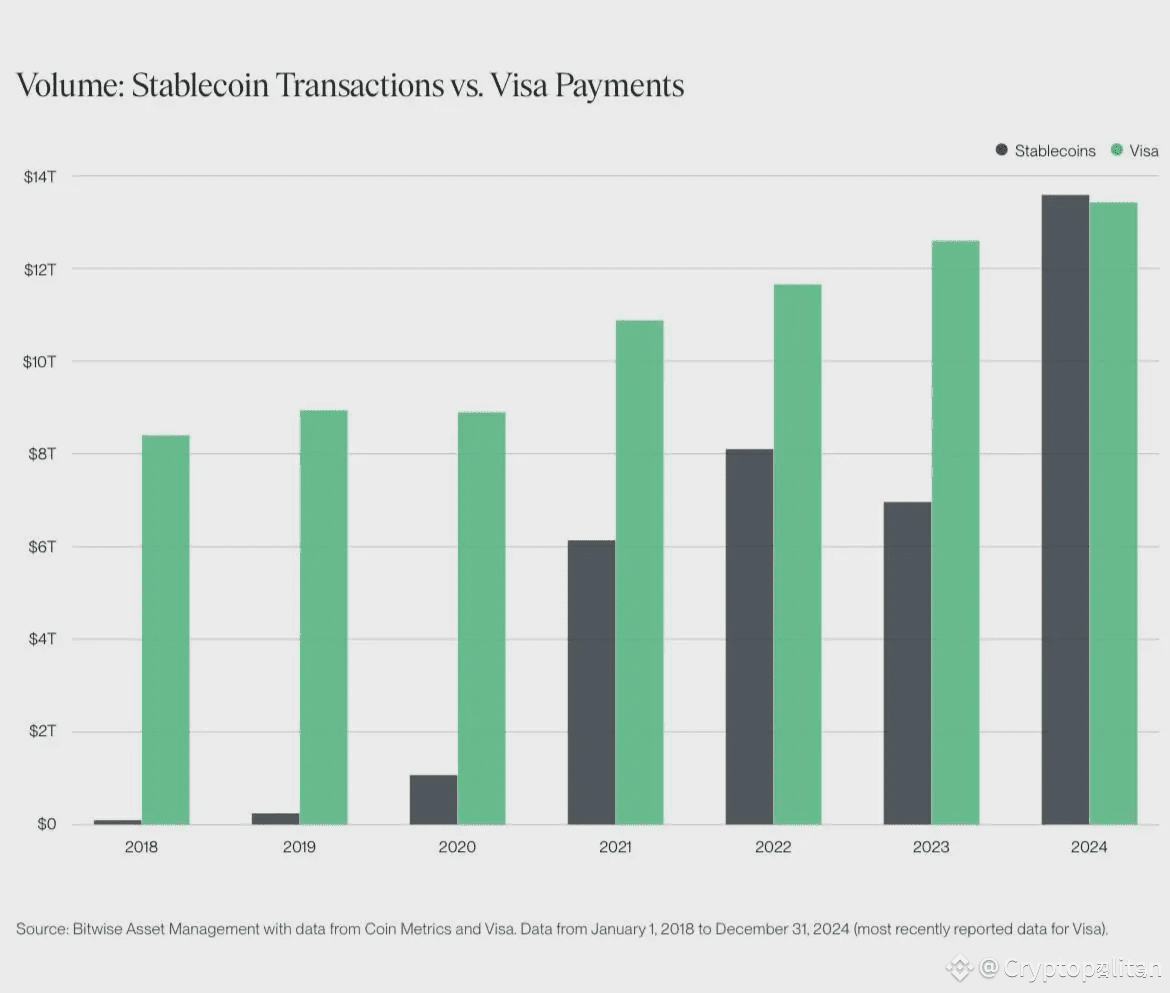
Tether, headquartered in Hong Kong, struggled to align fully with state mandates, amplifying trust issues. Its occasional reserve attestations fell short of third-party audits, inviting scrutiny from regulators and critics.
Meanwhile, market jitters hit in late 2018 and mid-2022 when rumors of insufficient backing triggered USDT price dips to as low as $0.92 and $0.9959, respectively. Each de-pegging shook confidence, reinforcing the need for stringent oversight.
At the federal level, pressure mounted through 2023. Senator Cynthia Lummis urged regular audits for issuers, while Treasury Secretary Janet Yellen warned of systemic risks if stablecoins remained unregulated. By February 2025, Congress advanced two landmark bills: the “Guiding and Establishing National Innovation for U.S. Stablecoins Act” (GENIUS Act) and the “Stablecoin Transparency and Accountability for a Better Ledger Economy Act” (STABLE Act).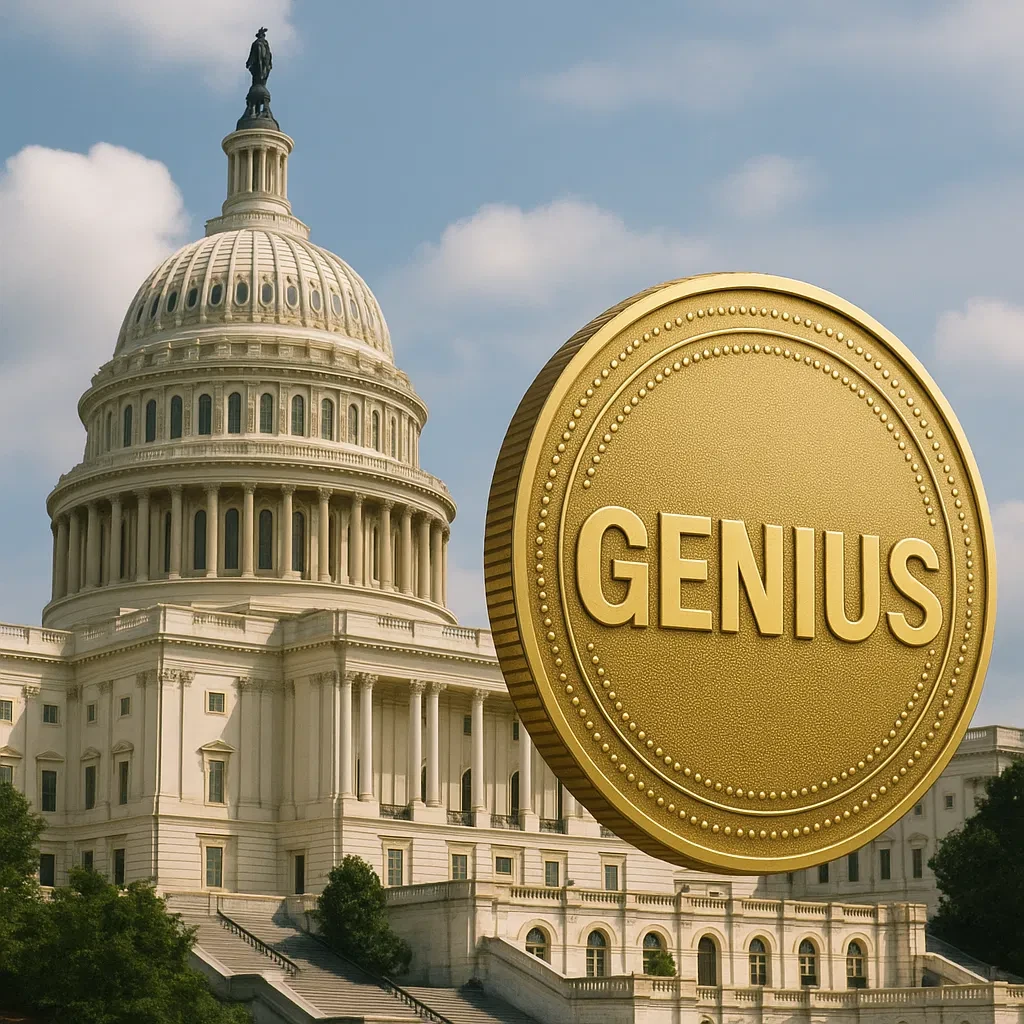
Both passed pivotal hurdles, mandating 100 percent reserves in cash or Treasuries, monthly independent attestations, and harsh penalties—up to $5 million fines and 20-year prison sentences—for false reporting.
Could Stablecoins Fatten the Treasury?
Under these new rules, issuers effectively must park nearly all token backings in U.S. government securities. As of May 2025, U.S. Treasuries now account for roughly $200 billion (80 percent) of total stablecoin reserves.
Tether reportedly holds over $120 billion—78 percent of its $150 billion liability—in short-term bills and reverse repos. Circle’s USDC Reserve Fund allocates nearly 99.5 percent of its $61 billion to government debt.
This wave of digital-dollar demand arrives as the Treasury auctions more than $1 trillion in new debt each year. An additional $200 billion buyer pool could significantly reduce borrowing costs—especially on bills maturing within three months.
With U.S. deficits running above $1 trillion annually, stablecoin-driven purchases offer a fresh source of demand outside the usual roster of primary dealers, foreign central banks, and institutional asset managers.
Consolidated data from issuers show short-dated Treasuries are the overwhelming preference. Such instruments satisfy regulators’ liquidity requirements and minimize rollover risk. Yet this influx of capital into the front end of the yield curve may flatten it further, tightening funding conditions only modestly. The immediate benefit is clear: lower yields on new issuances and smoother Treasury auctions.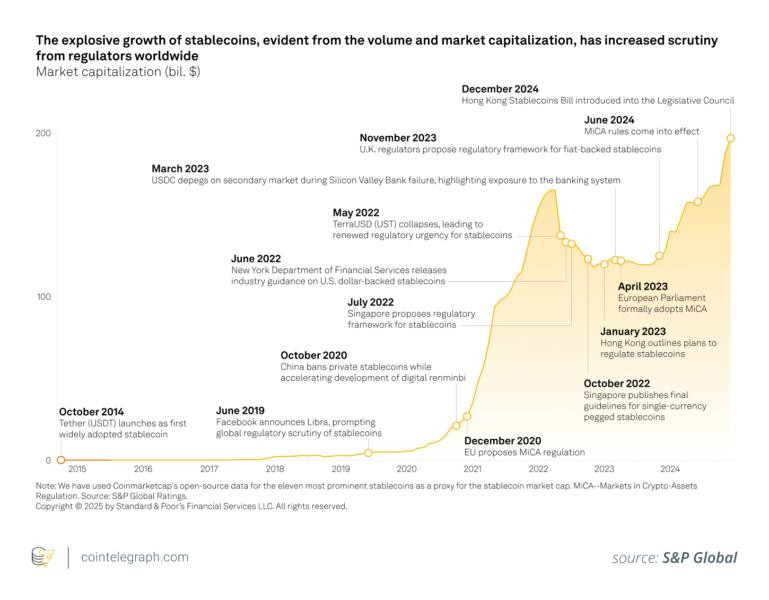
Short-Term Treasuries Only?
While bill-heavy portfolios meet redemptions swiftly, they carry hidden risks. With most reserves in instruments maturing within 90 days, issuers face constant rollover cycles. If market stresses trigger mass redemptions, stablecoin platforms might scramble to liquidate assets—potentially spiking yields and aggravating broader market volatility.
Moreover, stablecoins currently shy away from mid- and long-term debt. They lack the appetite for 10- or 30-year notes, where true funding pressure resides. Without venturing beyond the 3-month and 6-month space, tokenized capital cannot alleviate structural budget imbalances tied to entitlements and long-run obligations.
Another factor: stablecoins cannot substitute for foreign central bank purchases. Even at $200 billion nationally, they remain dwarfed by more than $3 trillion of foreign-held Treasuries.
An abrupt sell-off in official reserves would overwhelm stablecoin capacity. In short: while digital dollars can mitigate short-term supply surges, they cannot substitute for deep-pocketed international investors on the long end.
Digital Dollars, Bigger Reach:
Beyond debt funding, stablecoins reinforce the U.S. dollar’s grip as the world’s premier reserve currency. In 2025, global FX reserves allocated to the greenback dipped to 57.8 percent, down from 62 percent a decade prior. Policymakers now view dollar-backed tokens as an on-chain pipeline to send dollars worldwide—potentially displacing correspondent banking networks.
U.S. Treasury and Federal Reserve officials openly champion compliant stablecoins. Citing seamless cross-border transfers, they reason digital dollars can undercut competitors like China’s digital yuan. Migrant workers in developing countries already send remittances via stablecoins, saving on fees and avoiding exchange-rate volatility. If token usage scales, more countries may integrate on-chain payment rails, embedding the dollar deeper into global commerce.
Contrast this with Europe’s Markets in Crypto-Assets (MiCA), effective June 2024, which emphasizes financial stability and consumer protection over innovation. MiCA places stricter caps on nonbank issuers and enforces higher capital buffers. By comparison, U.S. laws allow nonbank entities to issue coins so long as they register as trust companies and follow capital, liquidity, and audit mandates.
Yet digital-extension of dollar hegemony comes with geopolitical risks. Should political gridlock undermine U.S. fiscal credibility—or a spectacular de-pegging event spook global users—confidence in tokenized dollars could evaporate overnight. A major run on stablecoins, reminiscent of March 2023’s USDC de-peg when Silicon Valley Bank collapsed, would trigger asset fire sales of Treasuries, roiling markets both on-chain and off.
Final Verdict: Cure or Cosmetic Fix?
Stablecoins have indeed metamorphosed from marginal tokens to pillars of 21st-century finance. Following the GENIUS and STABLE Acts, issuers are hardwired to buy massive amounts of U.S. government debt. In the near term, this fresh demand lowers yields on short-term bills and smooths Treasury auctions, providing Washington breathing room amid chronic deficits.
However, stablecoins cannot substitute for deep-pocketed institutional investors on the long end of the curve. Their focus on ultra-liquid, short-dated Treasuries leaves long-term borrowing costs largely unaffected. Moreover, any erosion of trust—driven by regulatory missteps, tech failures, or geopolitical upheavals—could precipitate a stampede from token dollars back into cash, intensifying systemic risks.
Ultimately, while stablecoins can shore up the front lines of the Treasury market, they are not a panacea for America’s fiscal dilemmas.
At best, they serve as a digital kicker, reinforcing dollar dominance in an increasingly tokenized world.
At worst, they create new vectors of volatility, where a flash de-peg sends shockwaves through both crypto and traditional bond markets. In digital dollars we trust—but only if trust endures.