
Stablecoin Gold Rush: Is Circle's IPO the Catalyst?

Circle’s IPO, set to debut on the NYSE this Thursday under ticker CRCL, has generated fervent excitement. Priced between $27 and $28 per share, the offering could raise up to $896 million by issuing 32 million Class A shares. With a $7.2 billion target valuation—up from $5.65 billion—investors like BlackRock and Ark Investment are clamoring for exposure.
Yet beneath the euphoria lie structural headwinds. Though Circle’s USDC stablecoin underpins $60 billion in circulation by investing reserves in short-term U.S. Treasuries, steep revenue-sharing agreements with Coinbase erode profit margins.
Furthermore, revenue is highly sensitive to interest-rate fluctuations and broader crypto-market volatility. Stakeholders will soon gauge if Circle can convert its “printing-money” reputation into sustained value.
Key Takeaways
- USDC’s Market Share: USDC commands $60 billion (25 percent) of the stablecoin market.
- Interest-Driven Revenue: Nearly all (99 percent) of Circle’s $1.68 billion revenue in 2024 came from investing reserves in U.S. Treasurys and cash.
- Coinbase Revenue Split: Coinbase captures 100 percent of yield on USDC held on its platform (23 percent of supply), cutting deeply into Circle’s profitability.
- Rate Sensitivity: Declining Treasury yields threaten Circle’s margins and may push it toward riskier investments.
- Growing Competition & Regulation: Tech giants and banks eye their own stablecoins; the bipartisan GENIUS Act—passed May 21, 2025—could favor issuers like Circle that emphasize compliance.
The Business Model: Risk and Reward
Circle’s proposition appears straightforward: issue USDC, a token pegged 1:1 to the U.S. dollar, and invest customer-deposited dollars into high-quality, short-term U.S. Treasuries. With 85% of $60 billion managed by BlackRock’s CircleReserveFund and the balance in cash at globally systemic banks, Circle generated $1.6 billion in reserve income in 2024 alone.
However, nearly all of that revenue depends on prevailing interest rates. At 4.75% yield, a conservative portfolio of Treasuries yields roughly $2.85 billion annually—an enticing “risk-free” return in crypto.
But if rates decline, the spread between what Circle earns and what it must pay for deposits narrows, forcing the company to either accept slimmer margins or take on additional riskier assets to maintain profitability.
That dynamic raises the specter of yield-chasing behavior: to sustain revenue growth, Circle might divert reserves into higher-risk debt or structured products. Such a strategy could mirror pitfalls seen in the collapse of Terra (LUNA) and the 2023 Silicon Valley Bank run, which in both cases threatened USDC’s peg. Though Circle has bolstered its reserves, any misstep in portfolio allocation could imperil user confidence and USDC’s 1:1 valuation.
Coinbase Partnership Drains the Profit Pool
Circle’s relationship with Coinbase began in 2018 via the Centre Consortium, co-founding USDC. Following the 2023 dissolution of that alliance, Coinbase acquired a minority stake in Circle, while Circle assumed full operational control of USDC. Yet key profit-sharing terms endured.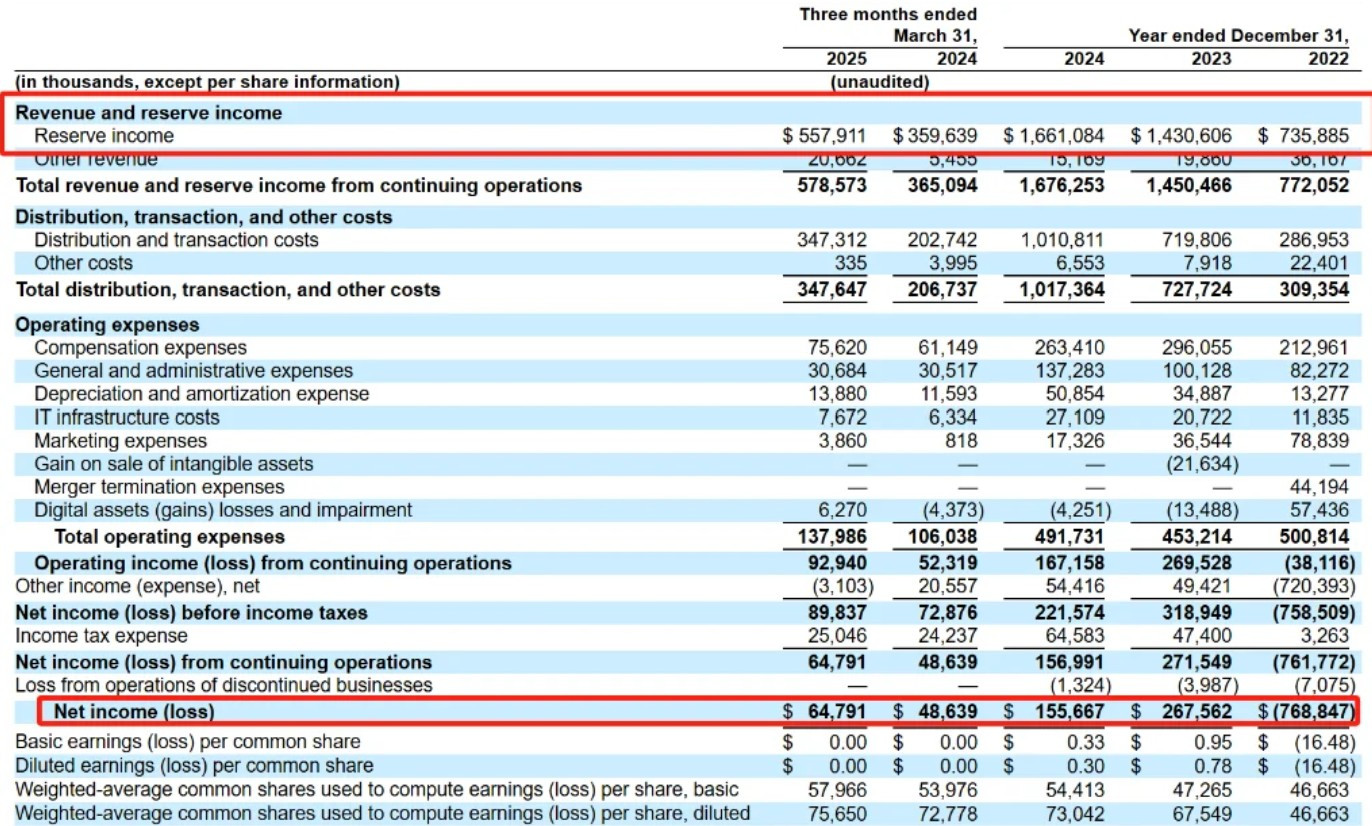
For USDC minted or held on Coinbase, the exchange collects 100% of reserve interest. In practice, 23% of all USDC supply resides on Coinbase, ensuring Coinbase draws a sizable share of Circle’s potential earnings. For USDC outside Coinbase, Circle and Coinbase split interest income evenly.
In 2024, Coinbase harvested $908 million from USDC-related interest—an amount equivalent to 14.5% of its net revenue. Meanwhile, Circle’s net income fell from $268 million in 2023 to $156 million in 2024, as partnership-related “distribution, trading, and other costs” skyrocketed. That profit-split structure significantly undermines Circle’s “printing-money” narrative, transforming potentially stable earnings into a zero-sum game with Coinbase.
Moreover, Coinbase retains veto rights over any new distribution or revenue-sharing agreements Circle might negotiate. This grants Coinbase strategic leverage, fueling speculation that Coinbase could eventually pursue a takeover of Circle. Such an outcome could fundamentally reshape the stablecoin landscape, altering fee structures, reserve allocations, and governance dynamics.
How Sustainable Is Circle’s Future?
Circle’s upside seems tied to the broader adoption of stablecoins as a digital-dollar surrogate. As traditional banking systems grapple with cross-border payments, DeFi protocols, and remittances, USDC’s programmable features and regulatory positioning give it a head start.
Should the GENIUS Act (passed in the Senate on May 21, 2025) become law, clearer regulatory frameworks may further entrench USDC and reward compliance-centric issuers like Circle.
Yet competition is intensifying. Tether’s USDT still controls 61% of the stablecoin market; Circle languishes in second place with 25%. New entrants threaten to undercut reserve yields or subsidize user incentives, sacrificing profitability to build share. PayPal’s stablecoin return policy—pledging to rebating yield to users—could pressure Circle to offer similar incentives, squeezing its topline.
Major banks, including JPMorgan, Citi, and Bank of America, are exploring jointly issued stablecoins that leverage existing on-ramps and regulatory licenses. Tech giants like Amazon and Google, with staggering distribution networks and capital reserves, could deploy their own tokens, further fragmenting demand for USDC.
Circle may need to innovate product offerings—such as embedded financial services or DeFi integrations—to differentiate.
Volatility in crypto markets also poses existential risks. In 2022, the collapse of Terra (LUNA) caused USDC to briefly de-peg, shaking confidence. In March 2023, Silicon Valley Bank’s failure unleashed a run on USDC, halving its market capitalization and forcing Circle to hold full collateral in cash and government-backed securities.
While Circle has since emerged stronger, any future shock to investor sentiment or partner solvency could trigger rapid outflows, threatening the peg and liquidity.
Circle’s IPO undoubtedly marks a milestone in the maturation of stablecoins, reflecting Wall Street’s newfound embrace of the sector. With BlackRock underwriting 10% of the offering and Ark Investment eyeing $150 million, institutional confidence is soaring.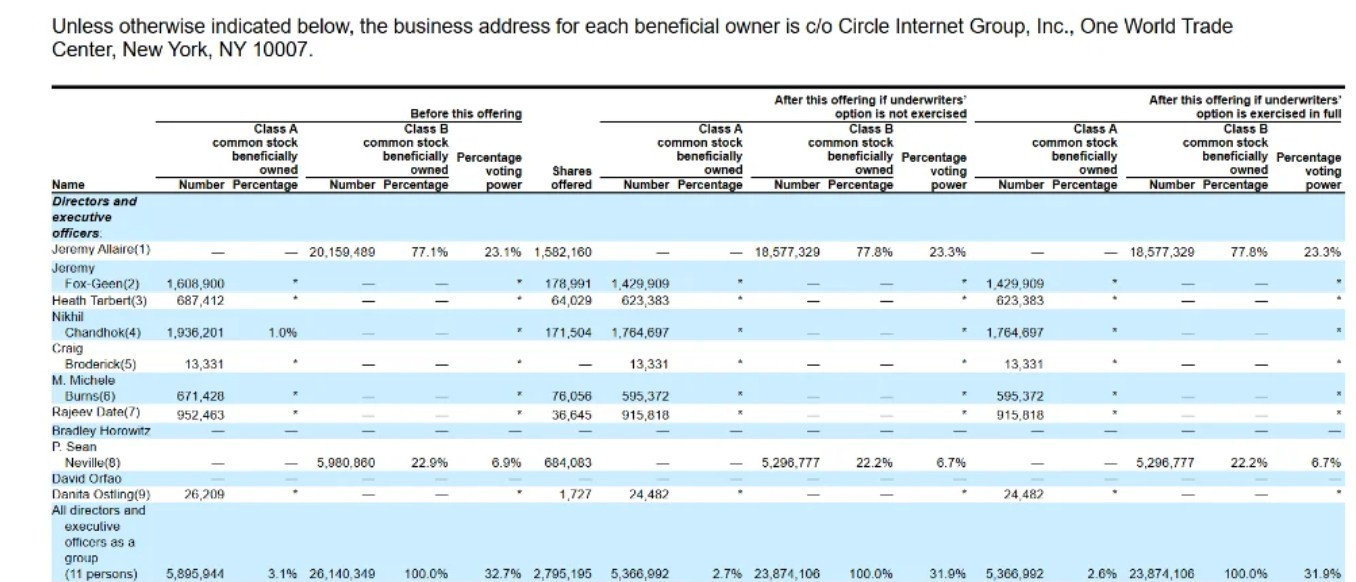
Yet profitability remains encumbered by a lopsided revenue-sharing agreement with Coinbase, interest-rate exposure, and fierce competition from both incumbent fintech giants and decentralized protocols.
Ultimately, Circle must pivot from a “printing-money” stance—where higher interest rates translated into profits—to a diversified model that generates fees through innovative products and broader utility. As regulatory clarity materializes, USDC’s compliance pedigree could cement its standing.
Still, whether Circle can retain its market position and deliver on lofty growth projections will depend on its ability to navigate a complex ecosystem of rivals, regulators, and volatile market forces. Investors and industry observers will be watching closely when CRCL begins trading, ready to judge if Circle’s IPO truly catalyzes a new era for digital dollars.