
Job growth slows and Trump pushes Powell to cut rates

A weak jobs report just added new pressure on the Fed.
Private payrolls rose by only 37,000 in May, according to new data from ADP. That’s the lowest monthly gain since March 2023—and a big drop from April’s revised number of 60,000. The data immediately rattled markets, with futures for the S&P 500, Nasdaq, and Dow all edging lower.
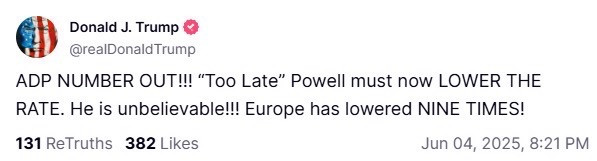
President Trump didn’t wait long to weigh in. He took to Truth Social and blasted Fed Chair Jerome Powell: “ADP NUMBER OUT!!! ‘Too Late’ Powell must now LOWER THE RATE. He is unbelievable!!! Europe has lowered NINE TIMES!”
Beneath the all-caps drama is a very real dilemma—how long can the Fed keep interest rates this high as the economy starts to cool?
What the ADP report actually tells us
Let’s break it down. The ADP report is not the government’s official jobs data, but it’s still closely watched. It’s based on payroll information from ADP’s large base of private-sector clients, and it gives investors an early read on how the job market is doing—especially before the official nonfarm payrolls report lands.
This latest report shows hiring momentum is slowing, even though wages remain strong. According to ADP’s chief economist Nela Richardson, the job market started the year strong but is clearly losing steam.
The numbers spooked investors. That’s because weak hiring, combined with high interest rates, is not a great combo for growth. And when the economy slows, rate cuts usually follow—eventually.
Powell is now caught between weak growth and sticky inflation
Here’s the tough spot for the Fed.
On one hand, economic activity is clearly softening. Businesses are pulling back on hiring, and confidence is fading. But on the other hand, wage growth hasn’t dropped much, which suggests inflation is still lurking in the background.
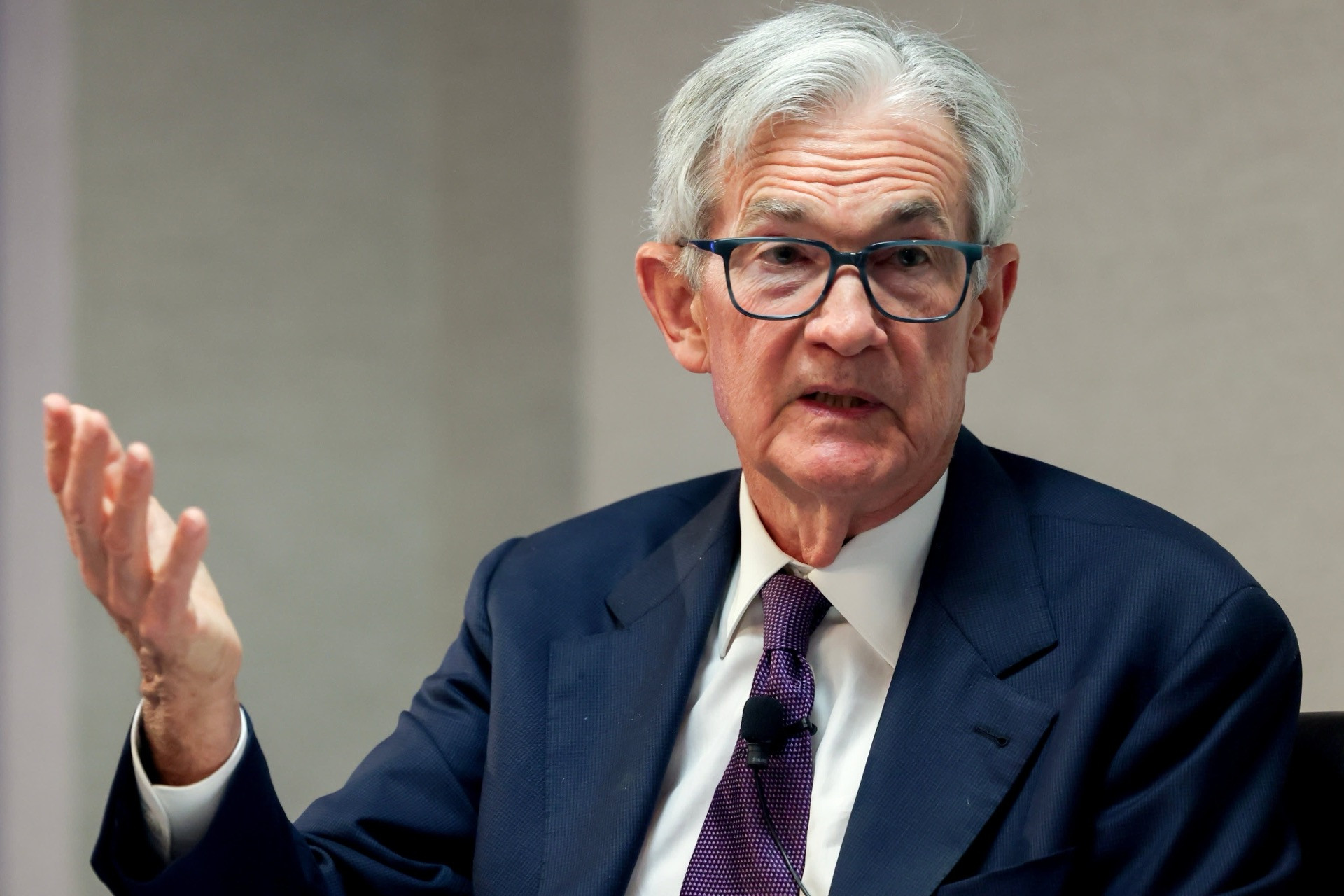
That puts Jerome Powell in a bind. He can’t ignore signs of a slowdown, but he also doesn’t want to cut rates too soon and risk another wave of inflation. So the Fed is stuck watching more data, trying to walk a very fine line.
Why Trump is turning up the heat
From Trump’s perspective, there’s every reason to push for a rate cut now.
Lower interest rates can give a quick boost to the economy and markets—just in time to ease pressure from his other economic policies, like tariffs, stricter immigration rules, and federal spending cuts. All of those could be cooling growth on their own.
Trump also pointed to Europe, which has already cut interest rates multiple times. The gap between the Fed and the European Central Bank is growing, and it could push the dollar higher and stir up more volatility across global markets.
My take on what happens next
Despite the noise, I don’t think Powell is going to move just because of this one ADP report.
The Fed will wait for the official jobs data coming Friday, along with more inflation numbers in the weeks ahead. But this report definitely increases the odds that rate cuts are on the table later this year—especially if economic data keeps getting softer.
I expect the Fed to stay put in June and July, but if hiring continues to slow and inflation drops further, a rate cut by September becomes a real possibility.
One big question remains
Is the Fed still driving the markets—or are the markets now driving the Fed?
We’ve entered a strange phase where investors seem to react faster than policymakers. Weak data hits, markets move, and suddenly the Fed is on the defensive. Powell may still be in the driver’s seat, but it’s the market that’s holding the map.
That’s something I’ll be watching closely in the weeks ahead.