
Gold’s Next Leap: Will Dollar’s Slide Ignite a Bullion Boom?

Gold’s meteoric 27% gain this year coincides with the dollar’s 9% slide, producing a stunning –96% inverse correlation—an intensity unseen since 1990. Morgan Stanley analysts warn that if this trend endures, and the dollar index falls to 91 by Q2 2026, gold could surge to $3,800/oz, eclipsing prior targets. Investors are watching this rare relationship closely, mindful that history suggests these extreme correlations often presage exceptional bullion rallies.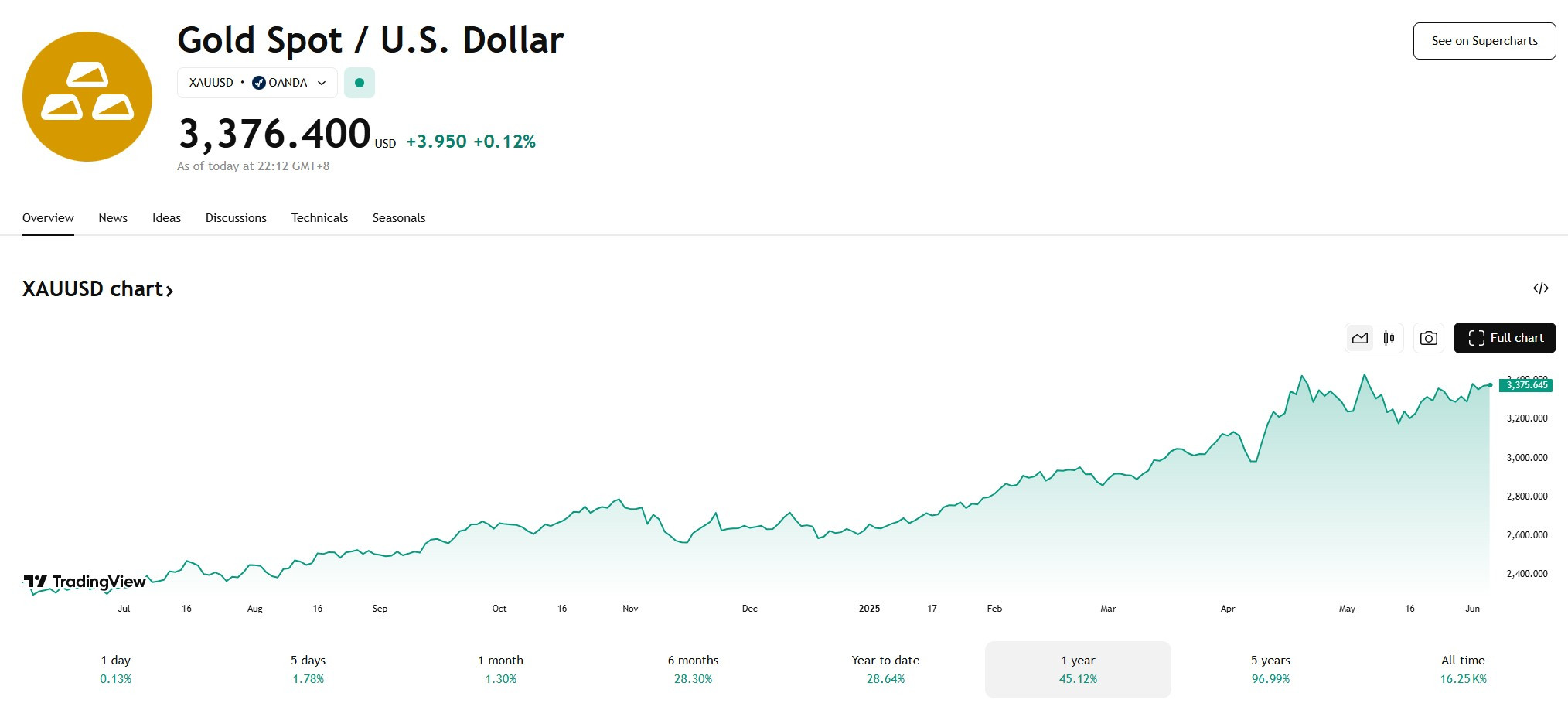
Key Takeaways
Unparalleled Correlation: Gold and the dollar index have recorded a –96% inverse correlation year‐to‐date, far exceeding the 1990–2025 average of –39%.
Gold’s Momentum: A typical five‐month stretch of such strong negative correlation has historically yielded an 8% average gold return, compared to the long‐term 3% mean.
Dollar Forecasts: Analysts forecast the dollar index dipping to 91 by mid-2026, implying potential gold prices of $3,800/oz, above Morgan Stanley’s prior $3,500/oz target.
Short‐Term Dynamics: Tariff uncertainties, ETF flows, and increased central bank purchases have propelled gold upward while dampening the dollar.
Emerging Market Upside: As the dollar falls, BofA Securities predicts double‐digit returns for EM assets, led by high‐yielding local currency bonds and resilient equities.
Historic Trends and Analyst Forecasts
Over the past five months, gold’s inverse relationship with the dollar has intensified to –96%, a rarity only seen seven times since 1990. During those episodes, gold’s rolling five-month returns averaged 8%, far above its long-run average.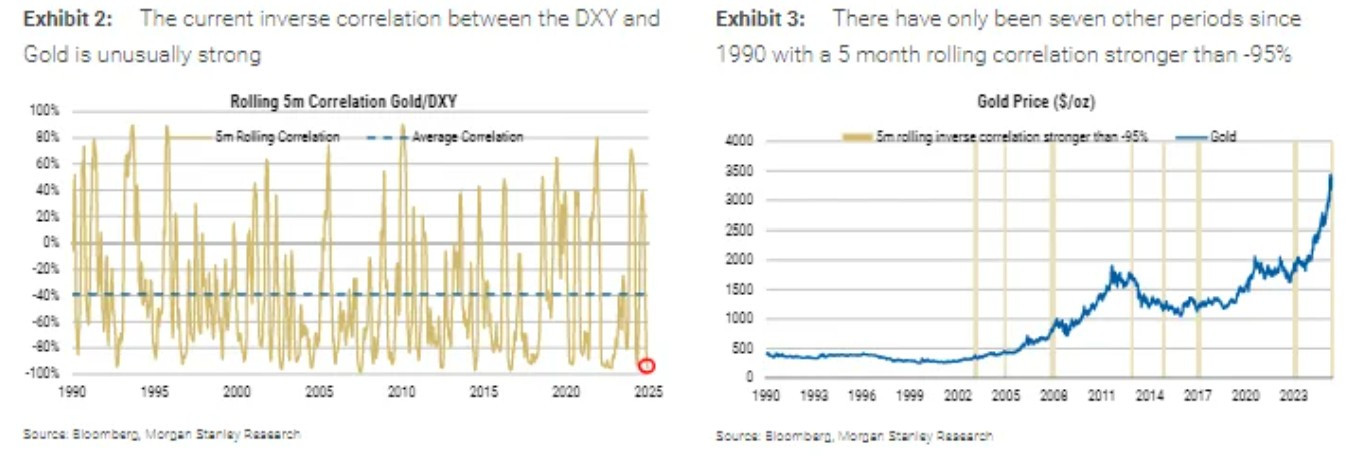
Historically, five of those seven periods featured a falling dollar paired with rising gold, often supported by ETF inflows, safe‐haven demand, and central bank buying.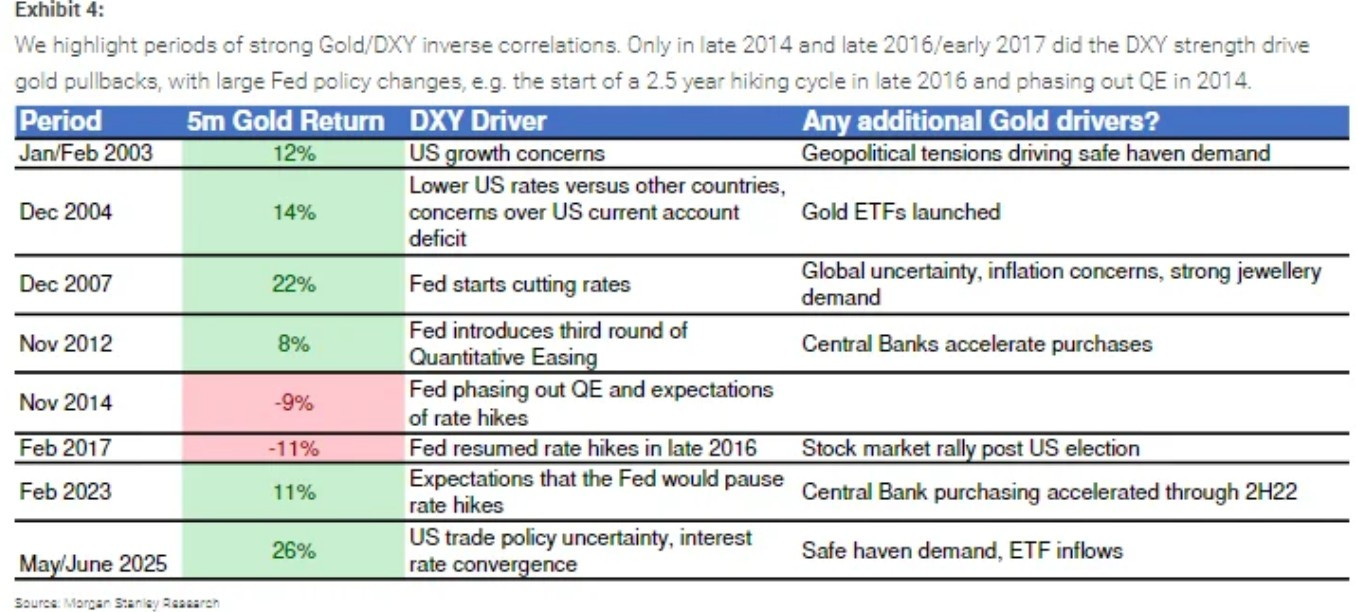
Morgan Stanley strategists Amy Gower and team highlight that, while these episodes are short-lived—2007’s stretch lasted 44 days—current dynamics resemble past precursors to rapid gold appreciation. If such correlations persist, gold may outshine earlier forecasts, potentially breaching $3,800/oz by mid-2026.
Can Emerging Markets Continue to Shine as the Dollar Falters?
Bank of America Securities sees significant upside for emerging market (EM) assets as the dollar weakens. EM local‐currency bonds have delivered average total returns of 5.7% this year, led by Brazil, where high yields and potential rate cuts have spurred a roughly 20% return.
Additionally, EM equities have outperformed U.S. stocks, with the MSCI Emerging Markets index up over 7% relative to the S&P 500. BofA’s David Hauner argues that dollar declines—exacerbated by anticipated Fed rate cuts, slower U.S. growth, and policy uncertainties—will fuel further capital flows into EM. Eastern European currencies and equities are especially favored, supported by attractive valuations and potential for broader regional appreciation as the euro strengthens.
Implications for Investors and Future Outlook
With these intertwined trends, both gold bugs and EM bulls see fertile ground:
Gold’s Prospects: If historical patterns hold, bullion could continue ascending, underpinned by sustained dollar weakness, safe-haven interest, and central bank purchases.
However, history cautions that super-charged negative correlations often peak quickly. Investors should gauge ETF flows and jewelry demand—both currently mixed—to assess whether purchases will intensify or plateau.
Emerging Market Strategies: As capital rotates away from U.S. assets, EM local-currency bonds and stocks stand to benefit. Brazil remains a top pick, but opportunities span across Asia and Eastern Europe, particularly where policy and growth forecasts are favorable. Still, investors must monitor global growth trends and potential Fed moves; any unexpected U.S. economic strength could stall EM momentum.
Looking ahead, this rare convergence of extreme gold‐dollar correlation and dollar depreciation suggests a window of opportunity—but timing is crucial. Should the dollar stabilize or recover earlier than expected, gold’s upside could moderate and EM assets may face headwinds.
Conversely, continued dollar declines, combined with safe-haven demand and robust ETF and central bank buying, could propel gold beyond $3,800/oz, while EM markets may extend their double-digit year-to-date returns. In either scenario, policymakers and investors must remain vigilant to shifting macroeconomic winds, as history shows these episodes, though lucrative, often prove fleeting.