
Bitcoin Bull Market Drives Stablecoin Market Cap to $250B, with USDC Facing Severe Competition Ahead

On June 5th Eastern Time, Circle (CRCL) officially listed on the New York Stock Exchange, filling the gap in the stablecoin sector among listed cryptocurrency companies.
As the issuer of USDC, the world's second-largest stablecoin, Circle has positioned USDC as the only compliant USD stablecoin in global circulation through its early strategic moves.
Driven by the bitcoin bull market, many cryptocurrency companies have recently disclosed their listing intentions, and the global stablecoin market capitalization has reached $251.1 billion.
However, analysts also remind that from the divergent paths of USDT and USDC, compliant stablecoins issued by institutions such as PayPal will squeeze USDC's market share in the future, and USDC still faces a severe competitive landscape ahead.
Bitcoin Bull Market Drives Cryptocurrency Companies to Go Public
Since 2025, driven by the bitcoin bull market, many cryptocurrency companies have embarked on the path of listing. Among them, Amber Group's digital wealth management platform Amber Premium and Bitcoin reward financial services company Fold Holdings (FLD) have successfully gone public, while cryptocurrency exchanges Kraken and Gemini, as well as bitcoin mining equipment manufacturer Bgin Blockchain, have revealed plans to go public.
Stablecoin issuer Circle has also recently made its debut on the New York Stock Exchange, with its share price surging nearly 200% in the first two trading days.
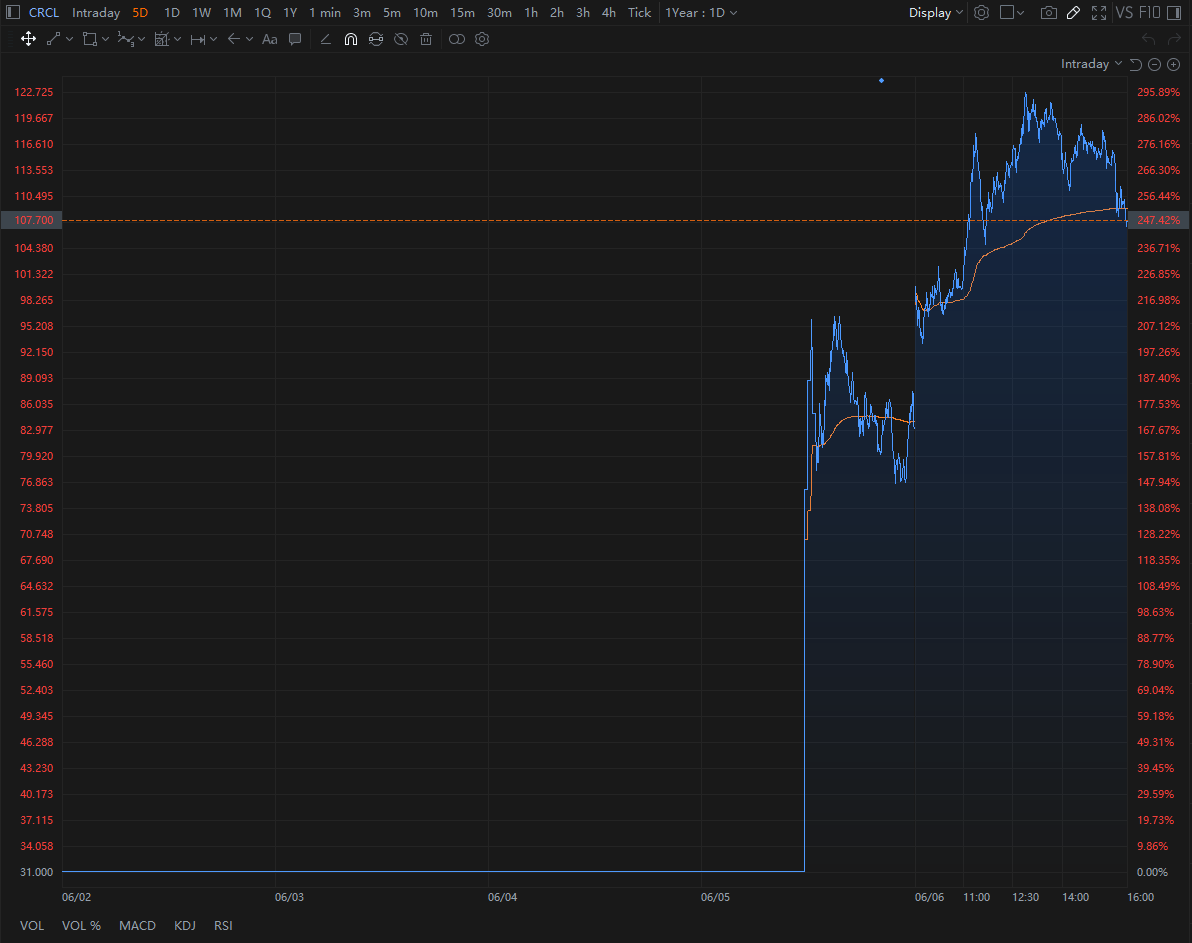
It is worth noting that this is not Circle's first attempt to go public. Previously, Circle tried to list through a merger with a Special Purpose Acquisition Company (SPAC), but the attempt failed at the end of 2022 due to regulatory issues.
More notably, the concept of stablecoins has been heating up recently, with the United States, the European Union, the United Kingdom, Japan, and Singapore all experimenting with using stablecoins as a payment method.
At the policy level, the U.S. GENIUS Act, Hong Kong's Stablecoin Ordinance, and the UK's stablecoin regulatory proposals have been introduced, with new changes in the regulatory environment boosting investor confidence in digital currencies and prompting a global re-accumulation of capital into related assets.
Analysts note that Circle's successful listing sends a very positive signal to compliant institutions with stablecoin issuance plans. It is expected that many institutions, including traditional financial players like Wall Street investment banks and large banks, will enter the stablecoin space in the future.
USDC Faces Severe Market Competition Ahead
As of the time of writing , the global stablecoin market capitalization stands at $254.0 billion, with Tether's USDT ranking first with a market value of $153.3 billion, and USDC ranking second with $61.4 billion.
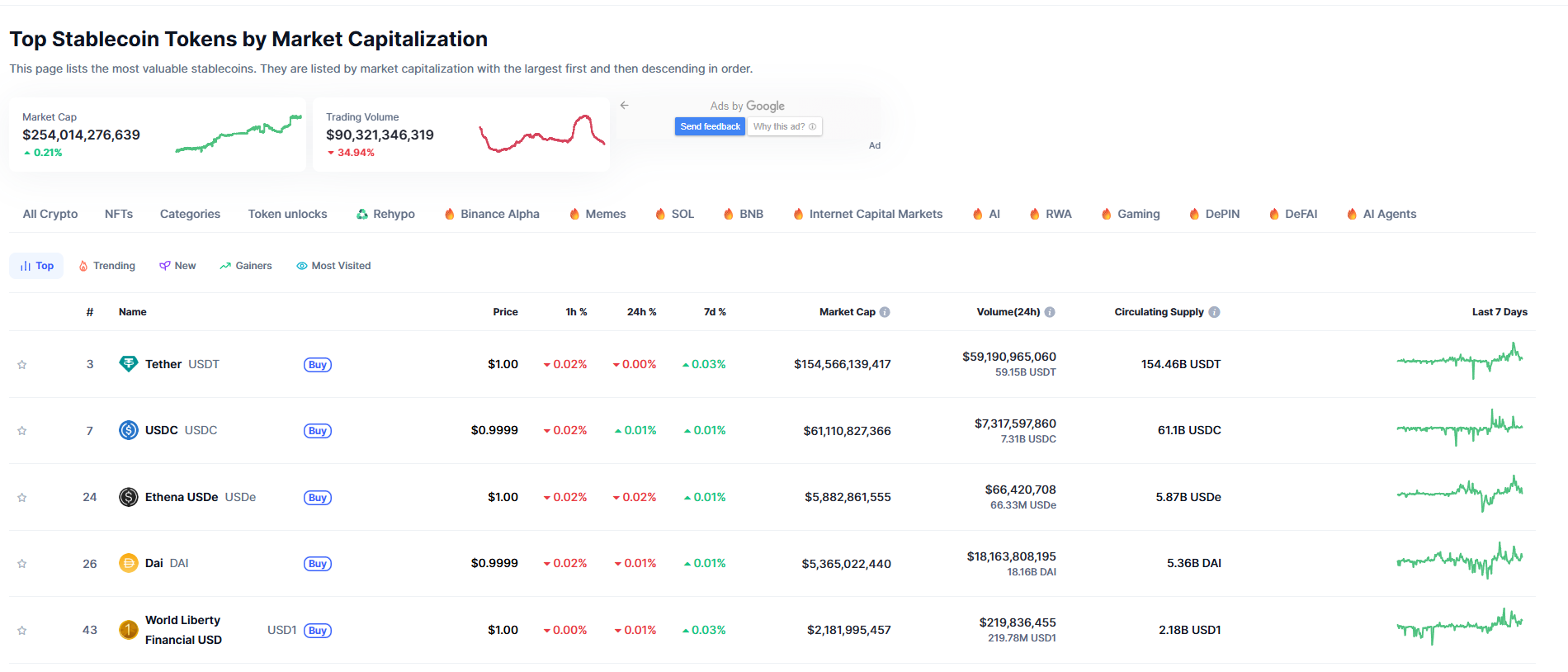
Although its market share is lower than that of USDT, USDC's compliance has given it a competitive edge. Currently, the two major stablecoins have significantly divergent development paths.
Compliance is clearly a main theme for the future development of the cryptocurrency industry. USDC's transparent reserve assets, primarily invested in U.S. Treasuries, give it an advantage in attracting institutional favor—especially as regulation tightens.
In contrast, USDT is currently facing regulatory scrutiny in multiple countries. Previously, the U.S. Commodity Futures Trading Commission fined Tether $41 million and ordered it to cease any further violations of the Commodity Exchange Act and CFTC regulations, following allegations that Tether made misleading or false statements about whether it held sufficient USD reserves to fully back its stablecoin.
Additionally, as stablecoin market access rules gradually clarify, banks and payment institutions are accelerating their entry into the stablecoin space. Currently, Standard Chartered, Fidelity, payment giant PayPal, and others have all expressed interest in launching stablecoins, while multiple regions globally have indicated plans to introduce stablecoins pegged to regional fiat currencies. With its compliance advantages potentially under threat, USDC still faces severe market competition in the future.
As a renowned analyst noted, "USDT remains highly attractive in high-friction regions such as the Middle East, Latin America, and Southeast Asia—where the USD system has limited reach—but the gradual entry of compliant stablecoins will squeeze USDC's market space."$CRCL