
Elon Musk Backs Down to Trump. A Complete Look at the Love-Hate Relationship Between Musk and Trump

In the early morning of June 11 local time, Elon Musk, CEO of Tesla, posted on the social media platform "X" that he regretted some of his recent posts about Trump, calling them "too excessive."

Musk's words and deeds are highly correlated with Tesla's stock price.
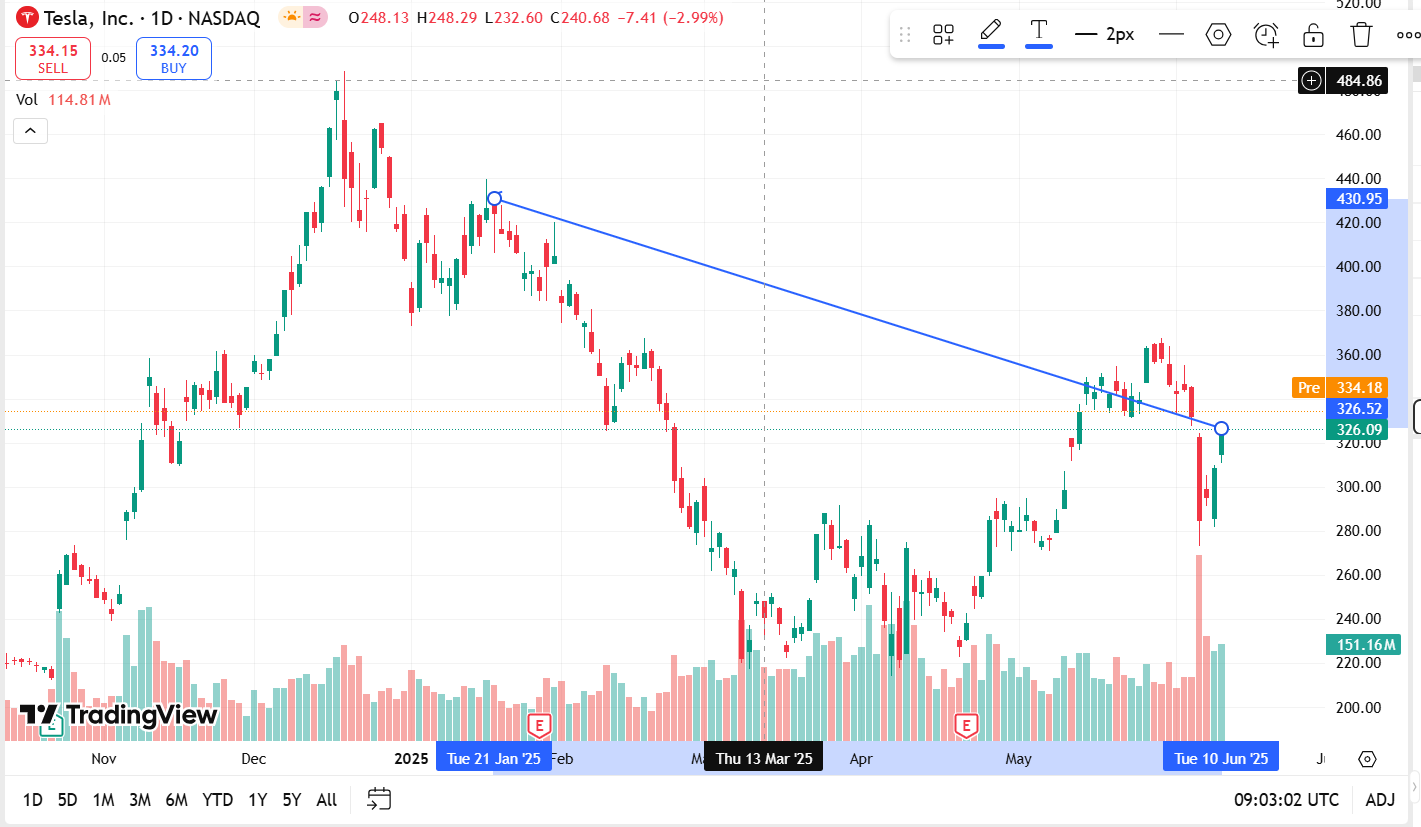
Since Trump's inauguration in January 2025, Tesla's stock price has fallen 23% cumulatively, while the S&P 500 index has fallen less than 1% over the same period. As of the time of this article, Tesla's pre-market stock price has risen nearly 3%.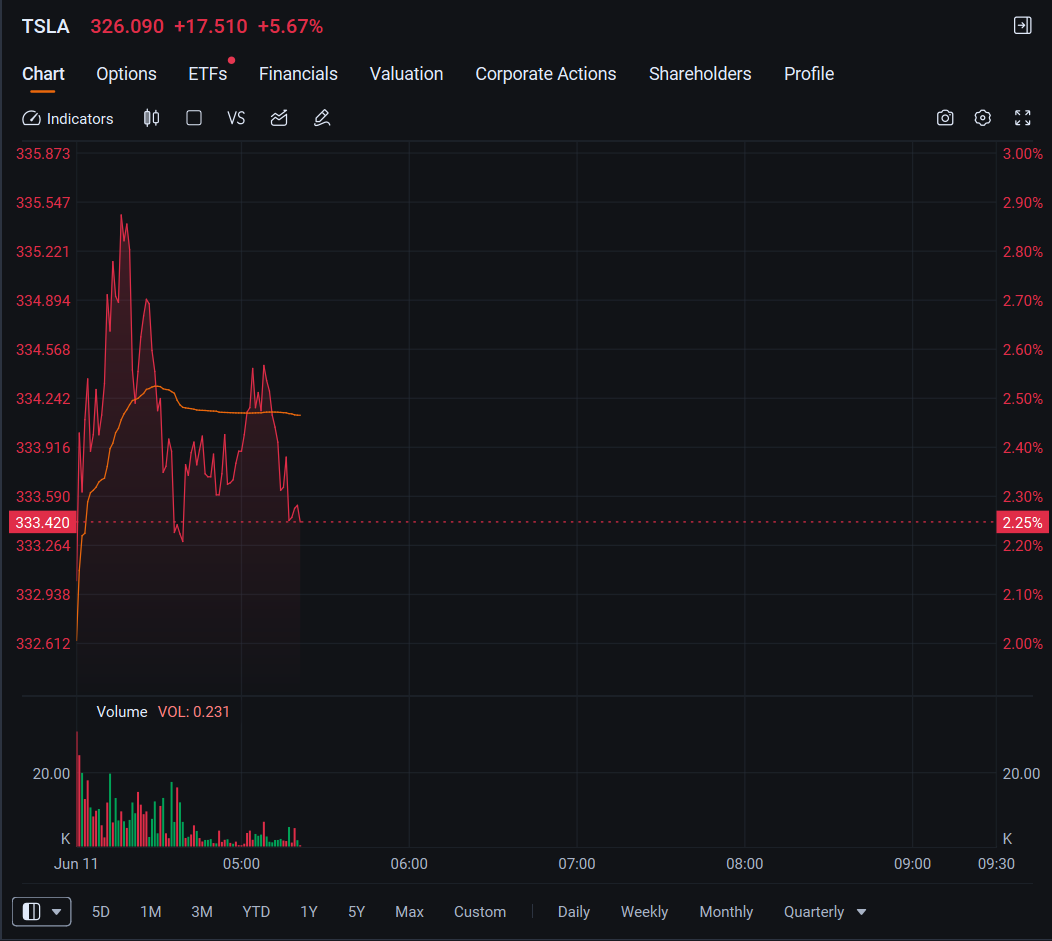
The Most Expensive Feud in History?
Since Musk left the U.S. "Department of Government Efficiency" at the end of May, his relationship with Trump has taken a sharp turn for the worse.
Previously, Musk repeatedly criticized the "Big and Beautiful" bill proposed by Republicans, questioning that the bill, which aims to cut taxes and welfare, would increase the federal deficit.
On June 5, Trump confirmed the deterioration of their relationship, saying he was "very disappointed" in Musk. "I had a good relationship with Elon, but I don't know if we will in the future."
This statement immediately angered Musk. As one of the most important financial backers of the Republican Party in the 2024 U.S. presidential election, he posted on X accusing Trump of "ingratitude."
As Trump and Musk completely fell out, their social media feud escalated rapidly. Trump lashed out at Musk on his self-created social platform "Truth Social," threatening to terminate government subsidies and contracts with Musk's companies.
Musk fought back on his "X" platform, claiming that Trump's name "appears in the Epstein documents," and said this was the "real reason" why the relevant files had not been made public. However, he later deleted the post.
Musk also severely criticized Trump's tariff policies, saying they "will lead to a recession in the second half of this year in the United States."
Some U.S. media broke the news that Trump had privately questioned whether Musk's abnormal words and deeds were related to alleged drug use.
On June 5, the day their conflict fully erupted, Tesla's stock price plummeted 14%, its market value evaporated by $153 billion, and Musk's net worth decreased by $33 billion in a single day. It can be called the most expensive feud in history.
Musk Faces Many Challenges
Musk has not been going smoothly recently.
During the dispute on June 5, Trump threatened to terminate government contracts with Musk's companies, putting considerable pressure on SpaceX, a company owned by Musk.

On the one hand, SpaceX has been cooperating with the U.S. government for many years, establishing close ties with the Pentagon, intelligence agencies, and NASA.
According to Bloomberg estimates, SpaceX, valued at $350 billion, has received more than $22 billion in non-confidential contracts from the U.S. Department of Defense and NASA since 2000. According to a report in The Washington Post, NASA and the Pentagon have recently urged SpaceX's competitors to accelerate the development of alternative rockets and spacecraft.
Government officials have contacted at least three commercial space companies on related matters.
CNN believes that it is difficult to find other companies to replace SpaceX, but at the same time, SpaceX also faces supervision from NASA and the U.S. Federal Aviation Administration. Its "Starlink" satellites are also seeking approval from the Federal Communications Commission to expand services.
In addition, after Trump's victory, Tesla's stock price once rose, but as Musk became involved in political controversies, Tesla's brand value, sales, and global market share have all been dragged down.
"Anti-Musk" demonstrations broke out in many places in Europe and the United States, and Tesla cars were smashed and set on fire. During the "war of words," Trump claimed that Musk's dissatisfaction stemmed from the proposal in the "Big and Beautiful" bill to cancel the tax credit for electric vehicle consumers, as this would affect Musk's interests.
According to CNN statistics, the policy of providing a $7,500 tax credit for electric vehicle buyers may have brought Tesla tens of billions of dollars in revenue last year.
In addition, Tesla also reported that over the past six years, the company's sales of regulatory credits to other automakers have exceeded $8 billion. These credits can help other enterprises meet federal and state emission standards. Trump's support for relaxing these standards may affect the sales of credits.
JPMorgan Chase recently estimated in a report to clients that the loss of electric vehicle tax credits could cost Tesla $1.2 billion annually, and the loss of credit sales could cost an additional $2 billion.
Some Views
Musk's taking the lead in backing down is good for Tesla's stock price, as can be seen from the pre-market price increase.
In addition, I have seen an interesting statement that this dispute between Musk and Trump is actually a means for Trump and Musk to jointly short Tesla to achieve short-term profit. Of course, this is just a joke, but it also reflects that Tesla's stock price has fluctuated significantly due to Musk's various moves.
However, as regular readers know, I am a relatively firm value investor in Tesla. I have also said an important point: short-term stock price declines caused by such breaking news, but sudden declines when the company's fundamentals have not changed, will all be followed by a rebound in the future.$TSLA