
Private Equity Giants Are Betting Big on Europe – What’s Driving This Shift?

Shearing sheep
June 11, 2025
GoGPT Summarizes Articles
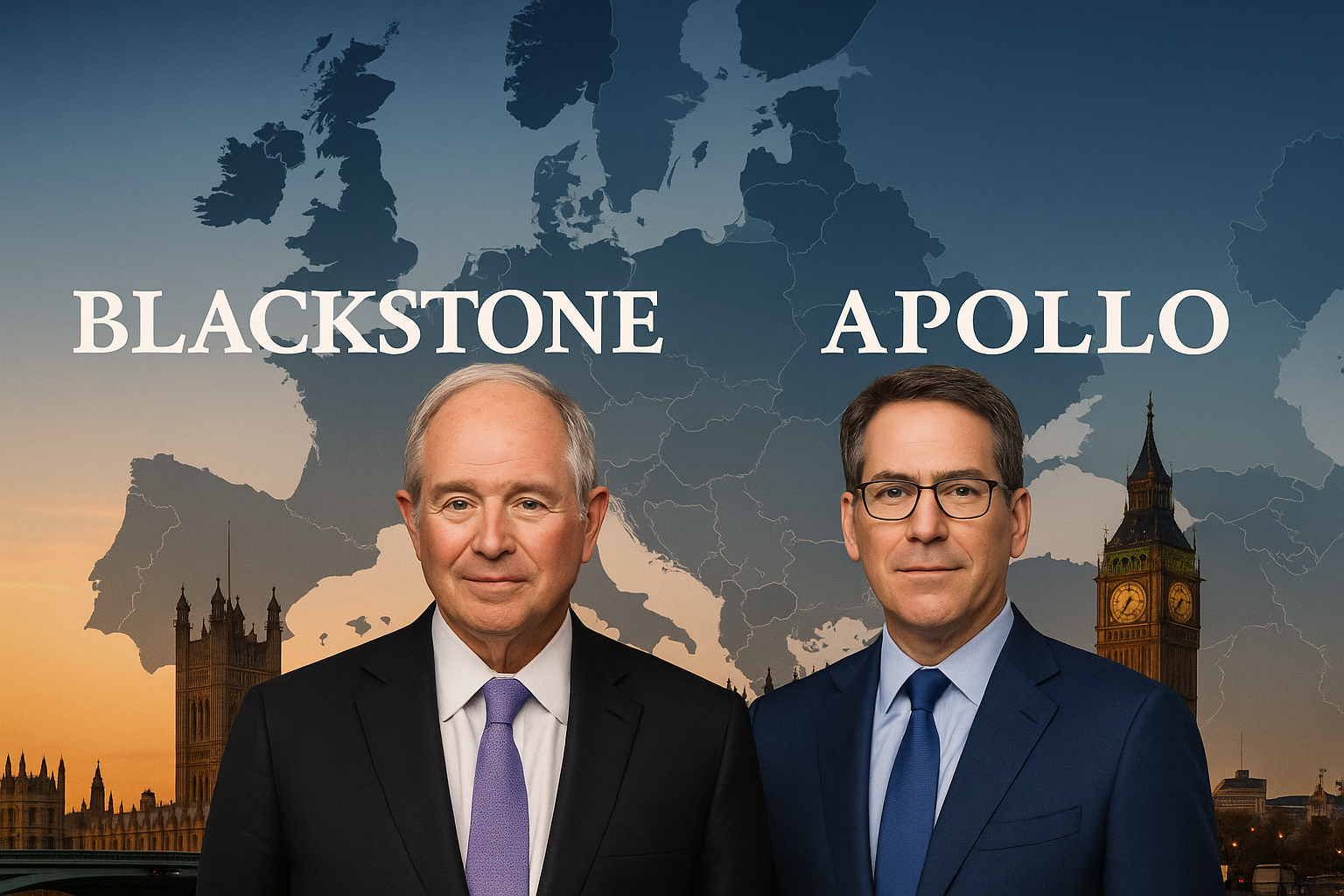
Europe is back on the private equity radar in a big way.
Two of the world’s largest alternative asset managers—Blackstone and Apollo Global Management—are rolling out massive investment plans across the continent. Blackstone is preparing to deploy a staggering $500 billion in Europe over the next decade, while Apollo has set its sights on investing $100 billion in Germany alone.
Blackstone’s European Push
According to Bloomberg and Financial Times reports published on June 10, 2025, Blackstone CEO Steve Schwarzman revealed in media interviews that the firm plans to commit $500 billion to Europe over the next decade. The announcement coincided with the 25th anniversary of Blackstone’s London office.
“Europe has become a major strategic focus for us,” Schwarzman said, citing attractive valuations and strong political support—particularly in the UK, where the government has been “very helpful,” especially in enabling large-scale infrastructure deals.
In 2000, Blackstone managed just over $13 billion globally. Today, it has grown into a $1 trillion-plus powerhouse with offices in 27 cities, and Europe is now firmly in its crosshairs.
Blackstone has already built a formidable presence on the continent. According to INREV, it is currently the largest real estate fund manager in Europe—a status earned through years of aggressive investment, particularly in the UK. The firm has deployed over $100 billion into British assets alone, making it one of the largest foreign capital allocators in the country.
One of its most successful strategies has been in urban logistics, where it capitalized early on the post-pandemic e-commerce boom. Its portfolio includes extensive networks of warehouses and last-mile delivery hubs located near major European cities—assets that have consistently appreciated in value thanks to sustained online retail demand.
Building on that momentum, Blackstone is now expanding deeper into the digital economy. One of its most ambitious upcoming projects is a massive data center campus in northern England—expected to become the largest of its kind in Europe once completed. This aligns with rising demand for cloud services, AI infrastructure, and sovereign data storage, particularly as European regulators push for digital autonomy and localized data governance.
Apollo’s Germany Game Plan
As reported by the Financial Times on June 4, 2025, Apollo President Jim Zelter announced at a Berlin investment conference that the firm plans to invest $100 billion in Germany over the next 10 years. The target sectors? Infrastructure, insurance assets, and defense-linked industries.
Apollo already has an established presence in Germany, laying the groundwork for this ambitious push.
One key foothold is its involvement with Vonovia, Germany’s largest residential property group. Apollo has been engaged in financing and asset-backed transactions with Vonovia, giving it meaningful exposure to the country’s regulated housing market.
In addition, Apollo previously held a significant stake in Oldenburgische Landesbank (OLB), a regional bank it helped restructure before exiting. This experience provided insight into Germany’s mid-market banking sector and regulatory dynamics.
The firm has also accumulated a series of legacy insurance portfolios, establishing a foothold in Germany’s sizable life and annuity markets—sectors that align with Apollo’s core expertise in yield-generating, long-duration assets.
These strategic investments have provided Apollo not only with operational experience on the ground but also with a nuanced understanding of Germany’s regulatory environment and capital markets. That familiarity will be crucial as the firm now pivots toward larger-scale infrastructure and defense-linked investments.
So why is Apollo ramping up now?
Germany’s new political leadership under Chancellor Friedrich Merz has relaxed the country’s strict debt brake (Schuldenbremse), paving the way for €500 billion in new public spending over the next 12 years. The spending targets long-term investments in defense, digitalization, and energy transition—precisely the areas where Apollo intends to focus.
In short, the stars are aligning: a favorable policy shift, a capital-hungry market, and a government openly courting private investment.
Why Now?
This pivot isn’t just about what’s promising in Europe—it’s also about what’s faltering in the U.S.
The American macro outlook is currently clouded by:
-
Rising interest rates,
-
Uncertain fiscal policy,
-
And stretched valuations, especially in tech and commercial real estate.
Meanwhile, Europe offers a more attractive environment:
-
Political stability in key countries like Germany, the UK, and Northern Europe,
-
Undervalued assets, particularly in logistics, infrastructure, and old-economy sectors,
-
And clear government support in the form of green energy subsidies and digital infrastructure incentives.
Notably, Germany’s DAX index is up around 21% year-to-date, according to Reuters, signaling renewed investor confidence in the region’s growth story.
Final Thoughts
What we’re seeing isn’t just a capital shift—it’s a strategic reallocation with long-term conviction.
Blackstone and Apollo aren’t merely chasing near-term returns. They’re making decade-spanning bets on Europe’s transformation: a future powered by infrastructure, data centers, energy transition, and defense autonomy.
This raises a big question for global investors: Are we witnessing a broader rebalancing away from the U.S.—and toward Europe’s next chapter of growth?
With private equity giants leading the way, Europe may no longer be the “forgotten continent” in global capital flows, but rather the next frontier for long-term value creation.
#Follow the Money: Where Are the Market Giants Investing#blackstone#apollo