
Europe’s AI Leap: Are Nvidia’s 20 AI Factories Enough?

On June 11 in Paris, Nvidia CEO Jensen Huang unveiled a sweeping plan: build 20 “AI factories” across Europe within two years, each powered by 10,000 GPUs and the new Grace Blackwell architecture.
He also declared quantum computing has reached a “tipping point,” with Nvidia’s CUDA-Q stack accelerating quantum algorithms on Blackwell 200 chips. Demonstrations of agentic AI—embodied by the “Greg” robot trained in Omniverse—preview a future where AI systems perceive, plan, and act autonomously.
This initiative aims to decuple Europe’s AI compute, integrate digital twin–driven manufacturing, and catalyze robotic automation, potentially igniting a new industrial revolution.
Key Takeaways
20 AI Factories, 10× Compute: Europe will gain 20 AI-optimized data centers equipped with DGX B200 systems and RTX PRO servers, boosting regional AI capacity tenfold.
Grace Blackwell “Thinking Machine”: The GB200 platform uses revolutionary NVLink with 130 TB/s backplane bandwidth to supercharge inference, supporting massive multiuser workloads.
Quantum Tipping Point: Nvidia’s cuQuantum and CUDA-Q libraries now run on Blackwell 200, enabling both simulation and co-processing between GPUs and QPUs, forecasting logic qubit growth of 10× every five years.
Digital Twins & Omniverse: Partners like Siemens, Cadence, ANSYS, and Rescale will employ physics-accurate virtual replicas to optimize factory design, simulation, and operation.
Agentic AI in Robotics: The “Greg” robot—trained across tens of thousands of virtual Omniverse scenarios—illustrates AI agents that learn, reason, and execute tasks before real-world deployment.
What’s the Big News?
Jensen Huang’s GTC Paris keynote opened with a bold vision: data centers will evolve into “AI factories” that generate “intelligent tokens” much like power plants produce electricity.
He announced 20 new facilities in Europe to be deployed over two years, each housing 10,000 GPUs—including DGX B200 and RTX PRO hardware—and running Nvidia’s CUDA-X, RTX™, and Omniverse stacks.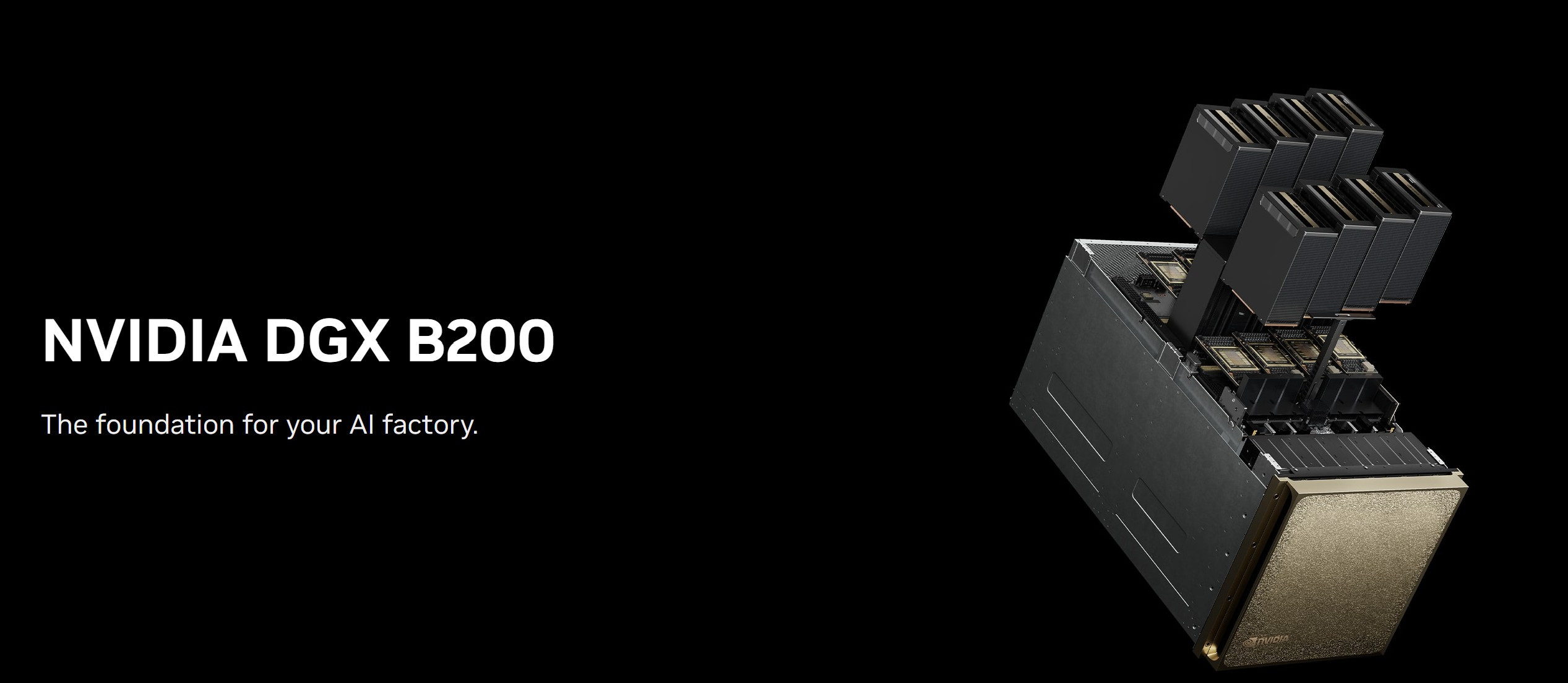
Huang emphasized the strategic collaboration with European leaders—BMW, Mercedes-Benz, Maserati, Schneider Electric, and more—to accelerate every phase of manufacturing, from design and simulation to digital twin operation and robotics.
He framed this expansion as a continental-scale industrial transformation, promising to resolve current GPU shortages, support startup ecosystems, and position Europe at the forefront of AI-powered manufacturing.
How Will Europe’s AI Factories Spark Industrial Change?
These AI factories are not mere data repositories but full-scale production facilities for “intelligent tokens”—the prompts and inferences that power AI applications.
Each center will integrate leading industrial software—Siemens’ factory simulators, Cadence’s digital twin platform, ANSYS physics engines—onto GPU-accelerated systems, enabling real-time design, optimization, and deployment.
By digitizing every step, from product modeling to logistics, manufacturers can dramatically cut development cycles, ensure higher utilization rates, and optimize processes through continuous AI-driven feedback loops.
Governments and industry consortiums across seven European countries will host AI technology centers, fostering local research, startup incubation, and workforce training to sustain long-term ecosystem growth.
Digital Twins Power Next-Gen Manufacturing
At the heart of Nvidia’s strategy lies Omniverse: a scalable framework for physics-accurate virtual replicas of factories, machinery, and environments.
Cadence’s realistic digital twin platform will simulate every mechanical and electronic component before physical assembly, allowing engineers to validate designs, predict failures, and fine-tune operations with millimeter precision.
Robotics teams can train agents like “Greg” entirely within Omniverse’s virtual worlds—spanning gravel, sand, slick floors, and complex object manipulation—before deploying them safely on real factory floors.
This approach slashes risk, reduces costly trial-and-error, and accelerates time to market by ensuring that both human and robotic workflows are fully vetted in software first.
Is Agentic AI Robotics the Next Wave?
Huang positioned agentic AI—systems that autonomously perceive, reason, plan, and execute multi-step tasks—as the third wave of AI, after perception and generative models.
The “Greg” robot demonstration highlighted how a single language prompt can spawn dozens of specialized AI agents—market researchers, designers, planners, finance analysts, and marketers—that collaborate seamlessly to launch a virtual food truck in Paris.
On the robotics front, Nvidia’s three-layer stack—Thor compute kits, a robotics OS, and Transformer-based control models—enables developers to teach robots via intuitive pipelines, leveraging the same Nemo toolset for LLMs.
Partnerships with Disney Research and DeepMind will deliver the world’s most realistic physics simulators to train humanoid robots at scale, paving the way for fully autonomous bots in manufacturing, logistics, and service industries.
As Nvidia’s vision unfolds, Europe stands at the cusp of a new industrial era—fueled by sprawling AI factories, quantum-classical compute synergy, digital twin mastery, and agentic robots.
Whether these elements align to deliver the promised tenfold boost and transformative outcomes depends on seamless cross-sector collaboration, robust infrastructure investment, and agile regulatory frameworks. But the foundation has been laid: a full-stack, continent-wide AI platform poised to redefine manufacturing, research, and human-machine collaboration in the years ahead.