
With the support of NASA orders, Voyager Technologies surged 82%

American aerospace and defense enterprise Voyager Technologies (stock code: VOYG) witnessed a sharp rise in its share price on the first day of listing. $VOYG
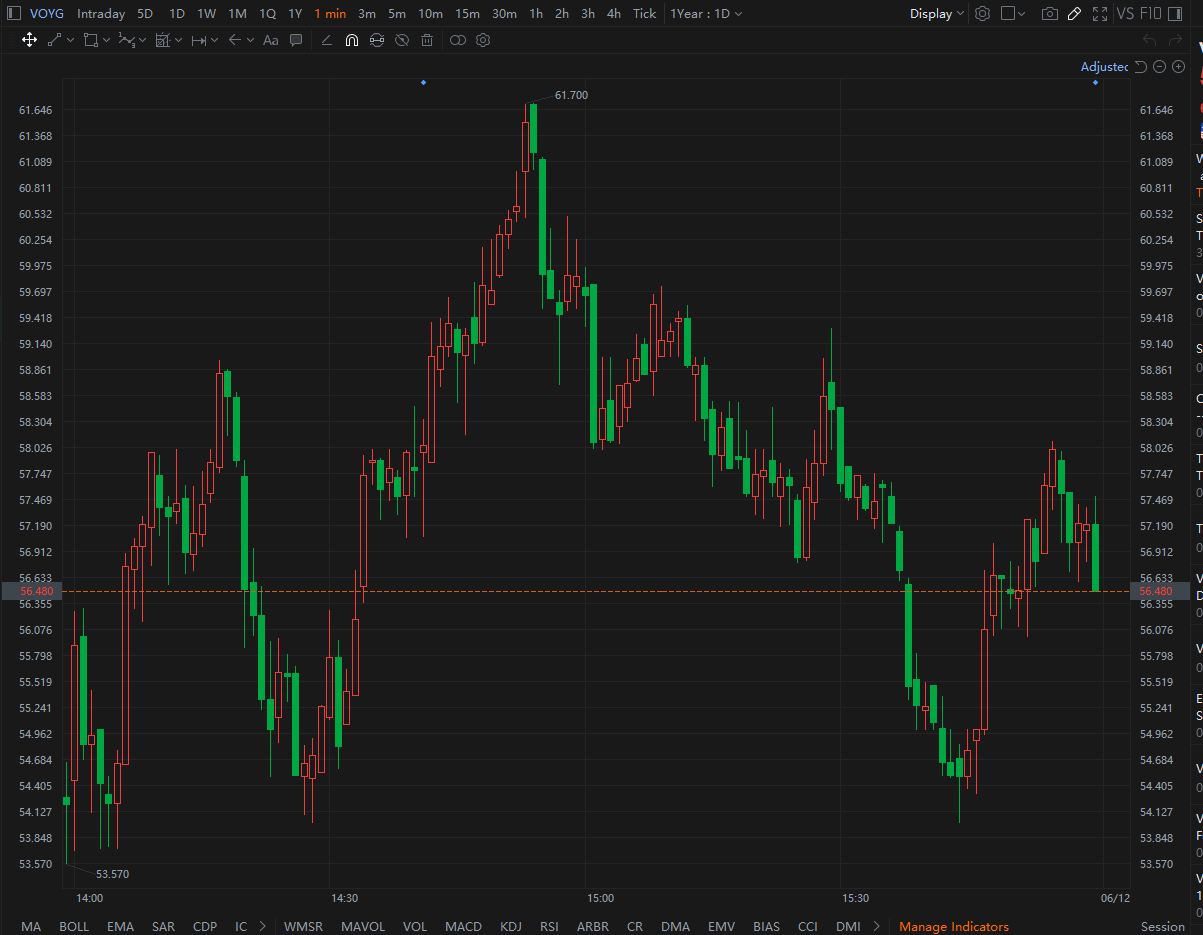
By the close, Voyager's stock price stood at $56.48, up 82.19% from its IPO price of $31. Based on the number of outstanding shares, the company's total market capitalization exceeded $3.1 billion. During the intraday session, the stock once surged to $73.95, with the maximum increase exceeding 138%.
Voyager's documents show that the company originally planned to issue 11 million shares, with an offering price range of $26 to $29 per share. Due to the stock demand exceeding expectations—reportedly receiving over 20 times the oversubscription—the actual issuance eventually exceeded 12.3 million shares, and the IPO price was also raised.
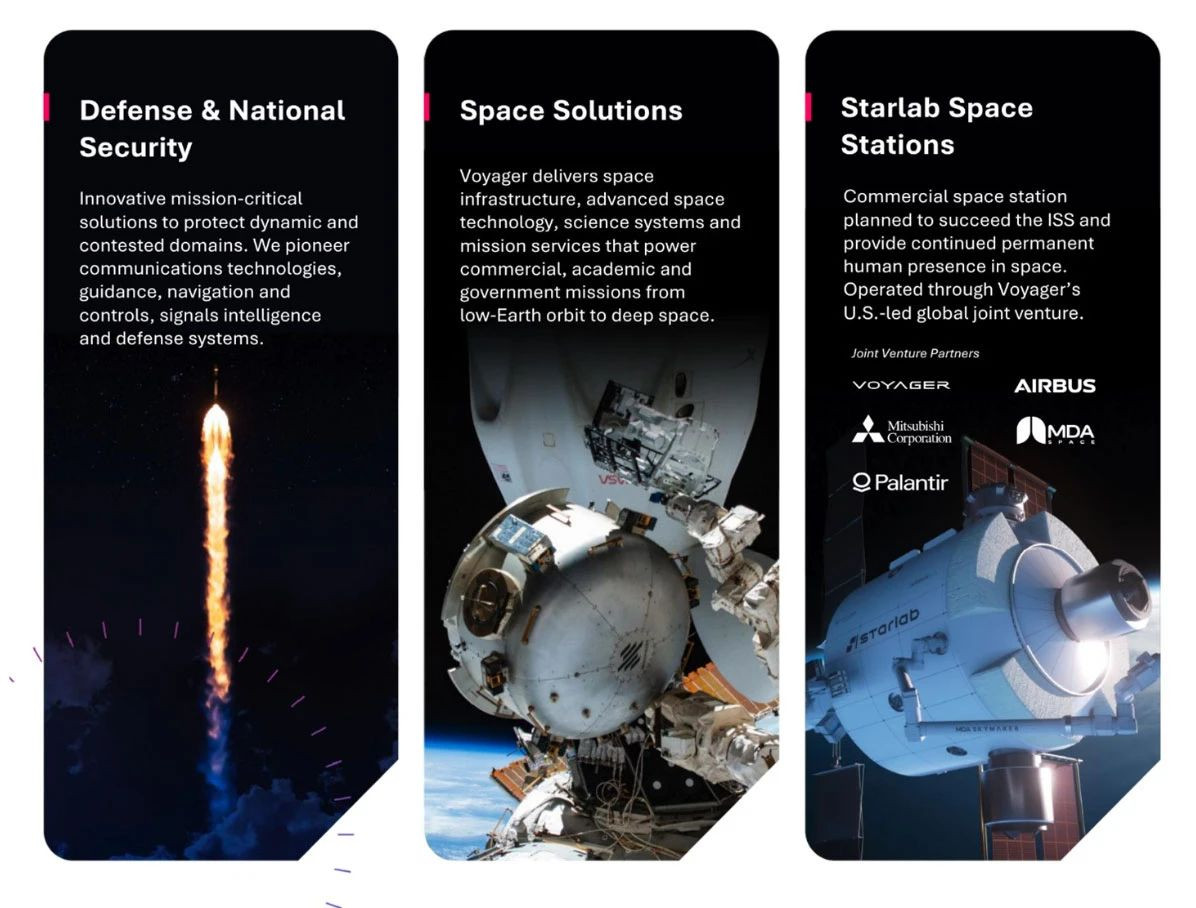
It is understood that Voyager was founded in 2019, and its name was still "Voyager Space" not long ago. The prospectus states that the company's customers cover both government and commercial sectors, and its business areas include national security, advanced technology, space infrastructure, etc.
And after I review the prospectus, it shows that Voyager's revenue in 2023 and 2024 was $136 million and $144 million respectively; the operating losses were $14.17 million and $48.44 million respectively; and the net losses were $25.2 million and $65.63 million respectively.
Voyager's revenue in the first quarter of 2025 was $34.51 million, an increase of 14.2% from $30.22 million in the same period of the previous year; the operating loss was $26.29 million, compared with the operating loss of $11.92 million in the same period of the previous year; and the net loss was $27.93 million, compared with the net loss of $14.95 million in the same period of the previous year.
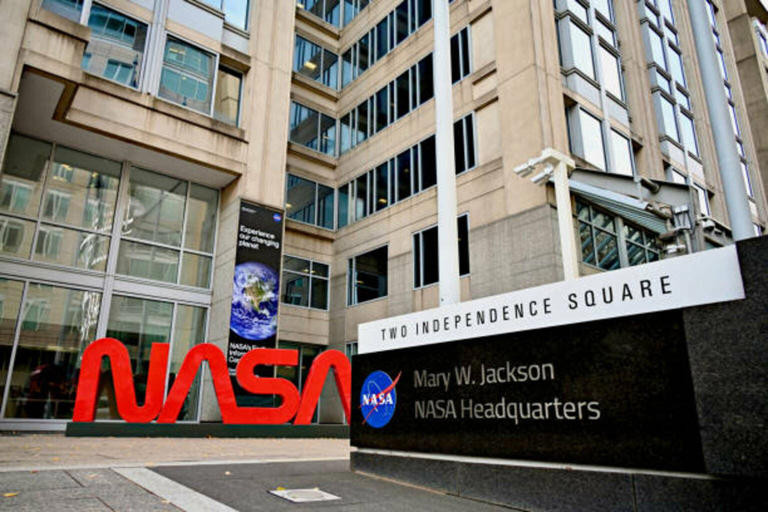
Currently, Voyager is collaborating with NASA and has obtained a $217.5 million R&D grant to design the "Starlab" commercial space station, which is expected to replace the retiring International Space Station in 2030.
The Starlab project will be operated by the joint venture Starlab Space, whose partners include Voyager, Airbus, Mitsubishi Corporation, MDA Space, as well as partners like Palantir Technologies.
At that time, Dylan Taylor, CEO of Voyager, commented, "The progress of Starlab highlights our shared commitment, including working with important international organizations and institutional allies to attract investment and cooperation, and ensuring the United States' leadership in low-Earth orbit."
Taylor added: "We are ready to advance human spaceflight, ensure the continuous human presence in low-Earth orbit (LEO), and build a thriving commercial space ecosystem."
Opinion
Voyager went public at a time when the Trump administration is seeking to significantly increase spending on defense and space programs. Last month, Trump also announced the development plan for the "Golden Dome" space-based missile defense system.
UBS analysts mentioned in a report that aerospace companies cooperating with government agencies often have stronger order certainty, especially projects with the U.S. military and NASA, which are usually accompanied by long-term funding support.
However, Goldman Sachs has noted in a report that the valuations of non-leading aerospace enterprises are highly dependent on government projects, and policy fluctuations may lead to significant volatility in performance.
If you are interested in the Universe , Voyager Technologies is a good choice in the long run.