
Citi Boosts Loan Loss Reserves as It Braces for Economic Downturn

Shearing sheep
June 12, 2025
GoGPT Summarizes Articles
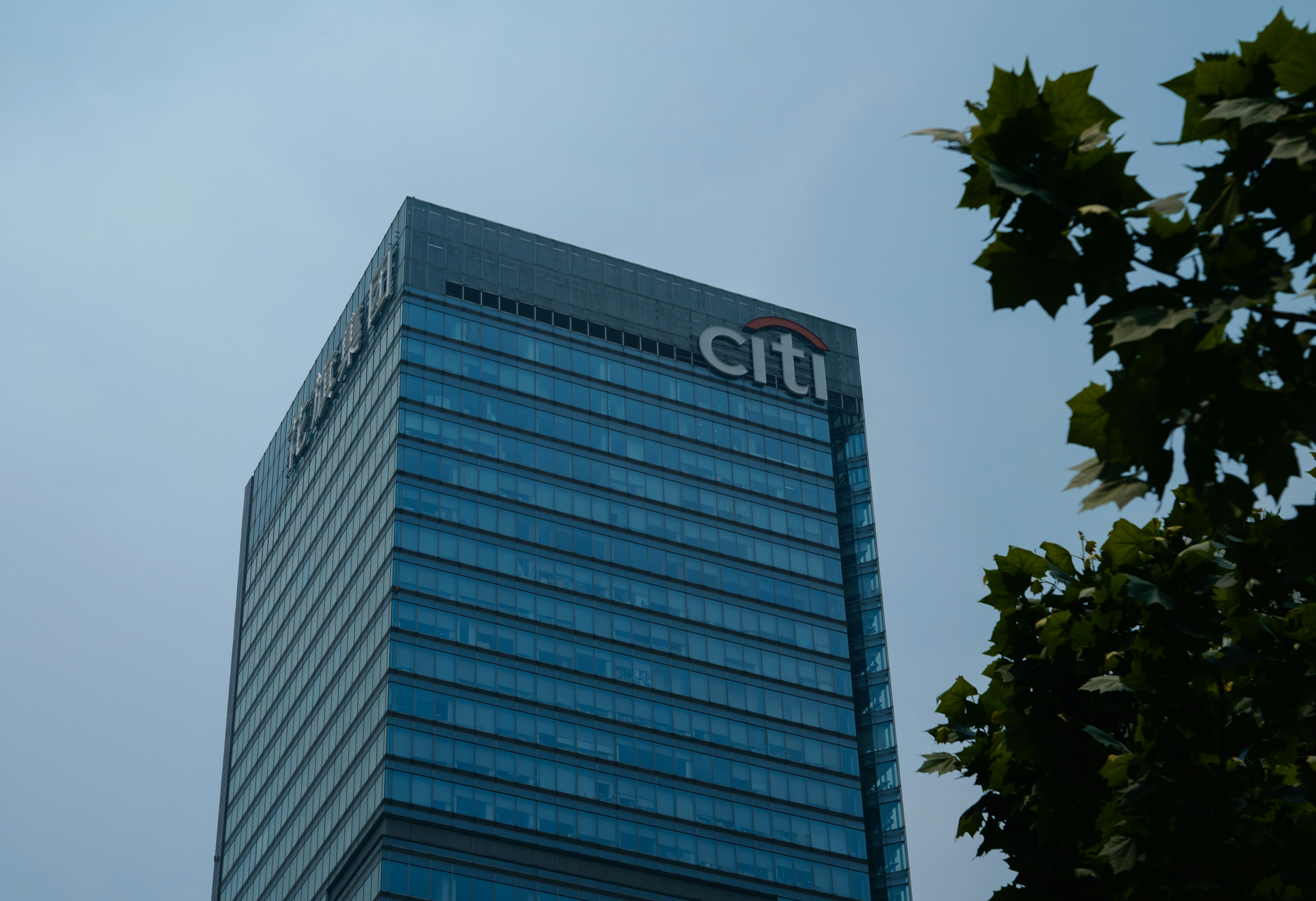
On June 10, at a Morgan Stanley conference, Citigroup Vice Chairman Vis Raghavan disclosed that Citi is increasing its loan loss reserves by hundreds of millions of dollars this quarter—setting aside more capital just in case borrowers struggle to repay. That move isn’t routine—it reflects a proactive bet on a more fragile economic outlook.
For context, Citi’s Q1 provisions were $2.72 billion, and analysts anticipated a slight drop this quarter. That contrast suggests Citi is more recession‑wary than the market right now.
Raghavan emphasized confidence in Citi’s corporate loan book—80% rated investment grade, even higher outside the U.S.—but the tone was unmistakable: economic unease is resurfacing.
Trading Thrives, Investment Banking Lags
Citi’s trading performance remains robust: Raghavan expects mid-to-high single-digit growth in both equity and fixed-income revenue year-over-year for Q2. Investment banking fees may also see modest increases.
But the real story? On investment banking, Raghavan lamented, “Bankers like certainty. It can be good or bad… What freezes activity is indecision.”
That captures today’s market inertia—deal-slowdowns not from doom, but from paralysis.
Macro Concerns Are Mounting
Wall Street’s caution isn’t limited to Citi. Over the past weeks, top bankers have echoed the same alarms:
-
Goldman Sachs President & COO John Waldron said the firm is reducing risk exposure, strengthening liquidity and capital buffers in response to tariff volatility and policy shifts. He outlined expectations of 1–1.5% growth with ~3% inflation—a “slowflation” backdrop—and noted rising investor concern over the unsustainable fiscal path.
-
JPMorgan CEO Jamie Dimon has issued multiple warnings from March through June. He said that soaring federal deficits and quantitative easing may trigger a “crack” in the bond market, noting that bond yields and credit spreads could widen significantly—though he didn’t say exactly when that might happen. In a June 11 appearance, Dimon cautioned that real economic indicators might soon deteriorate, even in a so-called soft landing, with modest upticks in unemployment and inflation.
-
BlackRock CEO Larry Fink has made some of the most candid remarks. As early as April, he said most CEOs he speaks to believe the U.S. is probably already in a recession, warning that equity markets could fall another 20% on mounting tariff and trade uncertainty.
These voices converge around three themes:
1. Weakening growth with persistent inflation (“slowflation”).
2. Fiscal irresponsibility risking bond-market upheaval.
3. Policy uncertainty—from tariffs to deficits—freezing deal activity.
Investors Still Watching, Not Panicking
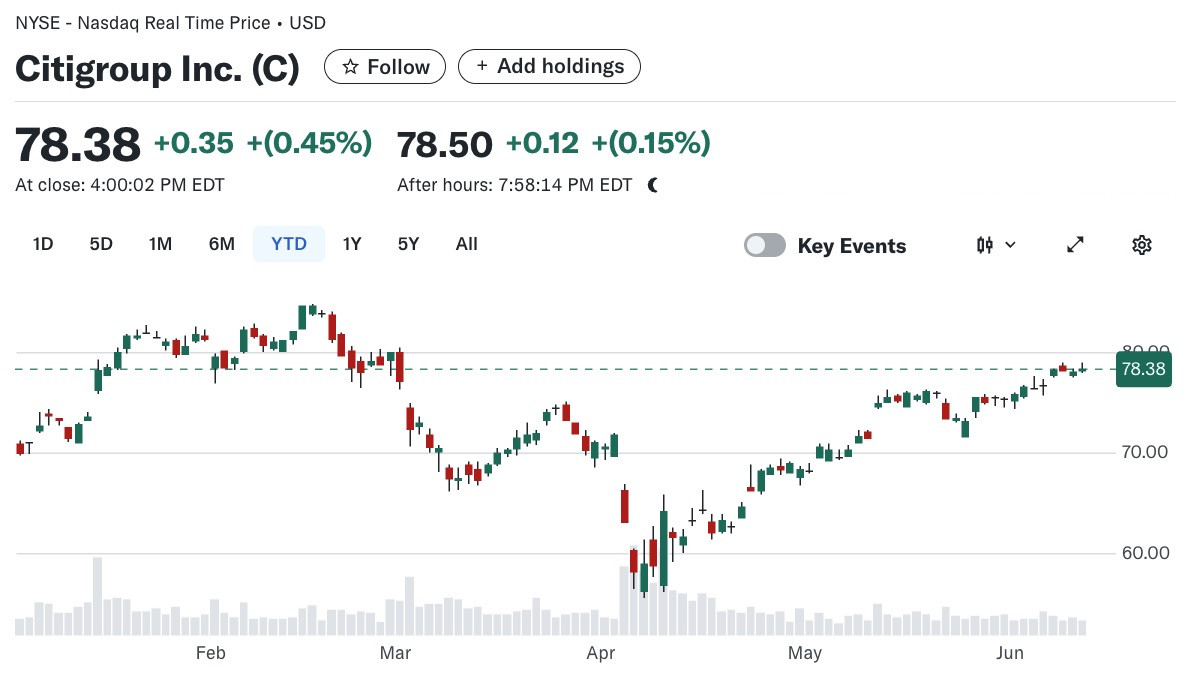
Despite these warnings, Citi ($C) shares rose 0.45% to $78.38 after the provisioning news. That signals a market still cautiously assessing the mixed signals: strong trading, lagging M&A, and growing loan-loss buffers.
However, when multiple major banks start preparing defensively, it's more signal than noise.
Citi’s hefty reserve build is not an outlier—it’s a symptom. Across Wall Street, leaders are speaking openly about slowflation, debt exhaustion, and dormant distress. The smartest money isn’t waiting for the storm—it’s reinforcing the levees before the flood.
#$Citigroup Inc.(C)