
Tariff Pressures Easing: Is the Fed’s Next Move About to Arrive?

By front-loading expectations for two rate cuts this year, traders signaled renewed confidence that inflation is cooling faster than feared. After May’s PPI data showed only modest monthly gains, the market fully priced in rate reductions—underscoring a shift in sentiment toward easier monetary policy and giving a boost to interest-sensitive assets.
Key Takeaways: What Moved the Needle?
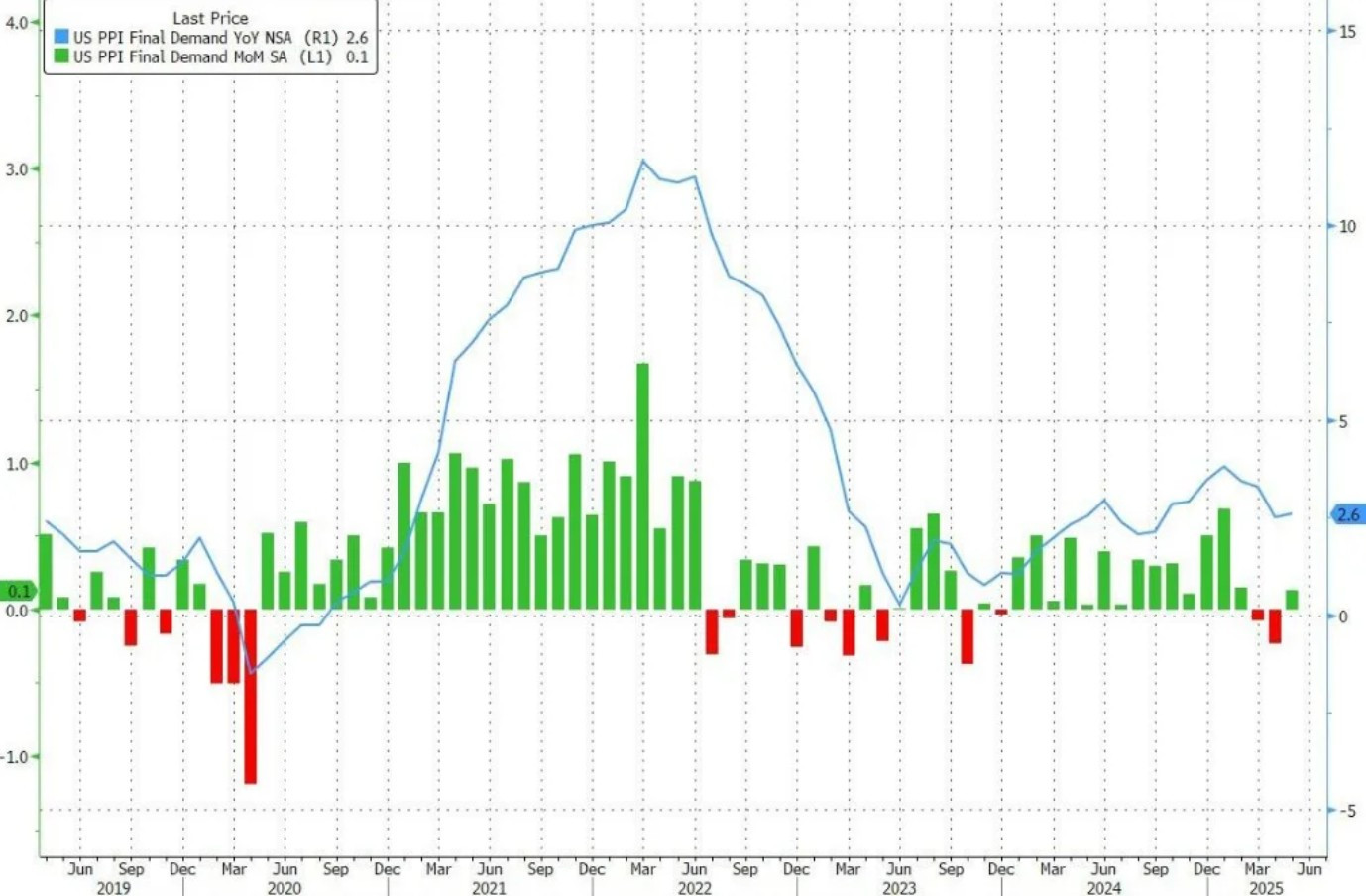
- PPI YoY at 2.6% matched forecasts, with April’s figure revised to 2.5%.
- Core PPI YoY at 3.0% hit its lowest since August 2024.
- Monthly PPI & core PPI each up just 0.1%, below economists’2% call.
- Goods ex-food & energy rose 0.2%, while services gained 0.1%.
- Food prices ticked up 0.1%; energy costs were unchanged.
- Intermediate processed goods flat; unprocessed goods fell for a third month.
- Final-demand services up 0.1%, led by trade-service margins.
- Final-demand goods rose 0.2%, with tobacco and gasoline among the drivers.
What’s Behind May’s Mild PPI Readings?
On a headline basis, U.S. producer prices rose only 0.1% in May—well under the 0.2% economists expected. The trend carried through to core PPI, which also climbed just 0.1%. Year-over-year, the core pace slowed to 3.0%, marking the weakest annual increase in nearly a year.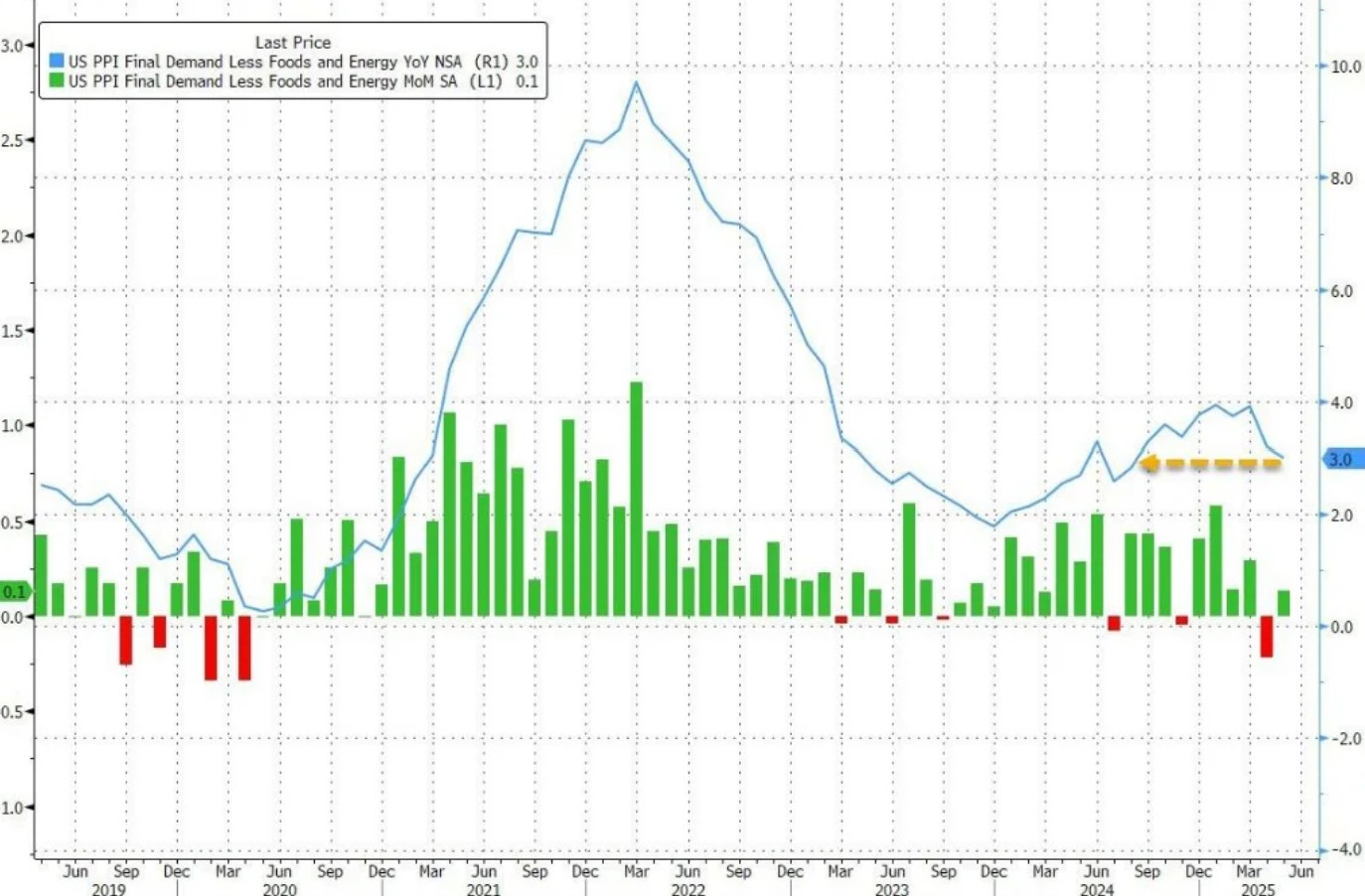
Digging into components, goods excluding food and energy posted a 0.2% increase, while services advanced 0.1%. Food-sector input costs edged up 0.1% after two months of declines. Energy prices stabilized, registering no net change from April—evidence that swings in oil and gas didn’t add to inflation pressures in May.
Intermediate processed goods, a bellwether for early supply-chain dynamics, were flat month-over-month. Unprocessed goods prices fell for a third consecutive month, signaling weakness at the commodity level. This moderation suggests that raw materials and early-stage inputs are unlikely to reignite significant price pressures in the near term.
Final-demand services prices rose 0.1%, rebounding from April’s 0.4% drop. That gain was driven by a 0.4% jump in trade-service profit margins—particularly in machinery and vehicle wholesale, where margins surged 2.9%. Lodging, apparel retail, alcohol sales, and software publishing also saw price upticks, offsetting declines in air passenger fares and financial services.
Are Tariffs Eroding Corporate Margins?
Despite muted PPI gains, corporate profitability remains under strain. Wholesale and retail margins—especially in vehicle and machinery sectors—expanded in May, pointing to firms absorbing new tariff costs rather than passing them to consumers. For months, U.S. businesses have shouldered higher levies, compressing profits.
That dynamic is critical: if companies continue to digest tariff expenses, they may either cut investment or raise prices later to protect bottom lines.
So far, tariff hikes have not translated into broad-based consumer price increases—but ongoing margin pressure could presage delayed inflation upticks in the latter half of 2025.
Analysts warn that as business profitability weakens, pass-through pressures could intensify. If the burden shifts from the corporate to the consumer level, inflation may reaccelerate.
Monitoring quarterly earnings reports and margin trends will be vital to gauge whether tariffs remain a contained drag or become a new source of price instability.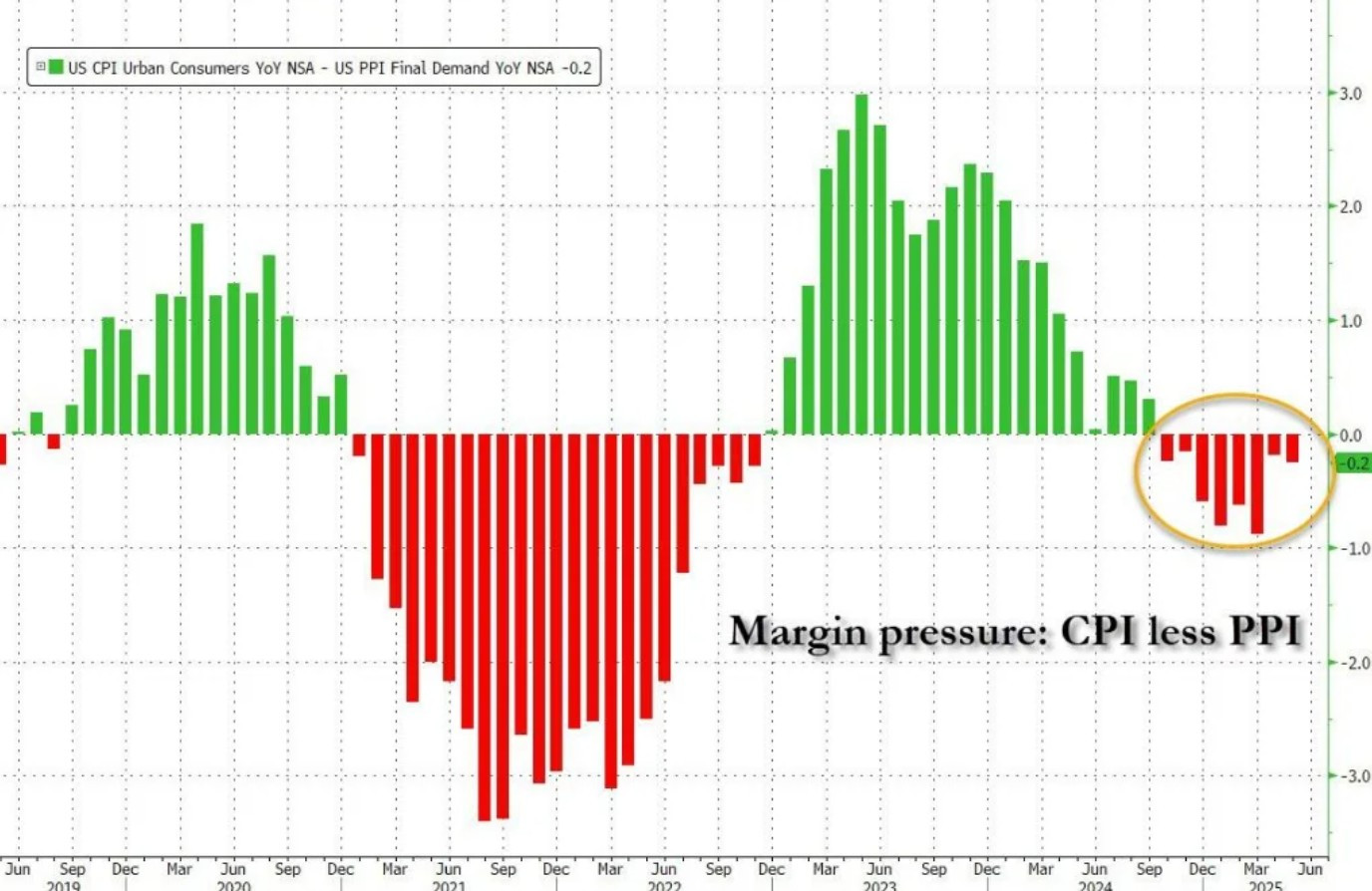
Entering the Fed’s Summer Waiting Game
Beneath the veneer of soft headline data, structural inflation pressures linger. Sticky service costs and the so-called “supercore”—prices excluding housing—continue to edge up, underscoring the Fed’s ongoing challenge.
Flexible goods prices have declined, but slower falls in sticky categories suggest entrenched price dynamics.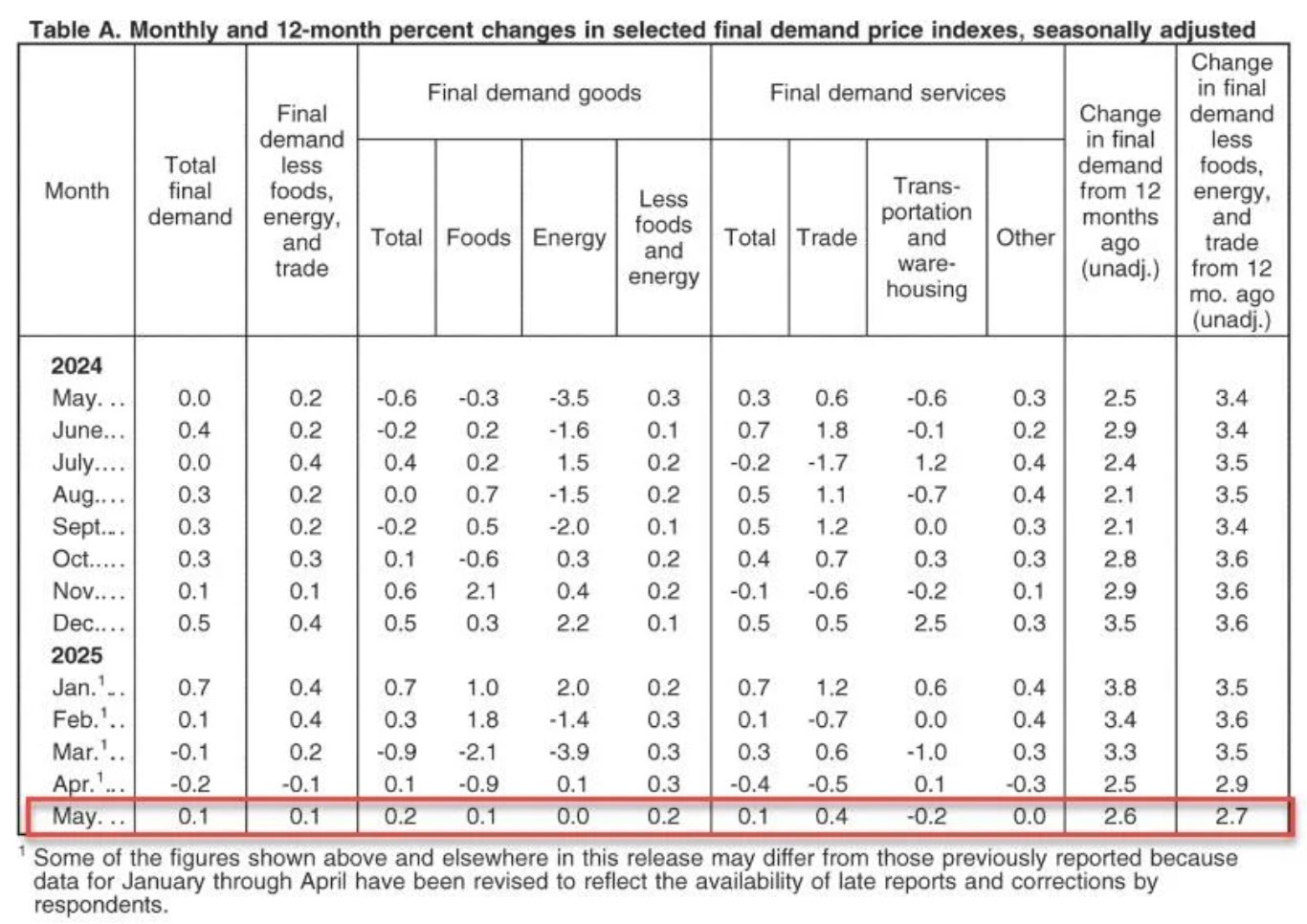
Pressure on lower-income households remains acute. Data tracking wages for the bottom quartile show growth has dipped below pre-pandemic levels, even as overall pay gains hover just above 4%.
This dual squeeze—sluggish wage growth at the bottom and persistent price increases for essentials—fuels concerns about uneven economic strain.
Oil markets added a wild card: a sharp rebound driven by geopolitical tensions lifted energy costs mid-month. While May’s PPI energy line held flat, renewed volatility in oil prices could reintroduce inflationary shocks.
The Fed will watch developments closely as uncertainties around tariff schedules and global supply risks persist.
For now, the market sees two cuts penciled in for September and December. Many Fed watchers expect policymakers to hold off until clear evidence that tariff-related inflation has not made a belated comeback.
In this summer of data-dependency, the central bank may opt for patience—waiting through June, July, and August reports before shifting from a neutral stance.