
Walmart and Amazon Might Launch Their Own Digital Coins and That Could Change Everything

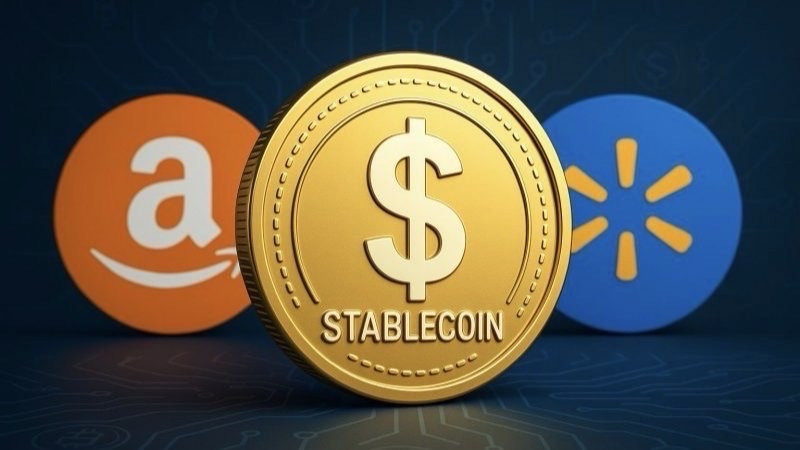
Two of the biggest names in retail—$WMT and $AMZN —are quietly exploring something that could reshape how we pay for things: creating their own stablecoins. It may sound technical, but the idea is simple—and the impact could be massive.
What Even Is a Stablecoin
Think of a stablecoin as digital cash that’s always worth the same as a dollar. For every coin issued, there’s an actual dollar (or something close, like a Treasury bond) backing it somewhere. Unlike Bitcoin or Ethereum, which can swing wildly in price, stablecoins are designed to stay steady.
Right now, stablecoins are mostly used in crypto trading. But if major companies like Walmart and Amazon step in, they could take stablecoins into everyday life—for things like groceries, plane tickets, or your next Amazon order.
Why Retail Giants Are Suddenly Interested
In a word: fees.

Every time you use a credit card, the merchant pays a fee to process the transaction—usually 1% to 3%. Now imagine what that looks like for a company with hundreds of billions of dollars in sales. It’s no small chunk of change.
And then there’s the waiting. Traditional payments can take days to settle, which slows down cash flow. Stablecoins could speed that up to near-instant. That’s a big deal for retailers with thin margins and complex supply chains—especially when they’re paying suppliers overseas.
Stablecoins also offer a way to cut out the middlemen: banks, card networks, payment processors. Companies like Amazon and Walmart could save billions—and have more control over the process.
This Could Be Bad News for Banks and Card Giants
And markets are noticing. As soon as this news hit, Visa and Mastercard shares dropped around 5%. One analyst put it bluntly: instant payments are coming, and that’s a serious threat to traditional players.
Retailers have tried to sidestep card networks before, but nothing really stuck. This time could be different. It’s not just about creating a new payment option—it’s about building a parallel financial system, one that they own.
And banks aren’t standing still either. There’s already talk of a stablecoin consortium formed by big banks to get ahead of this wave. That’s how serious this is.
The One Thing Holding Everyone Back
Right now, stablecoins operate in a bit of a legal gray area in the US. But that might be changing soon.
Congress is working on a bill called the Genius Act, which would set clear rules for how stablecoins can be issued and regulated. The bill recently cleared a key hurdle, and retail trade groups—including the powerful Merchant Payments Coalition—are pushing hard to get it passed.
Walmart has even been lobbying to add more competition to the credit card industry as part of this same legislation. It’s clear they’re not just interested in stablecoins—they want a bigger seat at the financial table.
What This Means in the Bigger Picture
To me, this feels like a classic case of technology shaking up an outdated business model. Here’s how I see it:
1. Retailers want to control the payment experience. If they can issue their own currency, they can offer faster checkouts, lower costs, and better data on customer behavior.
2. Washington is warming up to crypto infrastructure. If the Genius Act becomes law, stablecoins will finally have a clear path into the mainstream economy.
3. The foundations of the payments industry are starting to shift. Banks and card networks have held onto their position for decades. But a new tech-driven model is coming—and it could be faster, cheaper, and more flexible.
A Question Worth Thinking About
What happens if we start paying for groceries in Walmart Coin, or ordering online with Amazon Dollars? Will that make our lives easier—or just give big tech even more control?