
Why Is the Market So Resilient? Goldman’s Hedge Fund Chief Offers a Three-Part Answer

Shearing sheep
June 16, 2025
GoGPT Summarizes Articles
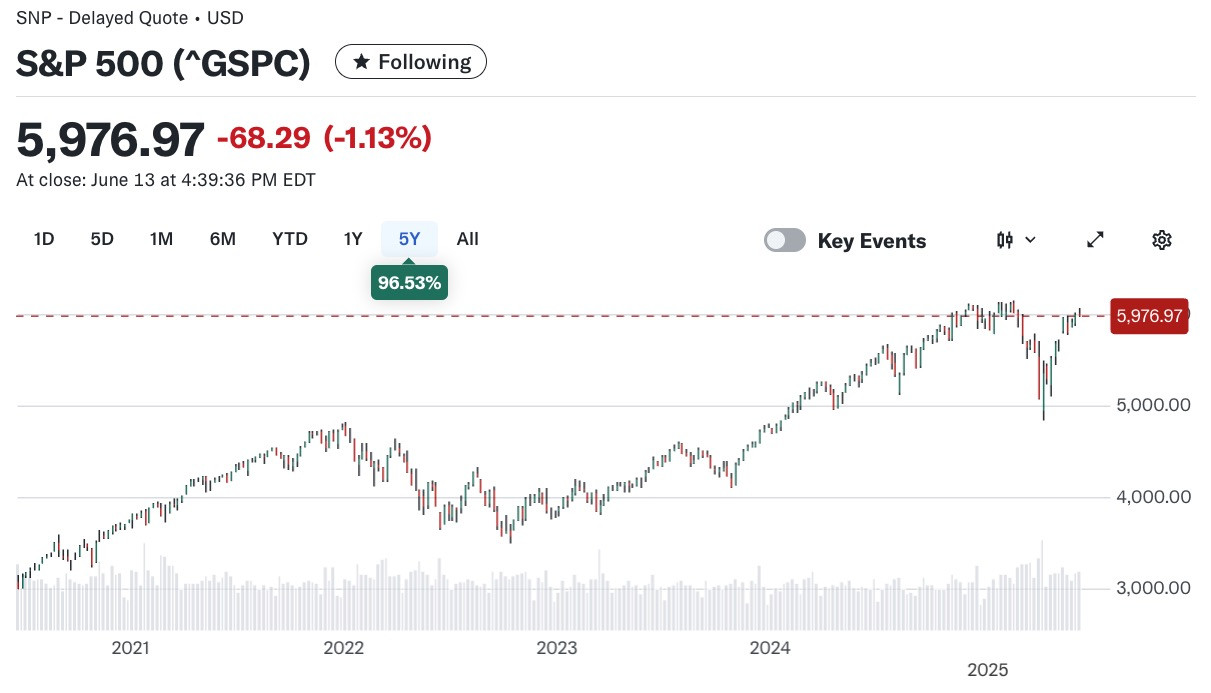
It’s one of those moments where markets seem to defy logic—again. Bonds are flashing red, geopolitical tensions are bubbling, and debt sustainability is quietly becoming the elephant in the room. And yet… stocks are doing just fine. The S&P 500 is hovering near its highs, and risk assets are holding up with surprising strength.
Goldman Sachs' hedge fund chief, Tony Pasquariello, recently shared his take on this apparent disconnect, and his interpretation boils down to three possible drivers: AI optimism, Trump 2.0 policy expectations, and sustained fiscal stimulus from Washington.
1. The AI Boom Isn't Going Anywhere
If you thought the AI frenzy peaked in 2024, think again. Pasquariello notes that the visibility of generative AI themes is already stretching well into 2026. Big players like Broadcom and Oracle are ramping up expectations, with Oracle’s CEO calling the demand “astronomical” and raising capex guidance to over $25 billion for FY2026.
In other words, investors are still pricing in a productivity revolution that’s just beginning to show up in earnings—and that optimism is keeping tech and broader equity valuations afloat.
2. Trump 2.0: Deregulation and Stimulus on the Horizon
With Donald Trump returning to the White House in early 2025, markets have shifted from speculation to reaction. The return of a Trump administration has brought renewed focus on deregulation, pro-growth policies, and the potential for large-scale fiscal initiatives aimed at boosting nominal GDP.
His signature “One‑Big‑Beautiful‑Bill” framework, passed earlier this year, authorizes tax cuts, border enforcement funds, and a $5 trillion debt-limit expansion—fueling further deficit growth. Markets now respond to an economy under newly unleashed fiscal impulse, not merely expectations of it.
Then there’s the simplest explanation: money. The U.S. government continues to run large deficits, projected at around 6.3% of GDP in 2025—with $815 billion in new bond issuance issued just in Q1, up 12% year-over-year, which in turn keeps liquidity flowing through the system. Pasquariello points out that this has provided ample capital for companies—whether for buybacks, reinvestment, or just keeping balance sheets sturdy.
That liquidity is also showing up in how investors are positioning themselves.
The Trade: What the Market Is Actually Doing
Regardless of which of the above narratives is dominant, Pasquariello highlights a clear pattern in asset allocation:
-
Short the back end of the yield curve
-
Short the dollar
-
Go long value storage assets like gold, silver, and Bitcoin
-
Stay long equities
It’s a pretty aggressive positioning setup, especially considering the backdrop: global bond selloffs (Japan, UK, U.S.), ongoing Treasury auction stress, and unresolved Middle East risks.
From Japan to the UK, bond markets are under pressure. Japan, once a bastion of yield stability, has seen significant selling. In the U.S., the yield curve remains distorted, and Treasury auctions are growing more precarious. Bond markets are telling a different story—one of mounting structural risk.
However, Gold has already broken out. Bitcoin followed. Even silver has joined the party—perhaps signaling that investors are quietly preparing for a world where fiat debt dynamics are more unstable than they appear.
As Pasquariello puts it, this is a textbook case of “Make Money First, Make Sense Later.” Markets may not need a perfect macro story to justify their moves — they just need momentum and liquidity.
What About the Economy?
While the U.S. economy isn’t booming, it’s far from collapsing. Pasquariello expects GDP growth of 1.25% in 2025, rising to 1.8% in 2026 — a more optimistic outlook than many had feared. Q1 saw a modest dip, but Q2 is tracking a strong 3.8%, reflecting a bumpy path rather than a full-blown stall.
Consumers are still spending, companies continue to invest, and capital is being recycled. In other words, conditions aren’t ideal — but they’re not bad enough to knock the market off course, at least for now.
Positioning Data
Beneath the surface, the flow data reveals a more nuanced picture. After three weeks of net selling, real money investors have returned as significant buyers. Hedge funds, by contrast, have flipped from a seven-day buying streak to net selling. Corporates remain split — share buybacks persist, but so do new equity issuances.
Meanwhile, the options market is providing a stabilizing force. With dealers long gamma, Pasquariello believes volatility could remain subdued this summer — especially as 10-day realized vol has dropped into single-digit territory.
Final Thoughts
The market right now is walking a fine line. Investors are chasing upside in stocks while hedging against long-term debt risk through gold, crypto, and bond shorts. It’s a strange equilibrium — one where technicals, narratives, and liquidity are doing the heavy lifting.
But as always, things can turn fast. For now, though, the market seems content with Pasquariello’s mantra:
Make Money First. Make Sense Later.
#Market Spotlight: The Stories Driving Today’s Trading