
Meta’s AI Gamble: Is the Spending Spree Paying Off?

$META Platforms’ shares have surged over 40% from April lows, closing in on record territory. Wall Street has cheered CEO Mark Zuckerberg’s aggressive AI investments, validating the company’s high‑stakes strategy.
In pre‑market trading, $META climbed another 3% after announcing plans to introduce ads on WhatsApp—a move expected to unlock significant new revenue streams.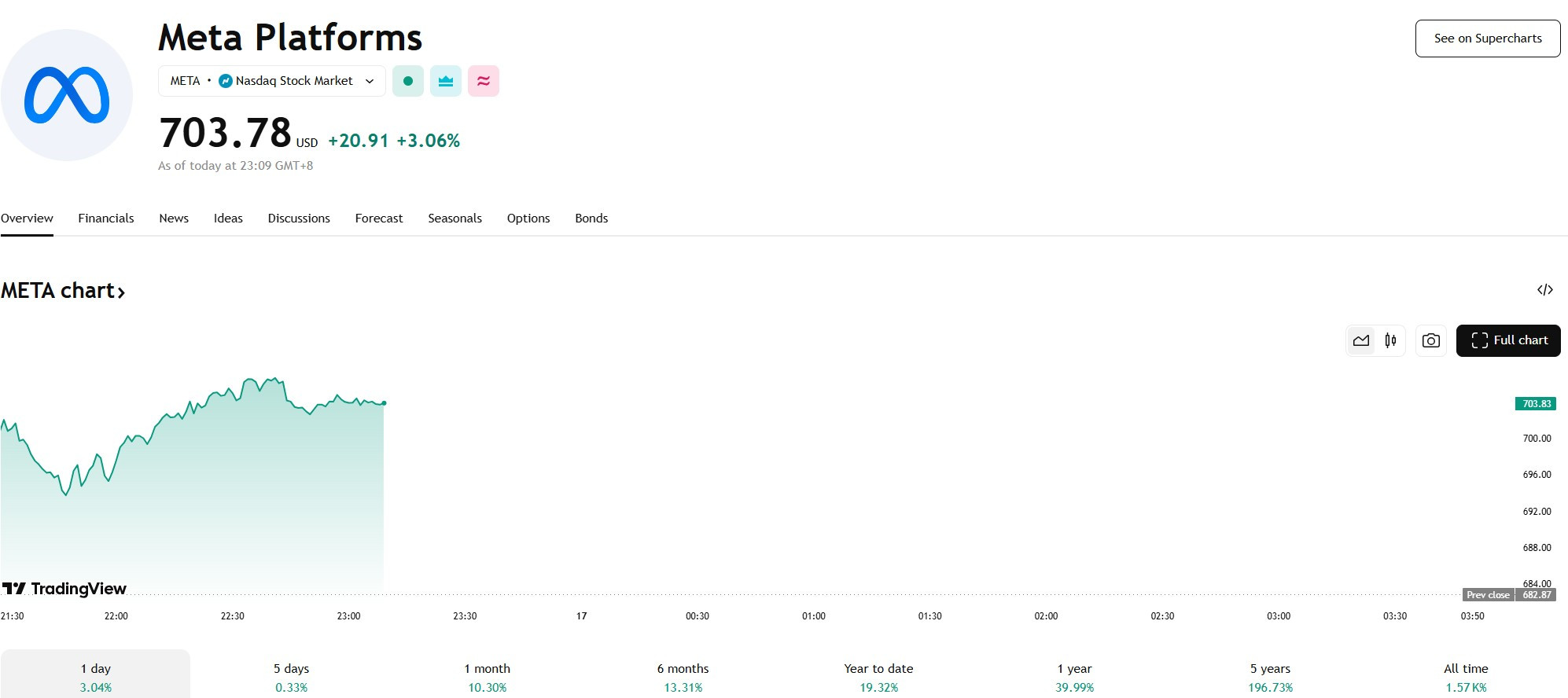
Analysts tracking $META via Bloomberg report that nearly 90% maintain a “buy” rating, with the stock trading just below its average target price.
This meteoric rise underscores a broader shift: investors now view $META ’s heavy AI spending not as a drag on profitability, but as a catalyst for unprecedented returns.
Key Takeaways: Meta’s AI Strategy at a Glance
Record‑High ROI: In Q1, Meta’s AI investments delivered a 31% return on invested capital—more than double the rate from 2023’s metaverse downturn.
CapEx Ramp‑Up: Capital expenditures for 2025 have been raised to $72 billion, reflecting confidence in long‑term AI payoff.
Scale AI Partnership: Meta struck a $14.3 billion deal with Scale AI and hired its 28‑year‑old CEO, Alexandr Wang, to accelerate development.
Talent Acquisition: Offering compensation packages from seven to nine figures, Meta is poaching top AI talent from Google and OpenAI.
Advertising Moat: Leveraging its massive user base, Meta aims to automate ad creation and targeting—boosting ad revenue growth by up to 4% by 2030.
WhatsApp Ads Rollout: Introducing ads in WhatsApp opens a new monetization frontier, further diversifying revenue beyond Facebook and Instagram.
Why Is Meta’s AI Spend Driving Returns?
Meta’s aggressive AI budget—now set at $72 billion for 2025—has yielded an unprecedented 31% return on investment in Q1. This performance starkly contrasts with the company’s earlier metaverse bets, proving that “burning cash” can pay off when directed toward AI.
Investors like Allen Bond of Jensen Investment Management cite Meta’s efficiency in converting raw computing power into scalable services. The surge in ROI convinces portfolio managers that AI can propel top‑line growth without sacrificing margins.
Moreover, AI‑enhanced platforms have led to higher user engagement and advertising click‑through rates, directly translating into revenue gains. These algorithmic improvements drive more effective ad placements, boosting both advertiser ROI and Meta’s bottom line.
Finally, sustained capital deployment into AI infrastructure—servers, data centers, and specialized chips—ensures Meta remains at the forefront as compute‑intensive applications proliferate.
How Is Meta Winning the AI Talent War?
To secure its competitive edge, Meta has embarked on a hiring blitz, targeting luminaries from rival tech giants. Last week’s marquee move: recruiting Scale AI’s 28‑year‑old founder, Alexandr Wang, plus his elite team, under a compensation model rumored to reach nine figures.
This “investment + talent transfer” model sidesteps regulatory scrutiny around outright acquisitions. Instead of buying Scale AI, Meta absorbed its human capital—accelerating AI roadmap execution.
Meta’s offers range from seven‑ to nine‑figure packages, rivaling Google, OpenAI, and Microsoft. Such aggressive poaching underscores the industry’s talent shortage: established players must outbid one another to acquire the minds capable of building next‑generation AI.
By centralizing top talent in its Menlo Park headquarters, Meta fosters cross‑pollination among research, engineering, and product teams—creating an innovation flywheel that smaller firms simply cannot match.
What’s Next for Meta’s Advertising Engine?
With AI algorithms fine‑tuned on user behavior, Meta is primed to overhaul its ad business. The company’s massive data trove powers automated creative generation, enabling real‑time, personalized ads at scale.
New Street Research projects that generative AI tools could lift Meta’s ad revenue growth rate by 1%–2% annually, reaching as much as 4% by 2030. This incremental gain equates to billions in additional sales.
By embedding AI directly into ad placement and creative workflows, Meta reduces campaign setup time and improves performance metrics—making its platforms more attractive to marketers.
As rivals like Alphabet grapple with AI cannibalizing their core search revenues, Meta moves on offense, integrating chatbots and recommendation engines to deepen user engagement and ad opportunities.
The forthcoming rollout of ads on WhatsApp will further expand this reach, tapping into a billion‑plus active user base and diversifying monetization away from News Feed and Stories.
What Will WhatsApp Ads Mean for Growth?
WhatsApp’s introduction of ads marks a watershed moment for Meta’s revenue diversification. With over 2 billion users globally, even modest ad penetration could yield substantial incremental income.
Meta plans to test ad formats such as Status ads—immersive, full‑screen experiences integrated seamlessly into the chat app. Early trials suggest high engagement rates, with click‑through metrics rivaling Instagram.
Monetizing WhatsApp also aligns with Meta’s broader AI ambitions: chatbots can power interactive ad experiences, letting users ask product questions or schedule appointments directly within the app.
This convergence of messaging and automation not only drives higher ad yields but also collects richer user data, feeding back into AI models to refine targeting precision.
In sum, WhatsApp ads are poised to become a cornerstone of Meta’s next‑generation ad ecosystem, reinforcing both growth and margin expansion.
Meta’s bold AI spending, talent recruitment, and platform monetization strategies have reversed skepticism into enthusiasm. With record ROI, aggressive hiring, and new ad channels—including WhatsApp—this once‑beleaguered tech giant is sprinting toward new heights. Investors betting on Meta’s AI future appear vindicated: the spending spree may well be paying off.