
Heavy News from the Middle East! Three Ships Catch Fire in Waters Near Strait of Hormuz

Another Bombshell from the Middle East!
Reports say that amid escalating tensions in the Middle East, U.S. Defense Secretary Hegseth is en route to the White House Situation Room for a meeting with President Trump and his national security team. Meanwhile, three ships have caught fire in the Gulf of Oman near the Strait of Hormuz.
Triggered by the news, international oil prices surged again—Brent crude oil once spiked nearly 2%.
Additionally, G7 leaders attending a summit in Canada issued a joint statement, stressing that "Iran must never be allowed to possess nuclear weapons." G7 leaders including Trump called for de-escalation of the Iran situation, remaining vigilant about impacts on conflicts and global energy markets, and standing ready to coordinate responses.
Why Is the Strait of Hormuz Vital to Global Energy Markets?
The Strait of Hormuz is the only waterway connecting the Persian Gulf and the Indian Ocean.
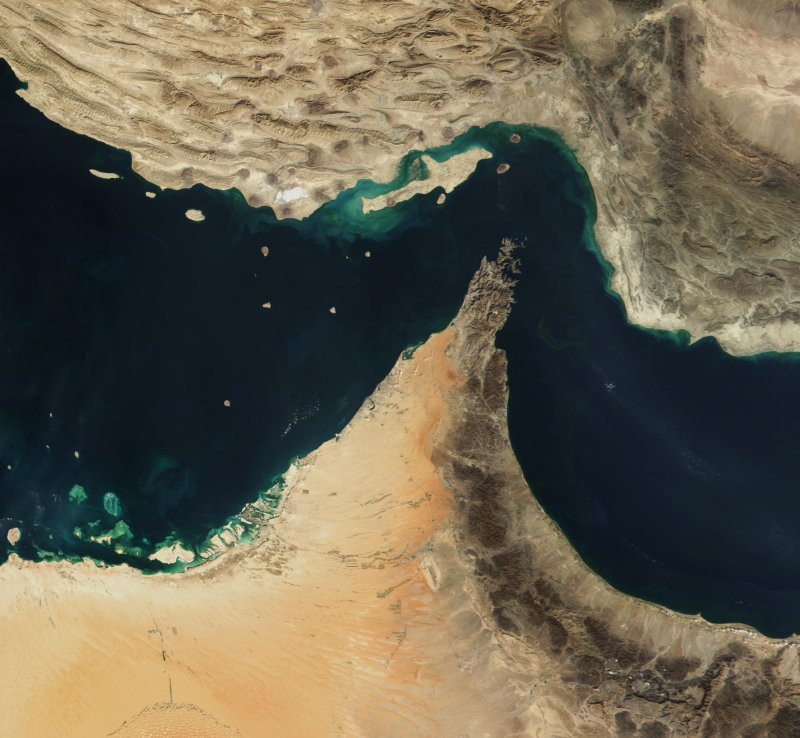
Though only 29 nautical miles wide at its narrowest point, it carries nearly one-third of the world's seaborne crude oil and one-fifth of global liquefied natural gas (LNG) shipments. The U.S. Energy Information Administration (EIA) calls it "the world's most important oil chokepoint."
According to the International Energy Agency (IEA), about 20 million barrels of crude oil and refined products passed through the Strait daily in 2023, accounting for nearly 30% of global oil trade.
About 70% of this volume flowed to Asian markets, with major buyers including India and Japan. Although alternative pipeline routes exist—such as Saudi Arabia's East-West Pipeline (to the Red Sea) and the UAE's Abu Dhabi Crude Oil Pipeline (to Fujairah)—the IEA estimates land-based diversion capacity is only 4.2 million barrels per day, about one-fourth of the Strait's normal throughput.
The LNG market relies even more heavily on the Strait: all exports from Qatar (the world's second-largest LNG exporter) and the UAE must pass through it. The IEA states that 90 billion cubic meters of LNG were transported via the Strait in the first 10 months of 2023, representing 20% of global LNG trade.
With almost no viable alternative routes for Qatari and UAE LNG exports, any shipping disruption would severely tighten global supply—about 80% of LNG exports go to Asia, and 20% to Europe, meaning such disruptions would intensify regional competition in tight markets.
How High Could Oil Prices Surge If the Strait Is Blockaded?
While a full blockade by Iran remains a low-probability event, analysts agree that the mere threat is enough to roil energy markets.
Goldman Sachs warns that in an extreme-risk scenario of long-term Strait blockade, international oil prices could surge above $100 per barrel. The bank estimates Iran currently produces about 3.6 million barrels of crude oil and 800,000 barrels of condensate daily, with average seaborne exports of 2.1 million barrels per day this year.
Warren Patterson, head of commodities strategy at ING, says the market has begun pricing in higher geopolitical risk premiums amid the latest developments.
Patterson notes that even disruptions to Iranian oil exports alone could overturn the market's previous expectation of crude oversupply, pushing Brent prices to $80 per barrel.
"Nearly one-third of the world's seaborne oil passes through this chokepoint," Patterson said. "Major interruptions to these shipments could send oil prices surging to $120 per barrel, especially since most OPEC spare capacity is located in the Persian Gulf and would be difficult to deploy in this scenario." He added, "Escalating tensions would also impact European natural gas markets."
How Will the Situation Unfold?
From the perspective of great-power games, the U.S. strategic drawdown in the Middle East has heightened Israel's security concerns.
The recent airstrikes can be seen as Israel's "stress test" of U.S. security commitments. If Iran blocks the Strait of Hormuz or attacks U.S. interests in the Middle East, it could trigger larger-scale military conflicts.
A Strait blockade would severely disrupt Middle Eastern crude oil supplies, causing international oil prices to skyrocket and igniting global inflation—something Western governments like Trump's cannot tolerate. Against this backdrop, the threat of blockade may be more effective than actual blockade, potentially even accelerating the end of the war.