
Zero Revenue, 12 Employees — But a $38B Valuation? What’s Really Behind Regencell Bioscience’s Wild Rally

Shearing sheep
June 18, 2025
GoGPT Summarizes Articles
While brain–computer interface (BCI) stocks are heating up in global markets, one unexpected player has stolen the spotlight: Regencell Bioscience Holdings Limited ($RGC), a little-known Hong Kong-based biotech firm.
On June 16, RGC shares skyrocketed 283% in a single day. The next day, they surged another 30%, closing at $78 per share — a historic high. That gives the company a market capitalization of over $38 billion. To put that in perspective: the stock is up 599x from just $0.13 in early 2025.
And yet — Regencell has just 12 employees, zero revenue from 2021 to 2024, and in its latest financial report, it even admitted: "There is uncertainty regarding our ability to continue as a going concern."

So, what’s fueling this frenzy?
The Hype Around Brain–Computer Interfaces
There’s no denying that 2025 has been a breakout year for brain–machine interface technology. Major developments include:
-
Elon Musk’s Neuralink raised $650 million in a fresh round of funding, pushing its valuation to $9B.
-
China completed its first invasive BCI clinical trial.
-
Hubei province in China introduced the world’s first medical service pricing for brain–machine interface procedures.
According to McKinsey, the potential global BCI market in healthcare alone could reach $40B–$145B between 2030 and 2040. Investor optimism is off the charts — and many are looking to bet early.
A Dubious “Breakthrough”?
Regencell’s big moment appeared to arrive on May 9, when it claimed that its “next-generation neurostimulation chip” had passed FDA clinical trial clearance and that it would collaborate with the Mayo Clinic to research treatments for Parkinson’s disease — a condition affecting roughly 10 million people worldwide.
Sounds impressive. But there’s a problem: no public record confirms this.
The company’s investor relations page, SEC filings, and official press releases contain no such announcement. Independent media outlets that attempted to verify the news also came up empty-handed. The Mayo Clinic, a prestigious institution, hasn’t confirmed any collaboration either.
In other words — this “breakthrough” may be more rumor than reality.
Stock Split Mania
Also worth noting: on June 2, Regencell announced a 38-for-1 forward stock split, paid out as a stock dividend. The split took effect on June 16 — the same day the stock began its parabolic rise.
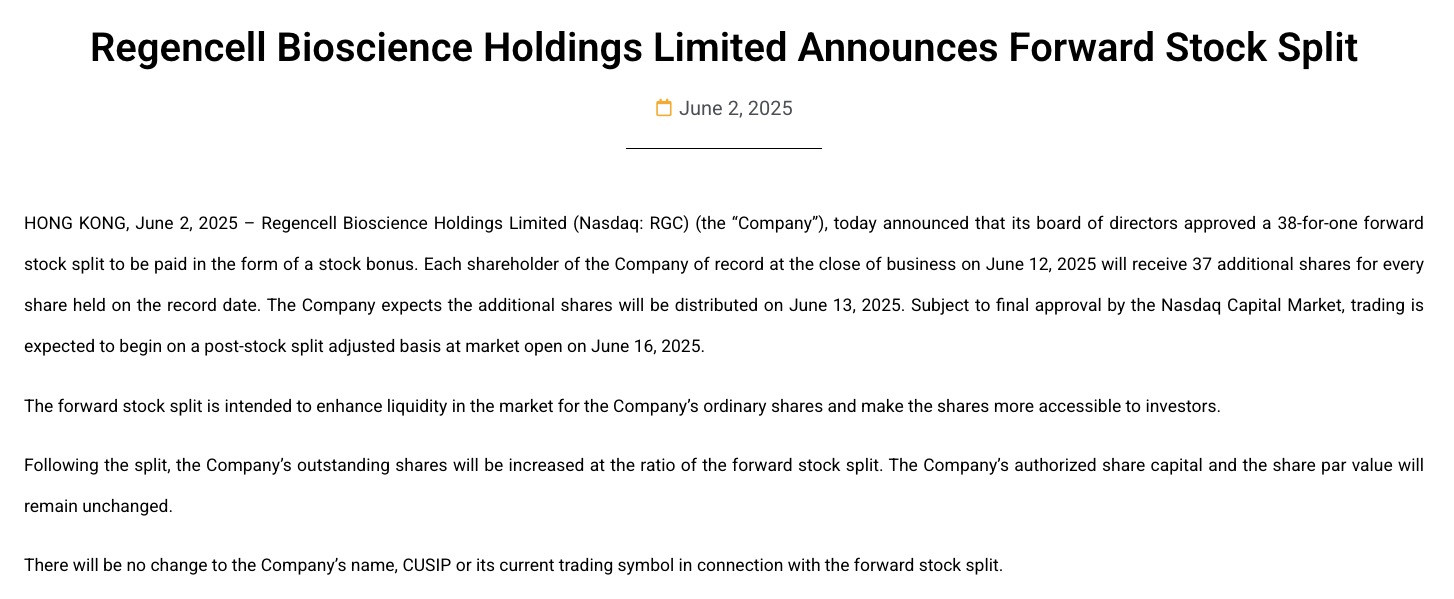
While stock splits don’t change a company’s fundamentals, they can make shares appear more affordable to retail traders. In thinly traded stocks, that can turbocharge momentum. That seems to be exactly what happened here.
A Family Business at Its Core
Regencell isn’t your typical biotech firm. It was founded to commercialize traditional Chinese medicine (TCM) for treating neurological conditions such as ADHD and autism spectrum disorder (ASD).
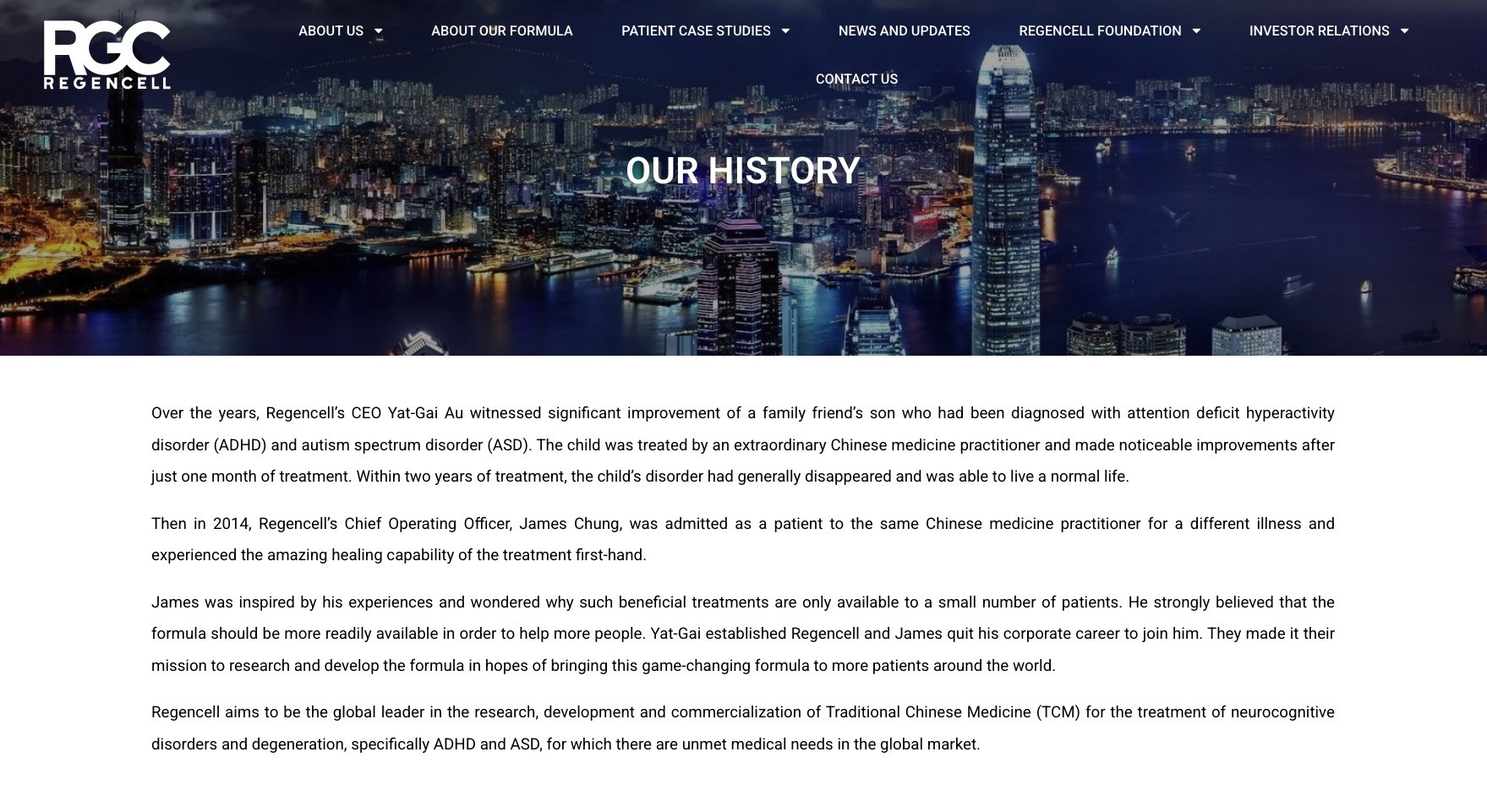
The company is led by Yat-Gai Au, its chairman and CEO, who owns over 86% of the company. Based on current prices, his stake is worth over $32 billion — at least on paper.
The company’s intellectual property is tied to his father, Sik Kee Au, a former electrical engineer turned TCM practitioner. He developed the “Sik-Kee Au TCM Brain Theory™,” which Regencell claims shows promise in improving ADHD and ASD symptoms.
But the filings also admit that this theory is not recognized in academic literature, and its effectiveness has not been validated by clinical trials.
No Revenue, No Patents, Shrinking R&D
Despite its $38B market cap, Regencell is still a pre-revenue company with no products, no patents, no regulatory approvals, and no published clinical results.
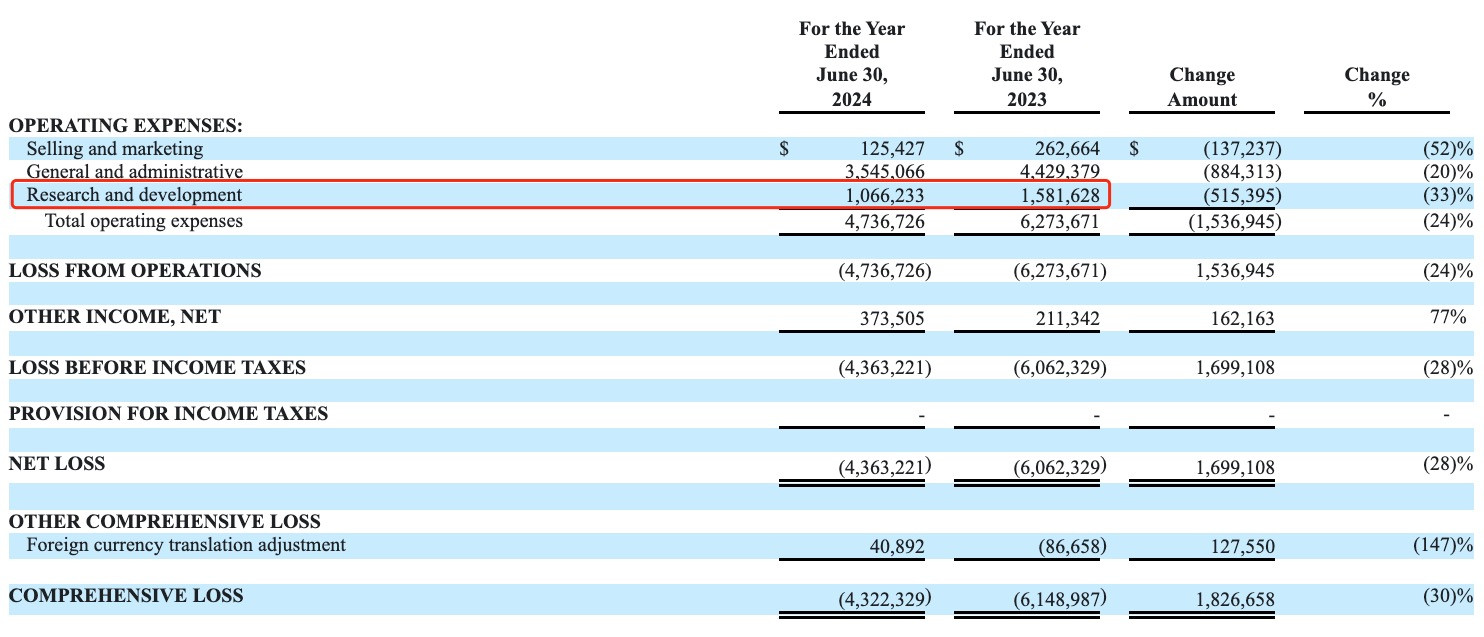
Since going public in 2021, Regencell has posted zero dollars in revenue and accumulated over $4.3 million in net losses.
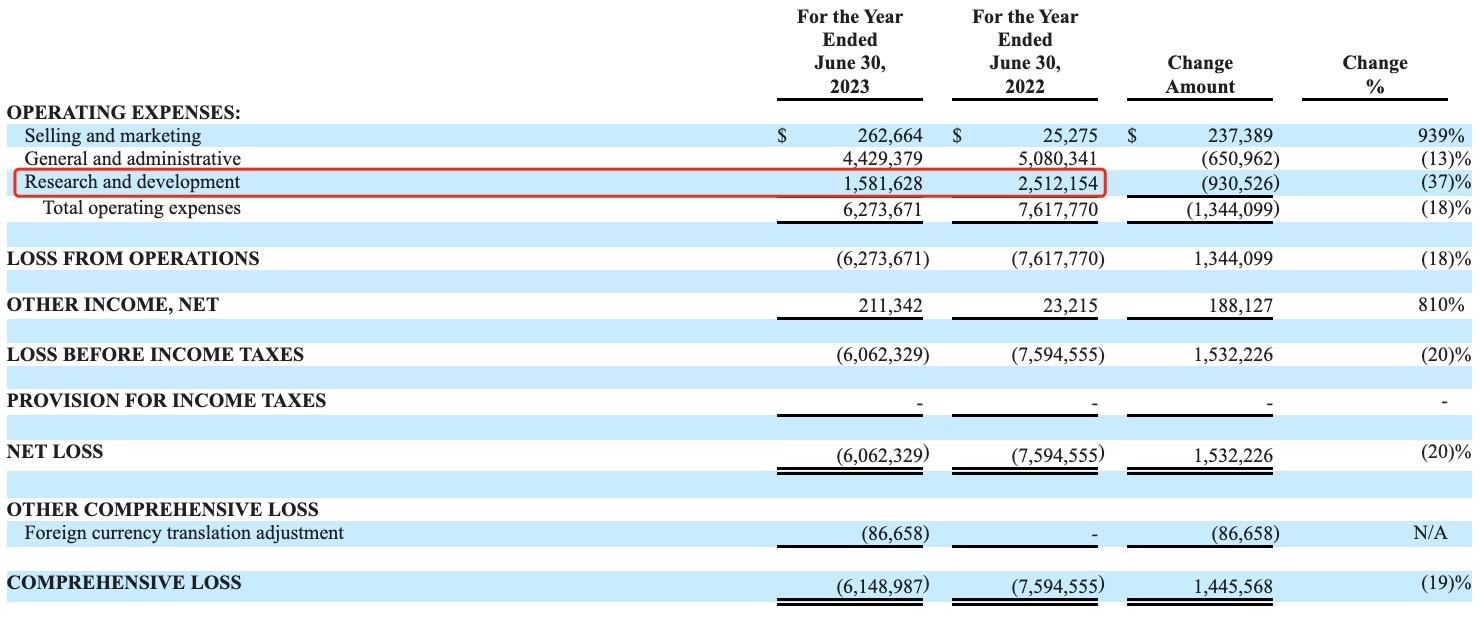
What’s more concerning is that its R&D spending is declining — from $2.5 million in 2022, to $1.58 million in 2023, to just $1.06 million in the most recent period. For a company supposedly pushing the boundaries of BCI and TCM neuroscience, this isn’t exactly a sign of aggressive innovation.
Valuation vs. Reality
At its current valuation, Regencell is worth more than biotech heavyweights like Seagen, Biogen, and even Moderna — all of which have:
-
FDA-approved products
-
Active drug pipelines
-
Scientific publications
-
Real-world revenue
By contrast, Regencell:
-
Has no commercial products
-
No confirmed FDA trials
-
No patents
-
No verified collaborations
-
No clear business model for monetization
This kind of disconnect between valuation and fundamentals is not just rare — it’s risky.
My Take
Regencell’s meteoric rise is a textbook example of narrative-driven speculation — where hype, headlines, and market momentum fuel a story far removed from business fundamentals.
The company’s sudden association with buzzwords like “brain–computer interfaces,” “FDA approval,” and “Mayo Clinic” has clearly attracted traders and speculators. But without verified disclosures, these claims raise more questions than confidence.
And let’s not forget: no invasive BCI device has yet received full FDA approval for commercial use. The path from early-stage research to clinical success is long, expensive, and full of failure — with Phase 3 failure rates in biotech hovering around 80%.
So while RGC might look like a once-in-a-lifetime moonshot, the reality is that it’s a tiny, pre-revenue TCM firm wrapped in a BCI narrative — with little evidence to support its current valuation.
#Market Spotlight: The Stories Driving Today’s Trading#$Regencell Bioscience Holdings Limited Ordinary Shares(RGC)