
The Fed Holds Steady as Tariff Worries Cloud the Path Forward

On Wednesday, June 18, the Federal Reserve once again held interest rates steady, keeping the benchmark range at 4.25% to 4.5%. This marks the fourth straight meeting with no rate changes, even as market pressure to cut rates has been growing louder—especially from President Trump, who just hours earlier blasted Fed Chair Jerome Powell as “stupid” and called for a drastic 2.5-point rate cut.
Instead, the Fed stuck to its previous forecast: two rate cuts by the end of 2025. While this calmed some fears of a more hawkish pivot, the overall message was mixed. The Fed raised its inflation outlook, lowered growth expectations, and sounded increasingly concerned about the inflationary impact of tariffs. Markets struggled to make sense of it all.
Stocks briefly turned negative after Powell’s press conference. Treasury yields, which had dropped earlier in the day, trimmed their declines. Gold swung lower. The dollar climbed.
What the Fed Actually Said and Why It Matters
In its statement, the Fed acknowledged that uncertainty around the economic outlook has eased slightly—but remains high. It dropped previous language warning of rising risks around inflation and unemployment. The central bank also updated its economic projections:
• GDP growth forecast was revised down to 1.4% for 2025
• Unemployment is expected to tick up slightly over the next few years
• Inflation (PCE) is now projected to hit 3.0% this year, higher than April’s official reading of 2.1%
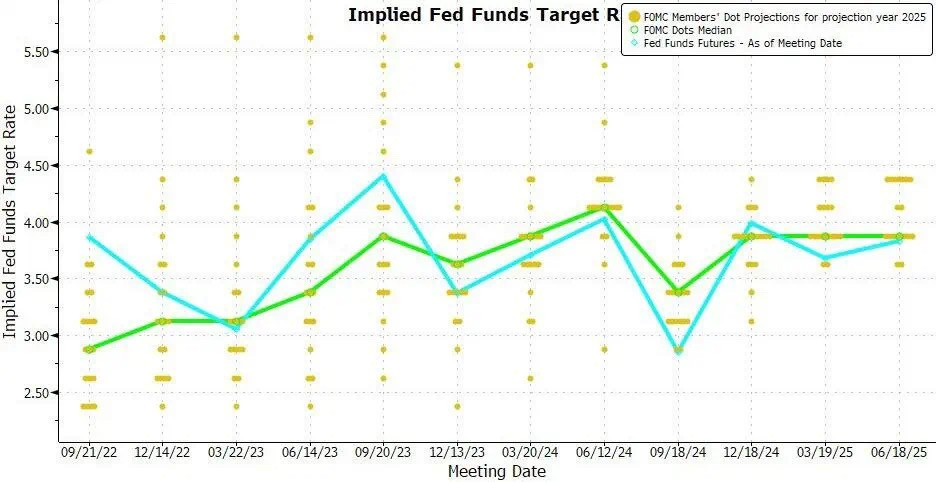
To understand this better: the PCE (Personal Consumption Expenditures) index is the Fed’s preferred inflation gauge because it captures a broader set of prices than the more commonly known CPI. A 3% projection suggests the Fed sees inflation sticking around longer than previously thought, even if they expect it to ease in the coming years.
Despite the higher inflation forecast, the Fed still predicts two rate cuts this year. But that’s assuming inflation will cool down again in 2026 and 2027—something far from guaranteed.
The Dot Plot Shows Growing Division Within the Fed
If we look at the Fed’s updated “dot plot” (a chart showing each Fed official’s interest rate forecast), there’s clearly more internal disagreement now. In March, 11 officials saw at least two cuts this year. That number is down to 10. Seven officials now expect no cuts at all—three more than last time.
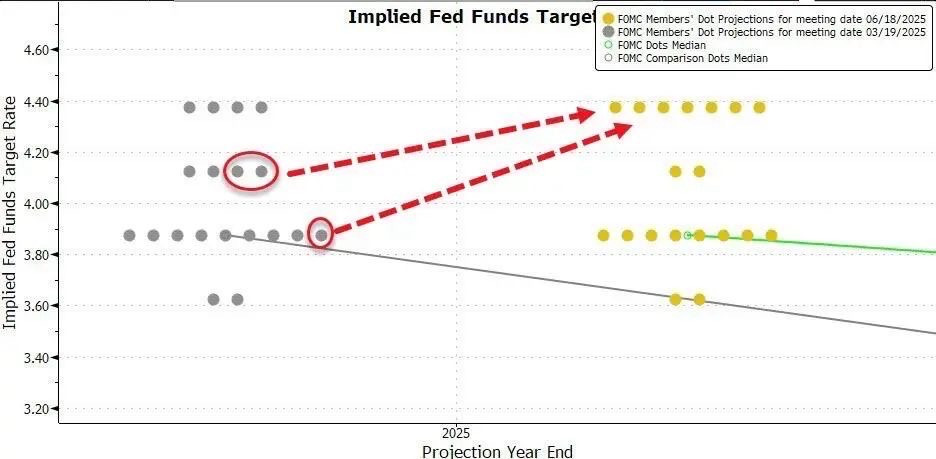
This reflects a growing split: some at the Fed are worried about cutting too early, especially if inflation proves sticky. Others are more focused on signs of slowing growth and weakening consumer confidence.
Steve Englander, head of G10 FX research at Standard Chartered, said the Fed is trying to “keep its options open” without committing to any near-term move. Nick Timiraos from The Wall Street Journal, often called the “Fed whisperer,” wrote that officials are watching closely to see if businesses absorb new tariff costs or pass them on to consumers. That outcome could make or break the case for rate cuts later this year.
Powell Hints Tariffs Could Push Inflation Even Higher
In his press conference, Jerome Powell painted a more cautious picture. He said inflation has eased somewhat, but recent data suggests pricing pressure may return in the months ahead—largely because of tariffs.
Here’s why that matters: when tariffs go up, import costs rise. Businesses then have to decide—either take the hit on their profit margins or raise prices for customers. Either way, someone ends up paying.
Powell admitted the Fed doesn’t yet know how big the impact will be. He emphasized that the full effects of the new tariffs may not show up until later this summer. That’s why the Fed is hitting pause again: “Right now, the best thing we can do is wait and see.”
He also stressed that the labor market is still strong and not currently signaling the need for rate cuts. “The job market is not asking for rate cuts,” he said.
A Growing Risk of Stagflation
One underlying concern that isn’t being talked about enough is stagflation—a combination of high inflation and sluggish growth. That’s a worst-case scenario for any central bank because it limits policy options: cut rates to help growth, and you risk fueling inflation; raise rates to fight inflation, and you hurt growth even more.
The Fed’s latest projections—slower GDP, higher inflation—suggest this risk is increasing, even if officials aren’t calling it that outright. The tension between the Fed’s dual mandate (price stability and full employment) is becoming more obvious.
Trump’s Pressure Campaign Intensifies
All of this comes as President Trump ramps up pressure on the Fed to cut rates aggressively. On the same day as the Fed meeting, he mocked Powell on social media and even joked about appointing himself to the Fed. This kind of public criticism isn’t new, but it adds another layer of political tension to an already complex policy landscape.
What Comes Next
The Fed’s message this week is clear: they’re not ruling out rate cuts later this year, but they need to see more data first—especially on how tariffs are playing out in the real economy.
That means the next few months could be crucial. If inflation spikes due to tariffs and growth slows at the same time, the Fed will face a tough choice. Either way, markets should be prepared for more volatility.
For now, Powell’s approach is one of cautious patience. But patience can run out—especially if the economy starts sending louder warning signals.