
Musk’s Starship Explodes Again

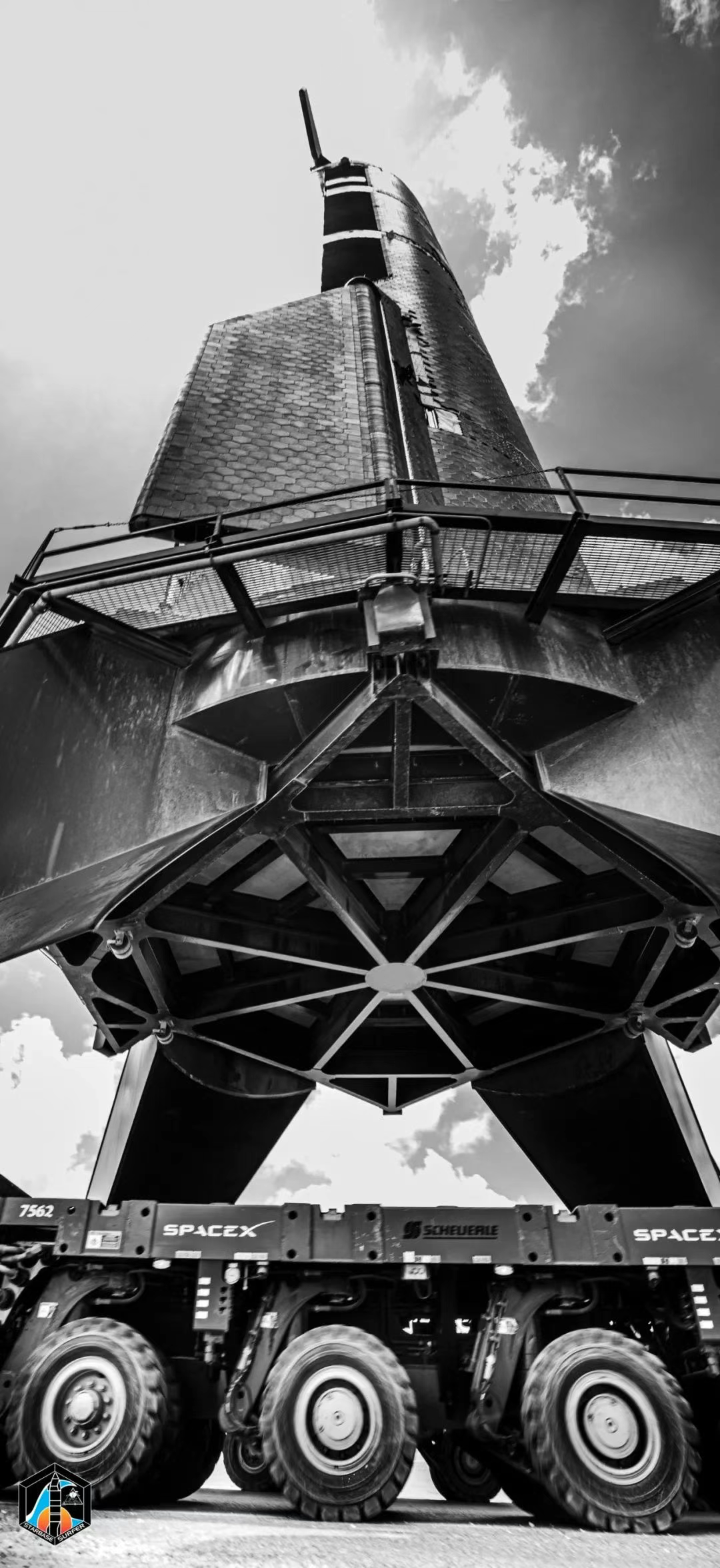
On the evening of June 18 local time, SpaceX’s Starship, developed by Elon Musk’s company, malfunctioned and exploded during a static fire test, prompting the deployment of fire services. SpaceX is currently investigating the cause of the explosion.
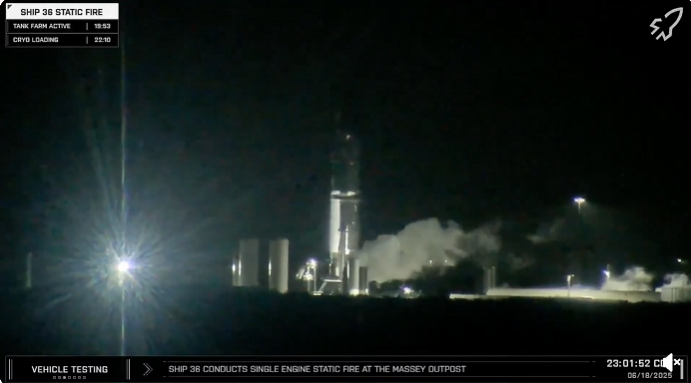
Fox News reported that authorities are investigating the incident, with no casualties reported so far. According to AFP, the Cameron County government in Texas stated: “During a routine static fire test at the Starbase in Texas, SpaceX’s Starship 36 experienced a catastrophic failure and exploded.”
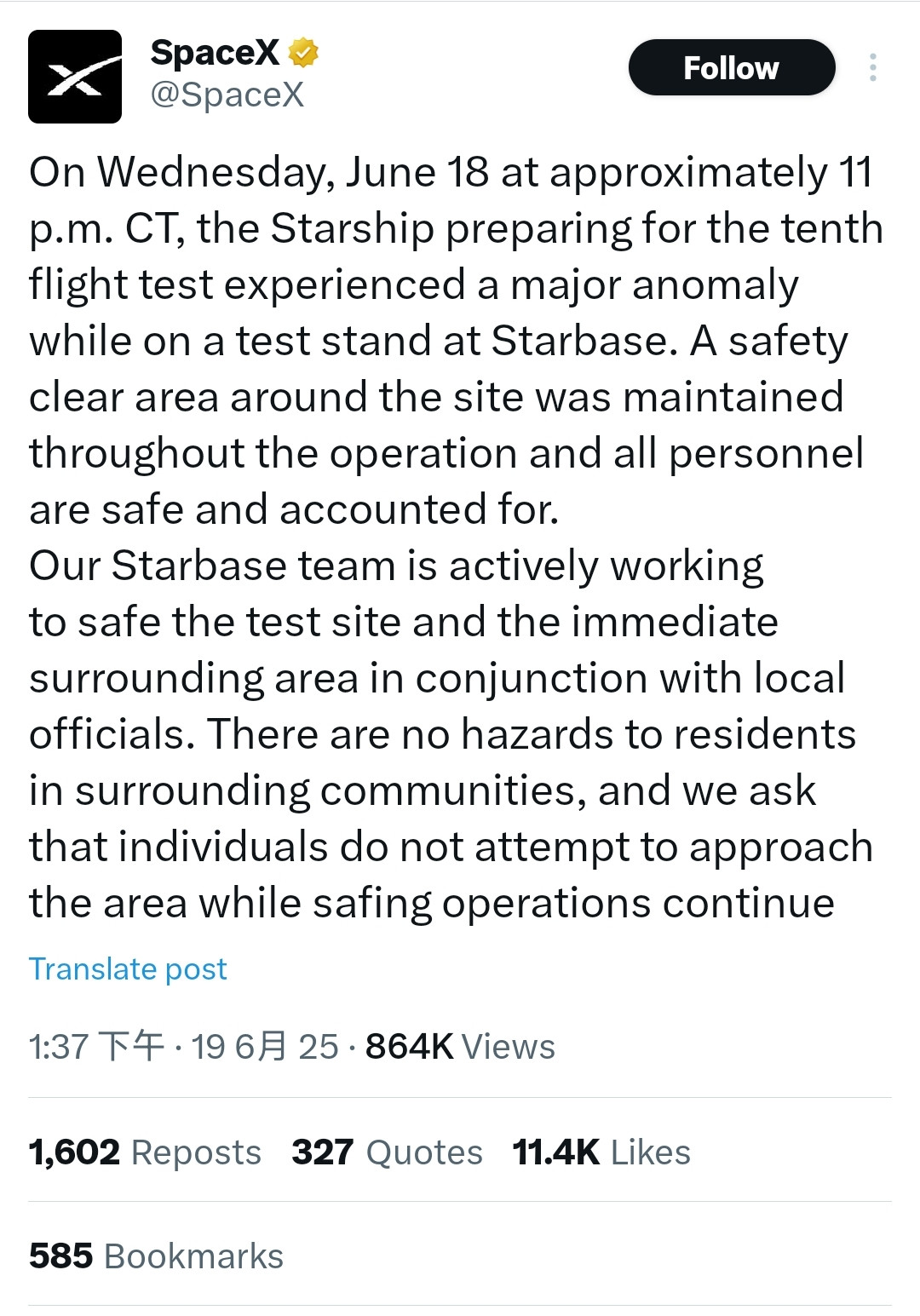
SpaceX later confirmed on the social media platform X that Starship, preparing for its tenth flight test, encountered a “significant anomaly” on the Starbase test stand.
Previous Starship Ninth Test Flight Failed
On May 27, SpaceX’s next-generation heavy-lift rocket Starship launched from Texas for its ninth test flight. The rocket’s first-stage booster exploded, and while the second-stage spacecraft reached space, it subsequently lost control.
SpaceX’s live broadcast showed that minutes after launch, the reusable “Super Heavy” booster successfully separated from the spacecraft. However, the booster exploded and failed to splash down in the Gulf of Mexico as planned. The spacecraft entered space but failed to deploy a simulated satellite as intended and suffered a fuel leak.
SpaceX confirmed it lost control of the spacecraft, with its debris expected to fall into the Indian Ocean.
In the seventh and eighth Starship test flights conducted in January and March this year, the first-stage booster successfully achieved “chopstick” recovery by the launch tower, but the second-stage spacecraft disintegrated rapidly during ascent.
Some Thoughts
Previously, when the “bromance” between Trump and Musk soured, Trump threatened to cancel NASA contracts with Musk’s company. Musk responded by saying he could retire the Dragon spacecraft at any time.
From that moment, I sensed a significant issue: the U.S. is relying on a commercial space program propped up by public funds, with a billionaire controlling critical satellite internet infrastructure.
If you look closely, you’ll see SpaceX is nearing a monopoly in the aerospace industry.
These repeated failures have significantly delayed Starship’s orbital round-trips, unmanned Mars missions, and NASA’s lunar landing plans, stalling critical technical validations.
Putting all biases aside, I’m genuinely excited about SpaceX’s progress because I want to see humanity set foot on Mars.