
Tesla vs. Waymo: Who Will Dominate the Robotaxi Race?

Shearing sheep
June 19, 2025
GoGPT Summarizes Articles
The battle for autonomous ride-hailing supremacy is heating up.
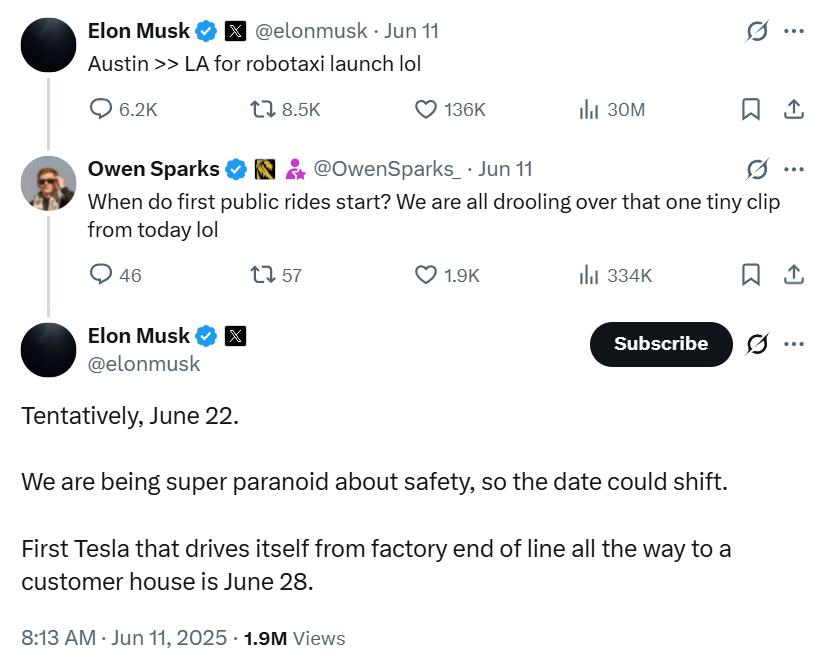
Local time on June 10, Elon Musk announced on X that Tesla ($TSLA) is set to launch its long-awaited Robotaxi service on June 22 in Austin, marking its first real-world test against Waymo ($GOOGL), the current leader in driverless taxis. While Tesla is just getting started, Waymo has already completed over 10 million driverless trips across major U.S. cities.
Can Tesla catch up—or will Waymo’s early lead prove insurmountable?
Waymo’s Head Start
Waymo has quietly built a commanding lead in autonomous mobility. Since launching in 2020, it has completed 10+ million driverless trips in cities like Los Angeles, San Francisco, Phoenix, and Austin. The company currently provides around 250,000 paid Robotaxi rides per week, putting it in direct competition with traditional ride-hailing players like Lyft.
Its vehicles rely on a sensor-rich setup—lidar, radar, and HD maps—for precise navigation. This contributes to both high safety standards and higher costs per vehicle, a potential limiting factor for scalability.
Tesla’s Ambitious Entry
Tesla is taking a fundamentally different approach. The company plans to debut its Robotaxi fleet in Austin with just 10 vehicles, all powered by its Full Self-Driving (FSD) software.
Tesla’s system relies entirely on AI and vision-based cameras—no lidar, no radar. This makes its vehicles significantly cheaper to produce, enabling faster scaling. According to Bloomberg Intelligence, Tesla’s fleet could grow to 35,000 Robotaxis by 2026. Musk also envisions a future where owners can rent out their vehicles as autonomous taxis—a sort of decentralized Uber meets Airbnb model.
Technology and Cost
One of the biggest differentiators is cost efficiency.
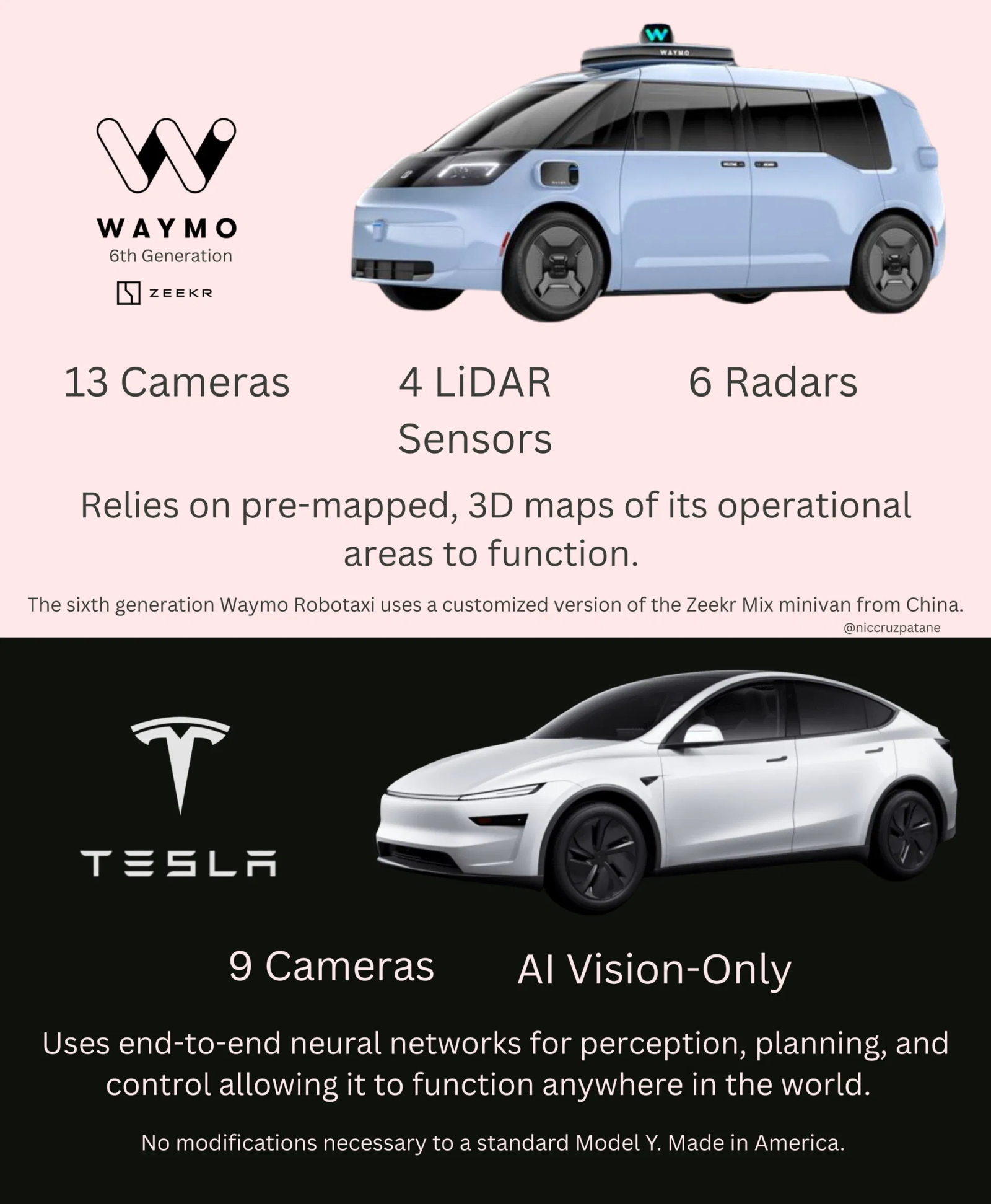
Tesla’s camera-only FSD system is vastly cheaper than Waymo’s lidar-heavy platform. Bloomberg estimates Tesla’s autonomous tech costs just 1/7th of Waymo’s. ARK Invest further estimates Tesla’s cost-per-mile could be 30–40% lower, a significant edge in a price-sensitive mobility market.
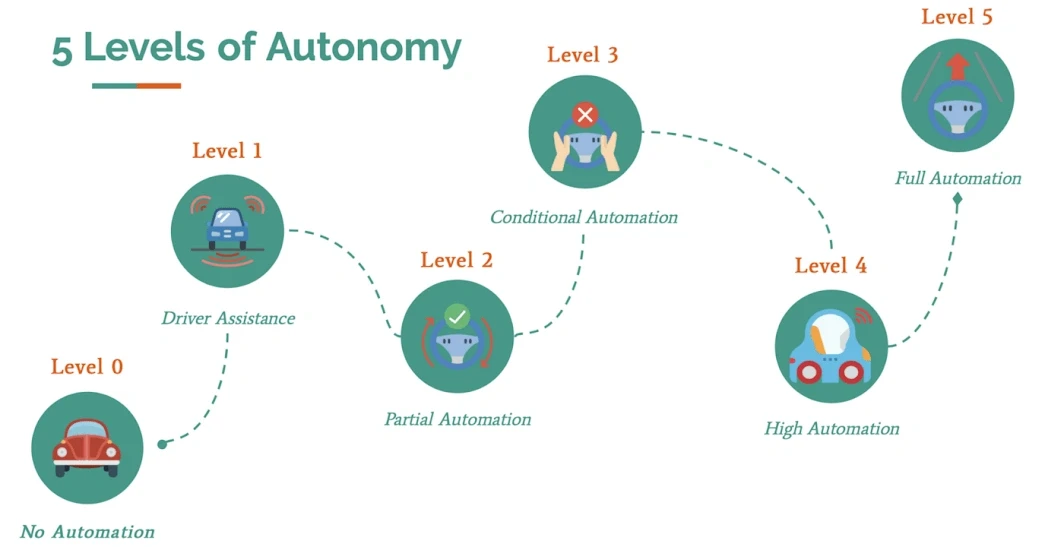
However, that comes with trade-offs in safety and capability. Waymo operates at Level 4 autonomy, meaning no human intervention is needed in predefined areas. Tesla’s FSD is still at Level 2, requiring driver supervision.
Waymo’s multi-sensor stack provides redundancy in bad weather and complex urban environments, while critics argue Tesla’s vision-only system can struggle with fog, rain, or glare. Still, Tesla has the upper hand in real-world driving data, collected from hundreds of thousands of FSD-equipped cars on the road today—something Waymo can’t easily replicate.
Business Models: Centralized vs Decentralized
Tesla is aiming for a decentralized robotaxi network, where private owners participate in the service—a move that could drastically reduce capital and operational costs.
While Waymo currently runs a centralized fleet, it's starting to explore new models—such as partnerships with Uber and potential personal ownership of its Zeekr-based AVs. These shifts suggest Waymo is adapting for flexibility, while staying true to its safety-first philosophy.
Regulatory Environment & Safety Risks
Tesla is launching in Texas, which has relatively lax AV regulations. That could fast-track deployment, but also adds risk. Safety concerns have already surfaced—especially after a recent live demo appeared to show a Tesla failing to stop for child mannequins behind a school bus.
Meanwhile, Waymo faces its own challenges. Despite strong safety metrics, it has faced public pushback. In early June, five Waymo robotaxis were vandalized and set on fire in downtown Los Angeles. In response, Waymo was forced to suspend service in downtown L.A.
Outlook: Who Has the Upper Hand?
Tesla has several competitive advantages:
-
Vast manufacturing scale
-
Low-cost autonomous hardware
-
Rich data from its existing fleet
But it still faces major hurdles:
-
Regulatory approval for full autonomy
-
Public trust in safety
-
Real-world validation of its vision-only system
Waymo, on the other hand, is slower to scale—but has built:
-
A safety-first reputation
-
Strong city-level partnerships
-
A working Level 4 service model
Conclusion
The race between Tesla and Waymo is just beginning—but it’s not a sprint.
Tesla’s vision-only model could be transformative—if it proves safe. But Waymo’s slower, safety-first strategy continues to earn trust and build momentum.
The next few months will be pivotal. If Tesla’s Austin rollout performs smoothly, it could signal a disruptive new phase in the industry. If not, Waymo may continue to widen its lead.
For investors, the stakes are high. ARK Invest believes Robotaxis could make up 90% of Tesla’s valuation by 2029. But Waymo isn’t standing still—it's expanding into New York City and cementing its place in urban mobility.
One thing’s clear: this isn’t just a tech race—it’s a test of business models, public trust, and regulatory readiness.
#U.S. Tech Giants: Tracking U.S. Market Leaders#$Tesla Inc. Common Stock(TSLA)#$Alphabet Inc. Class A Common Stock(GOOGL)#tesla#google