
Israel and Iran Are Trading Blows but Gold Is Falling

What’s going on with the so-called safe haven?
Israel and Iran are at it again. Tensions are climbing, missiles are flying, and the US—led by President Trump—is hinting at possible military action. You’d expect investors to panic and rush into gold, right?
But that’s not what’s happening.
Instead of surging, gold prices have dropped more than 1.8% this week. It’s the first weekly loss in three weeks, and that has some people scratching their heads.
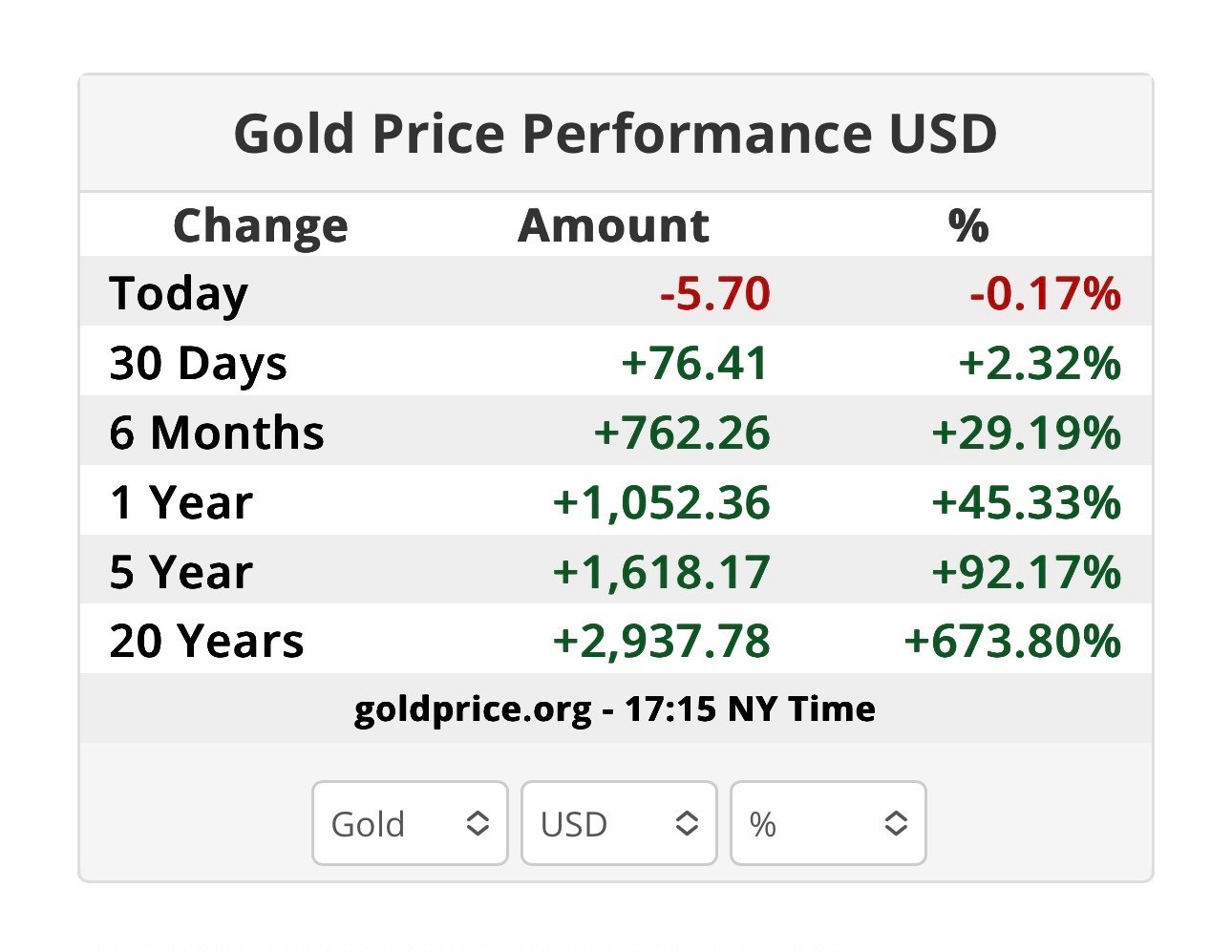
Deutsche Bank just put out a report warning that this unusual reaction from gold might be misleading. In other words, the market could be underestimating the real risk.
Why gold usually goes up during geopolitical conflict
Let’s break it down. Gold is considered a “safe haven” asset. That means when global uncertainty spikes—think wars, pandemics, financial crises—investors often shift their money into gold to protect themselves. So when tensions flare up in the Middle East, gold usually rallies.
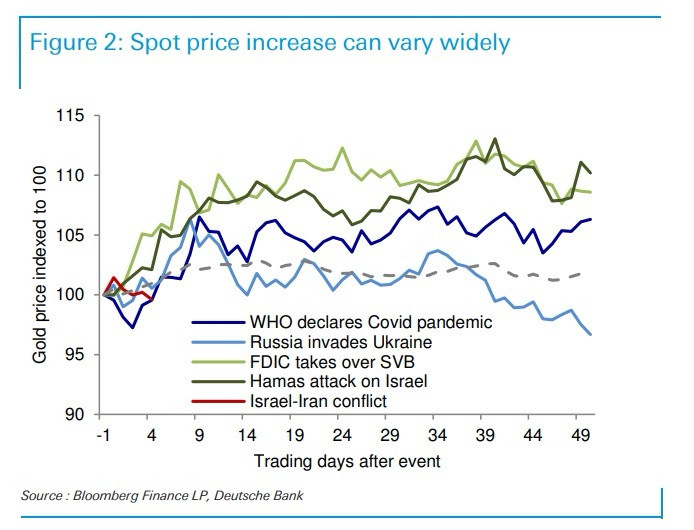
But this time, it didn’t.
Even with real military movements in play—Trump leaving the G7 early, threatening action within two weeks, B-2 bombers quietly moved to Diego Garcia, and a US aircraft carrier repositioned in the region—gold has barely flinched.
That’s what makes this time different. The market isn’t reacting like it used to.
Is the market calm or just missing the point?
Some analysts argue that the more loudly Trump threatens action, the less seriously the market takes it. They see it as a negotiation tactic—leverage to get Iran to back down. Others say the US doesn’t see any urgent need to act, especially with reports that Iran’s air defenses are down.
But Deutsche Bank sees it differently. They think this market calm might be premature. Historically, gold doesn’t always spike right away during a crisis. Sometimes it takes time to catch up.
According to their research, gold prices tend to peak between 8 to 20 trading days after a geopolitical shock. On average, that means a 5.5% gain in spot prices, and even more in terms of risk premium.
So if past patterns hold, the gold market might just be late to react.
Quick explainer What does “risk premium” even mean?
A risk premium is basically the extra price investors are willing to pay to avoid uncertainty.
In normal times, gold trades at its “base value.” But when the world feels shaky—say, because of a war—gold becomes more attractive. That extra price people pay for safety is the risk premium.
In this case, Deutsche Bank noticed something odd: gold’s risk premium vanished way too fast after the initial surge during the first days of the Israel-Iran escalation. That’s not normal.
What history tells us about gold in times of crisis
Deutsche Bank looked at 28 past geopolitical events—from the Hamas-Israel conflict to the Russia-Ukraine war to the early days of COVID. Here’s what they found:
• Gold doesn’t react instantly. Prices usually build momentum slowly, peaking between 8–20 trading days after the event.
• Average gains are solid, but highly variable. In some cases, spot gold rose 3%. In others, the gains were much larger.
• Bigger events trigger bigger reactions. And yes, the Israel-Iran conflict is a big deal—possibly even more significant than many past crises.
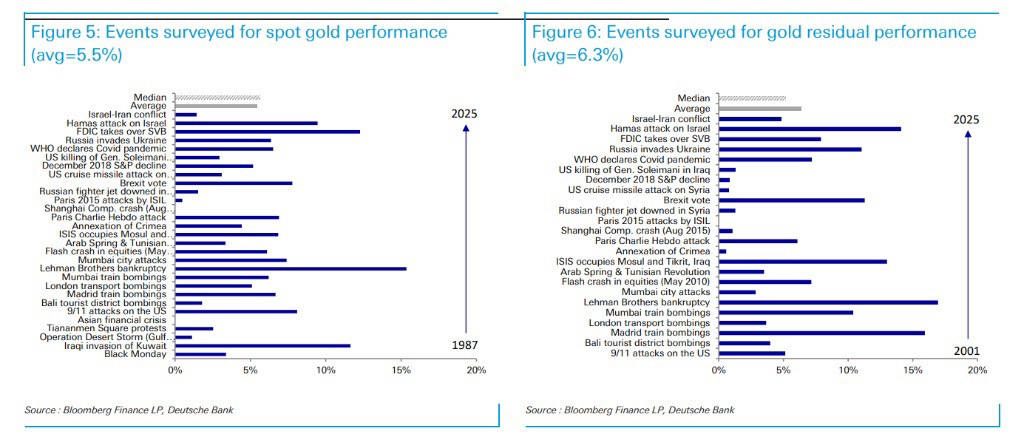
The takeaway? Just because gold hasn’t surged yet doesn’t mean it won’t. If this conflict escalates—or if the US actually takes military action—gold could still stage a strong rebound.
My take on what’s really happening here
Here’s how I see it.
First, today’s markets are more automated and data-driven than ever. With AI models and algorithmic trading dominating flows, a lot of the emotional, knee-jerk buying that used to drive gold spikes just doesn’t happen the same way anymore.
Second, this conflict is heating up slowly. It’s not a sudden shock like a terror attack or a surprise invasion. It’s building over days and weeks, which makes it easier for investors to tune it out—until something big happens.
And third, the market is still laser-focused on US interest rates and economic policy. Between the Fed’s stance and Trump’s tariffs, traders are more concerned about inflation, fiscal risks, and rate cuts than what’s happening in the Middle East.
But that could change fast. If the US launches a strike, or if Iran retaliates in a big way, we could see a quick rush back into gold. And right now, with gold off its highs, that might actually look like a buying opportunity.
Bottom line
1. Israel and Iran are escalating tensions, and the US is openly signaling military action.
2. Gold is supposed to be a safe haven—but so far, it’s been surprisingly quiet.
3. Deutsche Bank says this could be a delayed reaction, not a true dismissal of risk.
4. History shows gold often lags behind major geopolitical events before it moves.
5. The window for a potential gold rally might still be open if the conflict continues to escalate.
In short, this might not be gold’s moment yet—but it could be soon. And when the market finally catches on, the move might be sharp.
If you’re watching global politics and market reactions as closely as I am, hit follow and stay tuned. There’s more to come.