
Powell's High-Stakes Gambit: Defending the Fed's Rate Pause Amid Trump's Fury

Federal Reserve Chair Jerome Powell braces for a Congressional showdown next week, armed with data and resolve to defend the central bank's controversial decision to hold interest rates steady.
His testimony unfolds against a volatile backdrop: simmering internal Fed divisions over future rate cuts, rising tariff-fueled inflation fears, and a renewed, vicious public assault from President Donald Trump, who openly mused about firing Powell and branded him a "Total and Complete Moron."
Powell's Perilous Path: Patience vs. Political Pressure
Powell faces a grueling two-day Capitol Hill gauntlet. On Tuesday, June 24th, he addresses the House Financial Services Committee.
The Senate Banking Committee follows on Wednesday, June 25th. His core mission: justify the Fed's "wait-and-see" stance despite mounting political headwinds.
The Fed's semi-annual Monetary Policy Report, released ahead of the testimony, lays the groundwork. It acknowledges core inflation's welcome cooling trend but sounds alarms on new threats.
A sharp slowdown in immigration since mid-2024 is straining labor supply growth. Critically, new tariffs are clearly jolting consumer inflation expectations.
The report highlights a worrying surge in the University of Michigan survey. One-year inflation expectations leapt to 5.1% in June, up dramatically from 2.8% last December.
Long-term expectations also climbed to 4.1%. Tariffs were overwhelmingly cited as the culprit. While durable goods inflation edged up, the Fed stressed assessing the full tariff impact is "premature."
"Officials are in a holding pattern," the report states, citing balanced risks and the luxury of time. "Core inflation is moving down, and the labor market is relatively balanced... policymakers note they are 'well positioned' to wait." The next crucial Fed decision lands July 30th.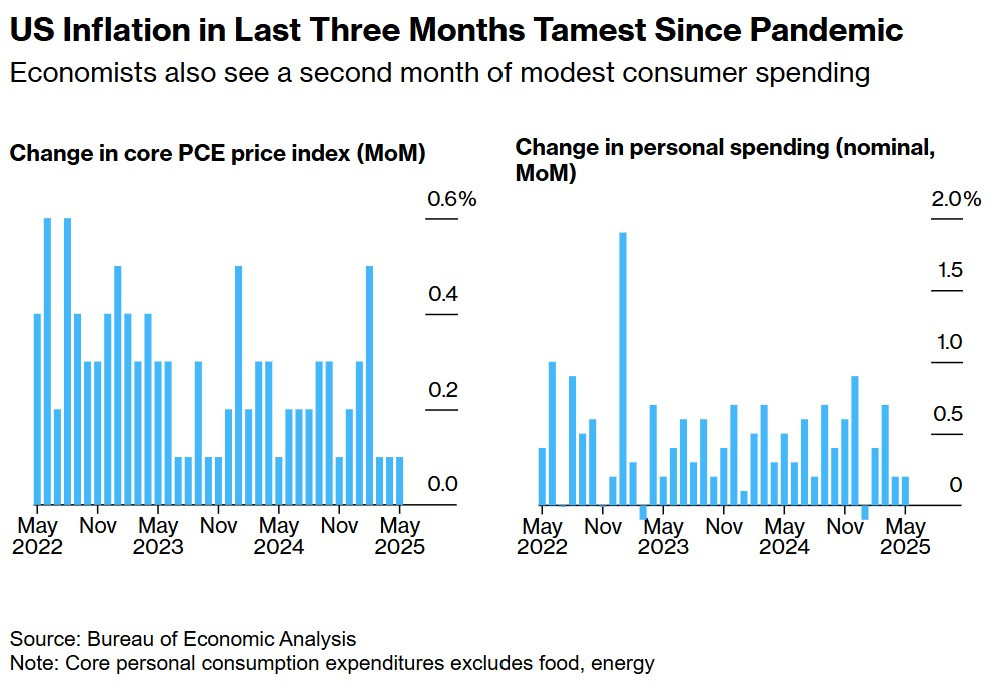
Trump's Tirade: "Maybe I'll Have to Fire Him"
Powell's delicate balancing act was violently disrupted Friday evening. Trump launched a blistering attack on his own appointee via Truth Social.
He labeled Powell a "Total and Complete Moron," a "dumb guy," and an "obvious Trump Hater" for not slashing rates immediately.
Trump's rage centers on his belief that rates are crimping growth and borrowing. He advocates a reckless strategy: "lower interest rates immediately and just hike them again if inflation spikes."
He dismissively nicknamed Powell "Mr. Too Late" and urged the FOMC to "override" him.
Most explosively, Trump floated firing Powell: "Maybe, just maybe, I'll have to change my mind about firing him?" He added, "But regardless, his Term ends shortly!"
This threat, recurring since Trump's first term, faces significant legal hurdles. Federal law mandates Fed Governors can only be removed "for cause." A recent Supreme Court ruling specifically shielded the Fed, calling it "uniquely structured."
Powell has previously stated he would not resign if asked. The Fed declined to comment on Trump's latest outburst.
The Data Dilemma: Cooling Trend Meets Tariff Turbulence
Powell's case for patience hinges partly on upcoming data, particularly Friday's May PCE inflation report – the Fed's preferred gauge.
Economists anticipate a modest rise. Core PCE (excluding food and energy) is expected to increase 0.1% monthly for the third consecutive month.
Annually, core PCE is forecast at 2.6%, slightly up from April's 2.5%. Headline PCE is seen at 2.3% year-over-year.
Crucially, this three-month core trend would be the tamest since the pandemic's onset five years ago. However, economists warn this gentle rise offers little clarity on looming upside risks, primarily tariffs.
The report will also show if modest consumer spending growth persisted for a second month. Recent sentiment drops partly reflect tariff anxiety. Income growth, adjusted for inflation, has been strong, supporting spending power for now.
Cracks in the Consensus: The Fed's Internal Divide
While the official stance is watchful patience, the Fed isn't monolithic. The June FOMC meeting revealed growing fissures.
The median "dot plot" still signals two 2024 rate cuts. Yet, the number of officials projecting just one cut, or none, increased significantly.
This split stems from the complex balancing act. The job market shows signs of cooling but remains tight. Wage growth has stalled even as labor force participation dipped. The looming question: Will tariffs trigger sustained inflation, validating the hawks, or prove fleeting?
Governor Christopher Waller injected a dovish counterpoint Friday. He suggested tariff impacts might be "transitory" and opened the door for a July cut: "If the data comes in as I expect, it will be appropriate to begin to ease policy later this year."
His comments ensure Powell's testimony will be microscopically parsed for hints of this internal debate.
Global Ripples: A World Watching Washington
The Powell-Trump drama and critical U.S. data cascade across the global economy:
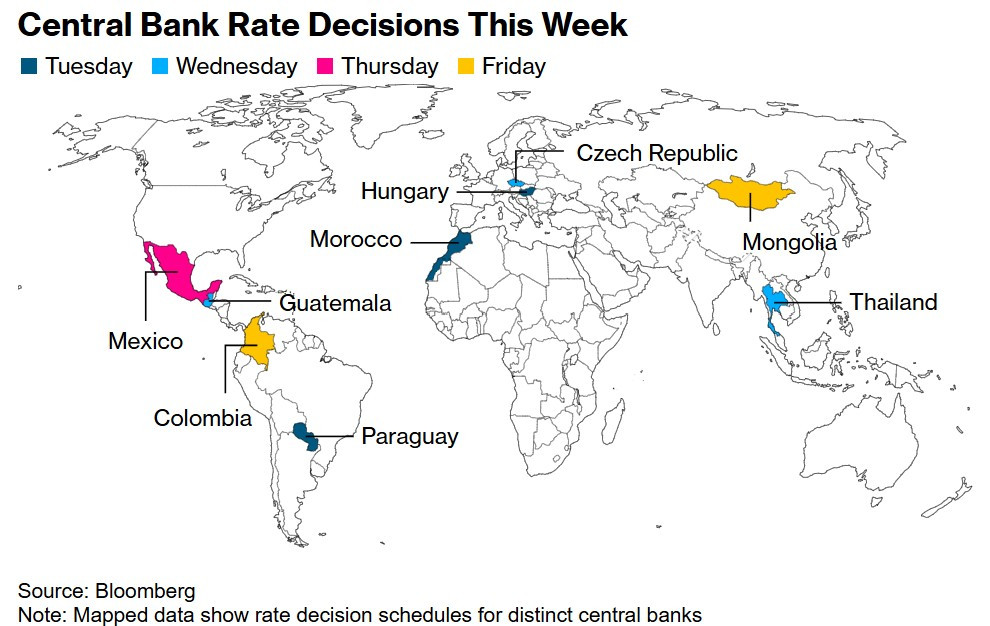
- Asia Scrutinizes Inflation: Key price reports land in Singapore (Mon), Malaysia (Tues), Australia (Wed), and Tokyo (Fri, a Japan indicator). Thailand's central bank meets Tuesday, expected to hold rates amidst domestic political turmoil.
- Europe Gauges Resilience: Eurozone flash PMIs (Mon) and Germany's Ifo (Tues) will test trade war fallout. ECB President Lagarde testifies Monday. BoE Governor Bailey speaks Tuesday amid weak UK retail sales. Bulgaria's euro bid advances.
- Latin America Eyes Cuts: Mexico's central bank (Banxico) is poised for its eighth consecutive rate cut on Thursday following slowing inflation. Brazil's central bank releases minutes Tuesday after holding rates high. Colombia's bank meets Friday.
What To Watch: Powell's High-Wire Act
Congressional Grilling (June 24-25): Can Powell convincingly defend the pause and manage expectations for July?
May PCE Inflation (June 27): Does the data show alarming tariff impacts or support the "transitory" view?
Trump's Next Move: Will the attacks intensify, further politicizing the Fed?
Fed Unity Test: How will Powell reconcile Waller's dovishness with the more hawkish dots?
Global Reaction: How will international markets and central banks interpret the U.S. turbulence?
Chairman Powell walks onto Capitol Hill carrying the weight of the U.S. economy's delicate balance.
His task: justify caution using data, navigate a political minefield ignited by Trump, and maintain control of a Federal Reserve showing its own fault lines – all while the world watches. The stakes for economic stability couldn't be higher.