
US Semiconductor Comeback Gains Steam as Trump’s Tariffs Start to Show Results

For years, talk of bringing manufacturing back to the United States sounded more like political slogans than actual policy outcomes. But now, real signs are emerging—especially in one of the world’s most critical industries: semiconductors.
This week, a wave of news caught my attention. Three of the world’s top cryptocurrency mining hardware makers—Bitmain, Canaan, and MicroBT—are building manufacturing facilities and supply chains in the U.S. These Chinese companies control over 90% of the global market for Bitcoin mining machines. But because of rising tariffs and growing political pressure from Washington, they’re shifting key operations to American soil.
According to the CTO of Conflux Network, this isn’t just about cost. “It’s a strategic shift toward politically acceptable hardware,” he said. In other words, companies are adapting not just to avoid tariffs—but to survive in a world where supply chains are now also judged by geopolitics.
Bitmain, for instance, moved quickly after Trump won the 2024 election by a wide margin. It began local production in the U.S. as early as December that year. Canaan followed a few months later, after Trump’s so-called “Liberation Day Tariffs” took effect—setting a minimum 10% import duty on all goods entering the country.
The trade war isn’t just a news headline anymore. It’s changing the structure of global supply chains. Chinese firms, especially those without the deep tech or brand strength of giants like Huawei, are now forced to localize manufacturing simply to keep business afloat. U.S. tariffs on Chinese imports stand at about 30%, compared to just 10% for other regions. That’s a huge margin—and a powerful reason to shift production.
On top of that, sanctions are complicating things further. Even though Bitcoin mining chips (called ASICs) aren’t directly targeted, some key components—especially those using AI chips made by sanctioned Chinese firm Sophgo—have been affected. Setting up U.S. operations is one of the only workarounds left.
All this points to one thing: Trump’s effort to bring manufacturing back to America is finally producing visible results.
Taiwan’s TSMC Makes One of the Largest Foreign Investments in US History
While the crypto hardware industry is making early moves, the traditional semiconductor giants are going all in.
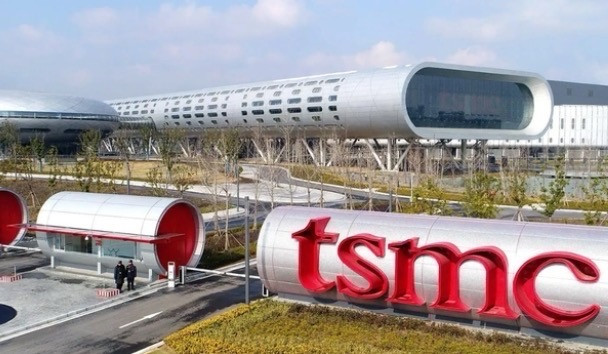
$TSM —the world’s leading chipmaker—is building a massive facility in Arizona. After years of slow progress, things picked up quickly in 2024, right after Trump ramped up tariffs once again. As of April 2025, construction has moved into high gear, with expansion plans totaling $165 billion. That makes it one of the largest foreign direct investments in U.S. history.
To put this into perspective: the investment is over five times TSMC’s net profit from last year ($36.5 billion). That’s not just a business decision—it’s a major strategic shift. For TSMC, Arizona is no longer just a satellite factory. It’s on track to become a second “Hsinchu”—the Taiwanese city where TSMC’s global success story began.
The impact is already visible. NVIDIA has started producing its next-gen Blackwell AI chips at the Arizona facility. It’s also teaming up with Foxconn and Wistron to build a massive AI infrastructure hub in Texas, expected to generate $500 billion in manufacturing output over the next four years. AMD, too, has announced plans to produce its fifth-generation EPYC processors in Arizona using advanced manufacturing processes—for the first time ever on U.S. soil.
It’s not just talk anymore. Trump’s “Made in America” push is turning into actual production lines.
Micron Is Doubling Down on US Chipmaking With $30 Billion Investment
Memory chip giant Micron is also making big moves. The company just announced a fresh $30 billion investment to boost its U.S. production capacity—especially in cutting-edge memory like high-bandwidth memory (HBM), which is critical for AI chips.
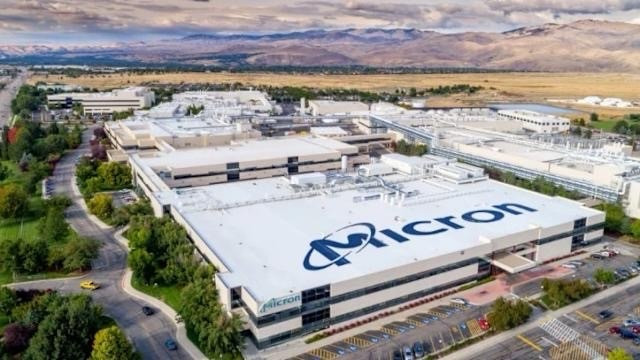
$MU had already begun building major chip fabs in New York. Now, its expansion includes two advanced fabs in Idaho, up to four in New York, and an upgraded facility in Virginia. The plan also includes local R&D centers and packaging tech to support next-gen memory.
Micron’s goal is to bring 40% of its global DRAM output back to the U.S. To make it all happen, it’s tapping into both public and private support, including a potential $6.4 billion in direct funding under the CHIPS Act—a major piece of legislation designed to boost domestic semiconductor manufacturing.
All of these efforts are being structured to qualify for “Advanced Manufacturing Investment Credits” (AMIC), making them financially sustainable in the long run.
Texas Instruments Commits to Building America’s Chip Supply Chain
Another major player, Texas Instruments, has gone even further. The company recently unveiled a $60 billion plan to build seven new chip fabs across Utah and Texas. It’s the single largest U.S. investment ever made by one company for domestic semiconductor manufacturing.
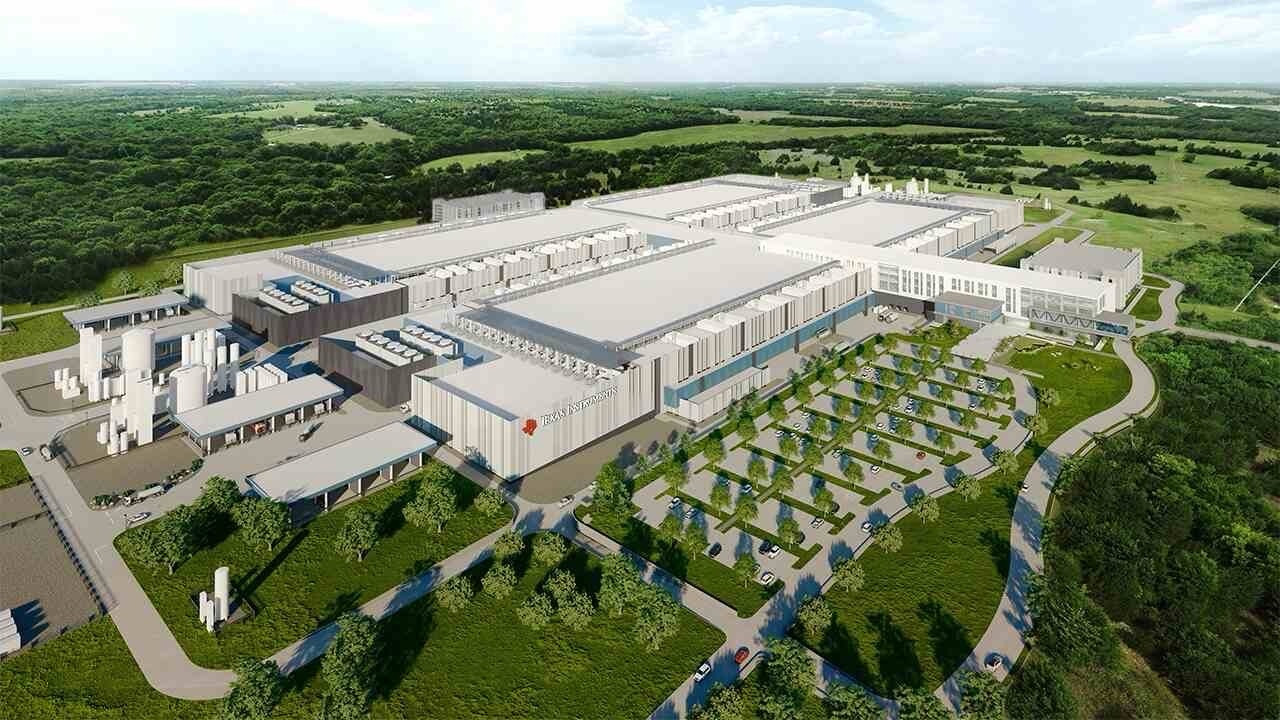
For $TXN , this isn’t just about scaling up. It’s about building a complete, end-to-end American supply chain for the analog and embedded chips that power everything from smartphones and cars to satellites and servers.
The numbers are staggering. $60 billion is more than 12 times TI’s 2024 net profit ($4.8 billion). The plan is expected to create 60,000 new jobs and dramatically increase America’s capacity for producing 300mm wafers—the current standard in advanced semiconductor production.
TI CEO Haviv Ilan put it simply: “We’re building reliable, cost-effective capacity for chips that are essential to every modern electronic system.”
What This Means and Why It Matters
What we’re seeing here isn’t just a few factories changing hands. This is a real, strategic shift in global manufacturing. The old playbook of “design in the West, build in the East” is breaking down. For decades, companies chased lower costs in China. Now, they’re paying more attention to political risk, supply chain security, and domestic self-sufficiency.
Yes, these companies are reacting to Trump’s tariffs. But more importantly, they’re responding to a bigger trend: geopolitics is now shaping industrial strategy.
For investors, that means the tech supply chain is entering a new era—one where location matters as much as innovation. For workers and local economies in the U.S., it means new jobs, new industries, and a chance to regain ground lost to decades of offshoring.
One thing is clear—Trump’s manufacturing policy, once mocked as wishful thinking, is now starting to show up in concrete, billion-dollar ways.