
Novo Nordisk’s Comeback Story? New Obesity Drug Outperforms Zepbound in Early Trial

Shearing sheep
June 23, 2025
GoGPT Summarizes Articles
After months of stock pressure and investor doubts, Novo Nordisk might finally be catching a break — and it’s thanks to a promising new weight-loss drug that just outperformed Eli Lilly’s Zepbound in early-stage trials.
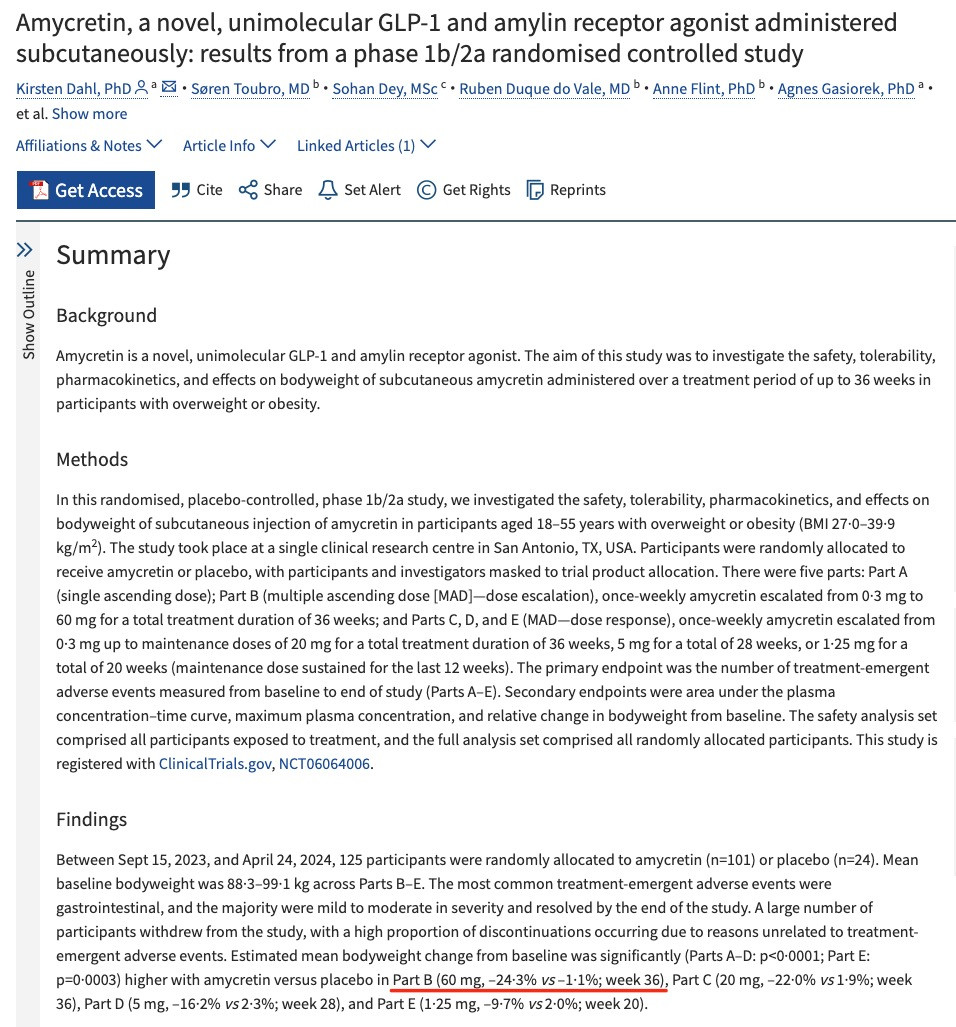
According to data published over the weekend in The Lancet, Novo Nordisk’s new injectable drug amycretin helped patients lose an average of 24.3% of their body weight at the highest dose tested. For context, that’s more than Zepbound’s 22.5%, and well above Wegovy’s 15%. Participants in the placebo group, meanwhile, lost only 1.1%.
This is a big deal.
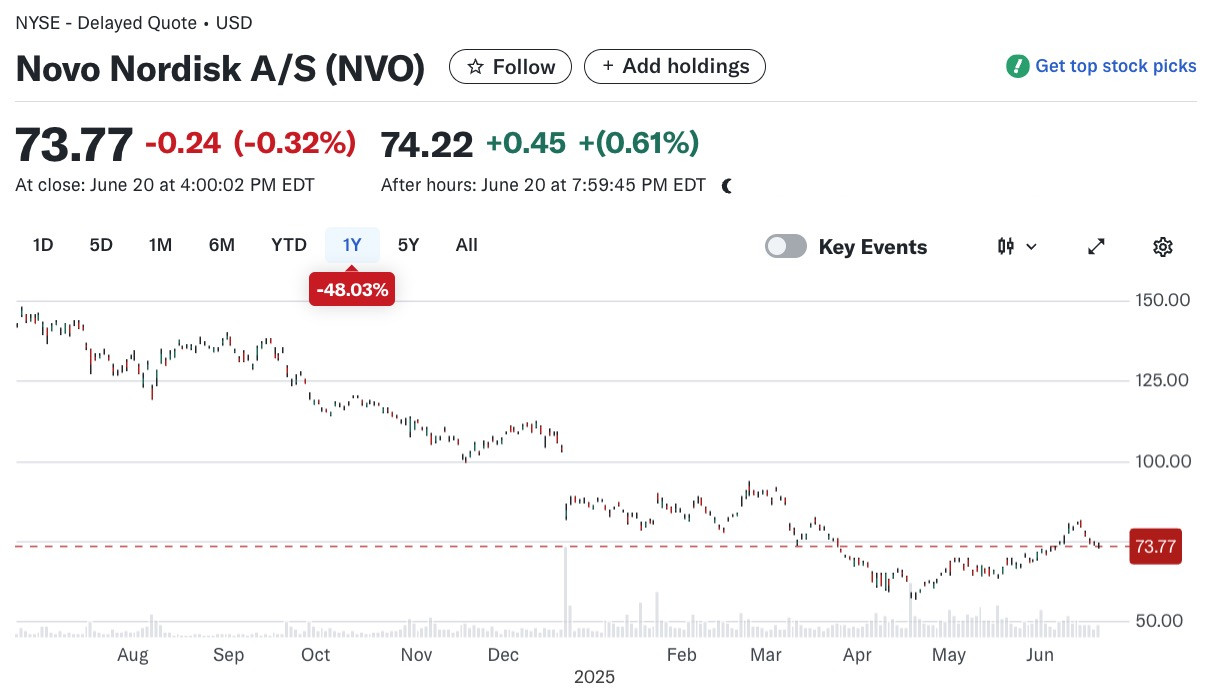
Novo Nordisk ($NVO) has been under growing pressure lately. Its shares are down nearly 50% over the past year, with investors increasingly worried that Lilly’s aggressive expansion in the GLP-1 space — particularly with Zepbound and Mounjaro — was leaving Novo Nordisk behind. Even Novo Nordisk’s other next-gen candidate, CagriSema, delivered disappointing data last year, adding to the pessimism.
But amycretin is shaping up to be a potential game-changer.
A New Dual-Action Approach
What makes amycretin different? It’s a dual-hormone therapy that combines semaglutide (the active ingredient in Wegovy and Ozempic) with amylin, a hormone that enhances satiety. Early data from both injectable and oral versions look promising:
-
In a Phase 1 trial, oral amycretin helped participants lose 13.1% of their body weight in just 12 weeks, without hitting a plateau — suggesting there could be even more potential with longer use.
-
Novo Nordisk executives believe that with extended treatment, the oral formulation may eventually match the injectable in performance.
It’s a smart approach. Offering both delivery formats — especially as patient preference tilts toward convenience — may help Novo Nordisk fend off competition and expand its reach across different patient groups.
Competitive Landscape
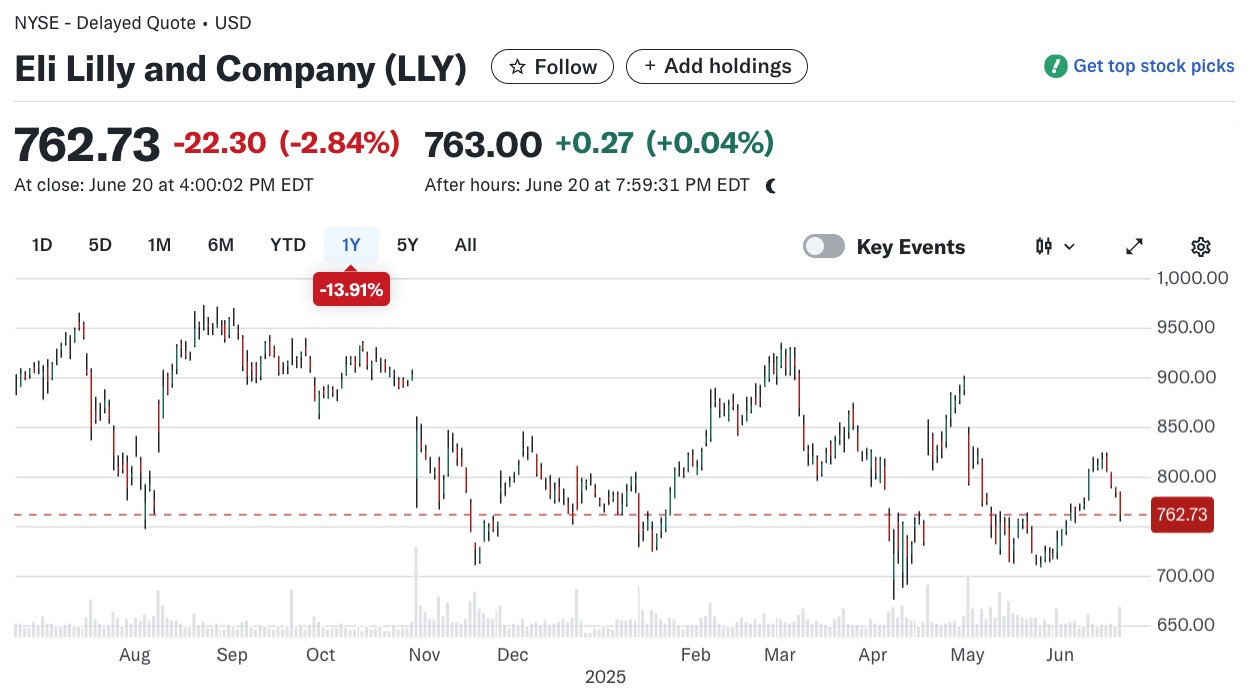
Of course, Eli Lilly isn’t sitting still. Its oral GLP-1 candidate, orforglipron, posted strong Phase 2 results with 14.7% weight loss over 36 weeks, and recently showed further efficacy in diabetic patients in a Phase 3 trial. That helped lift Lilly’s stock by over 15%.
All of this reinforces a simple truth: GLP-1 development has become a biotech arms race, with each new efficacy gain or delivery innovation potentially worth billions. Analysts estimate the global obesity drug market could hit $150 billion annually within the next decade — and neither company wants to cede ground.
Regulatory Tailwinds Strengthen the Thesis
Moreover, the American College of Cardiology (ACC) issued a major update on June 20, officially recommending GLP-1 drugs like Wegovy and Zepbound as primary prevention tools for heart disease — the leading cause of death in the U.S.
This is more than just a medical endorsement. The ACC emphasized that these drugs are more effective than lifestyle changes alone, and carry lower risks than surgery. Their stance is also aimed at encouraging Medicare and private insurers to expand coverage for these high-cost medications.
The implications are massive. GLP-1 drugs are now being recognized not just for weight loss, but as core tools in cardiovascular risk reduction — potentially accelerating adoption across the healthcare system and solidifying their long-term role in chronic disease prevention.
More From Novo Nordisk’s Pipeline
Meanwhile, Novo Nordisk is signaling that it’s not just a one-drug story.
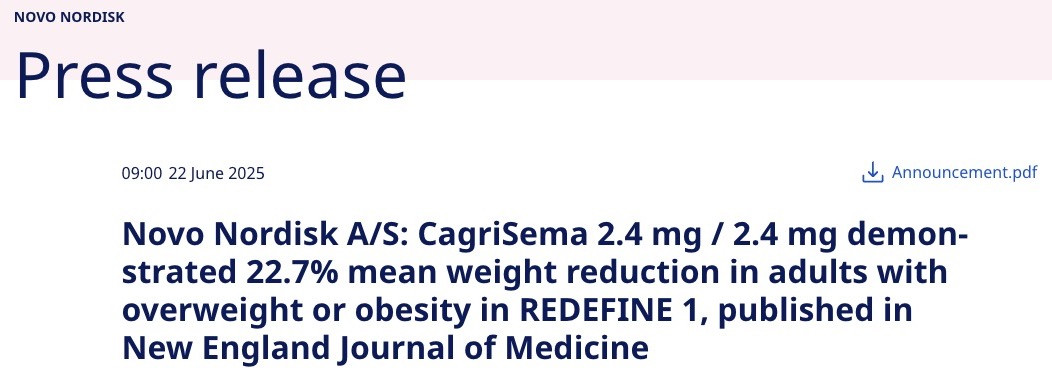
On June 22, at the American Diabetes Association (ADA) conference, the company shared updated data on CagriSema, which had previously disappointed investors. The latest results from the REDEFINE 1 trial showed that patients who adhered to treatment lost 22.7% of their body weight over 68 weeks, compared to just 2.3% in the placebo group. That’s a noticeable improvement from earlier reads and could help reposition the drug in the competitive pipeline narrative.
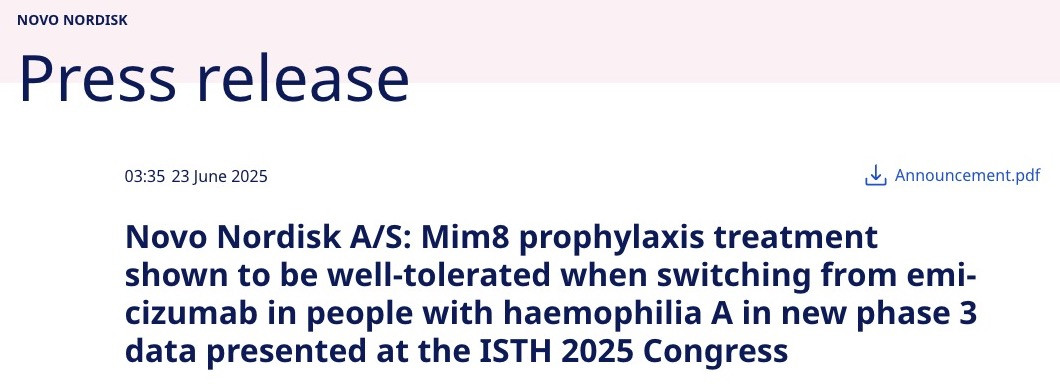
Also on the same day, at the ISTH 2025 congress, Novo Nordisk presented positive Phase 3b results from its Mim8 trial in hemophilia A patients. Mim8 was found to be safe and well-tolerated even when switching directly from emicizumab, without requiring a washout period or loading dose. Patients also reported a strong preference for the Mim8 pen-injector, citing ease of use.
While Mim8 may not grab headlines like amycretin, it underscores Novo Nordisk’s broader innovation strategy beyond obesity and diabetes — and serves as a reminder that the company’s R&D engine remains active across therapeutic areas.
Bottom Line
After a turbulent year, Novo Nordisk is showing signs of a rebound. Amycretin’s early-stage data looks strong, and could position Novo Nordisk to reclaim ground lost to Lilly in the weight-loss race. Add in the ACC’s guideline update, solid performance from CagriSema, and positive developments in hemophilia, and Novo Nordisk’s pipeline finally has momentum again.
That said, the GLP-1 battle is far from over. Eli Lilly remains a fierce rival, and real-world performance, adherence, and pricing dynamics will ultimately determine which company leads this space long-term.
#Market Spotlight: The Stories Driving Today’s Trading#$Novo-Nordisk A/S(NVO)