
Under the Microscope: Can Powell Resist the Rate-Cut Frenzy?

Fed Chair Jerome Powell arrives on Capitol Hill tonight under a barrage of pressures: the president’s vocal demands for deep rate cuts, unexpected dovish signals from within his own Board, and simmering Middle East tensions that threaten to upend inflation projections.
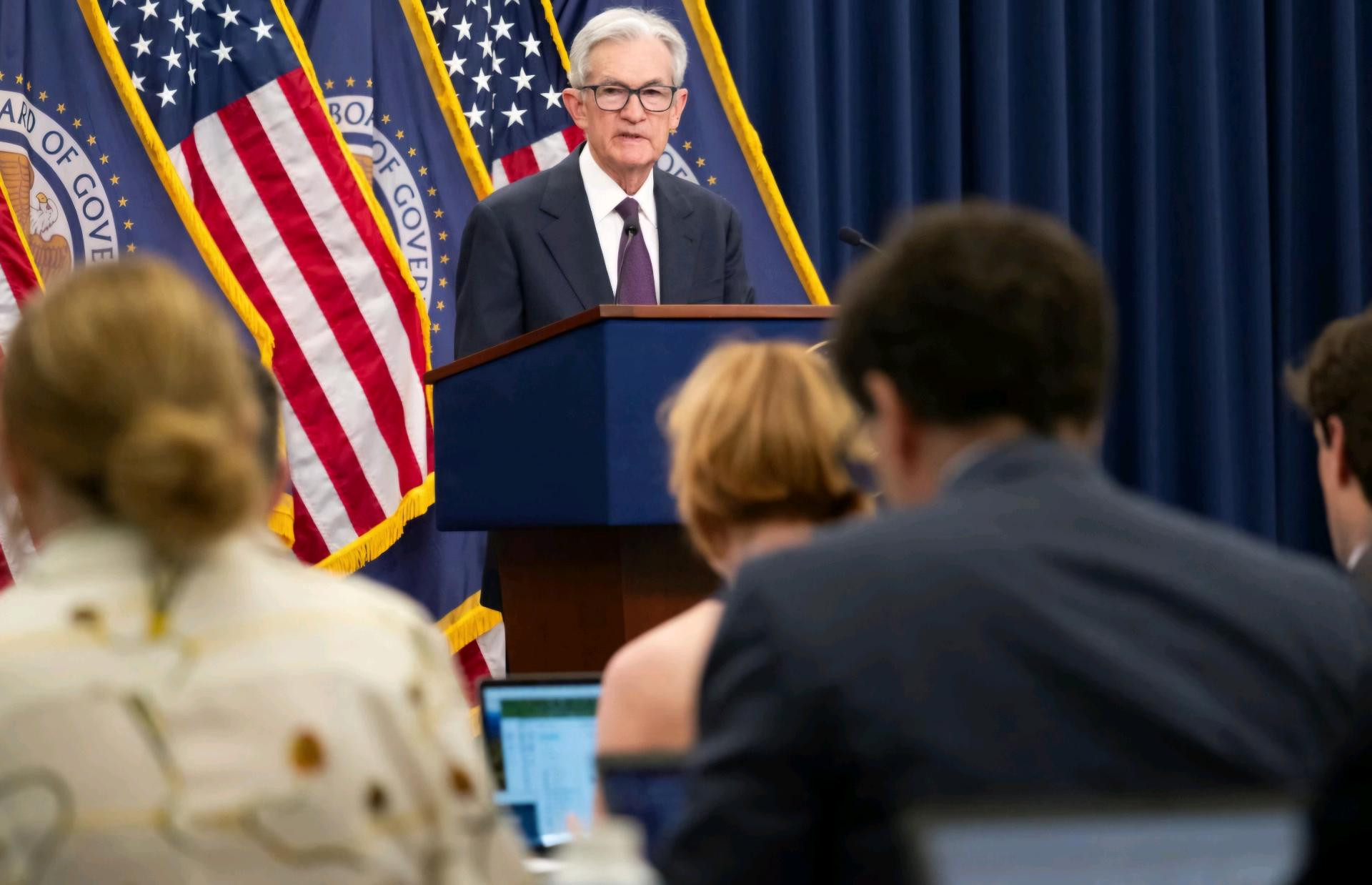
Markets are pricing in a July cut, yet Powell’s hallmark “data-dependence” stance suggests he may hold firm—at least until more evidence emerges.
Key Points
1.Governors Bowman and Waller publicly backed a July cut only days after the June FOMC meeting.
2.President Trump renewed calls for a 2–3 percentage-point reduction and urged lawmakers to “teach Powell a lesson.”
3.The June dot plot showed a decade-high divide: seven officials oppose any 2025 cuts; eight foresee two cuts by year-end.
4.Core PCE inflation rose just 0.1% in May, marking a third straight month of restrained price growth.
5.Oil briefly neared $80/barrel after U.S. strikes on Iran but retraced swiftly, underscoring persistent geopolitical risks.
Will Powell Cave to Political Pressure?
Despite President Trump’s scathing social-media tirade—labeling Powell “super dumb” for resisting cuts—most analysts expect the Chair to maintain the Fed’s “patient” posture tonight.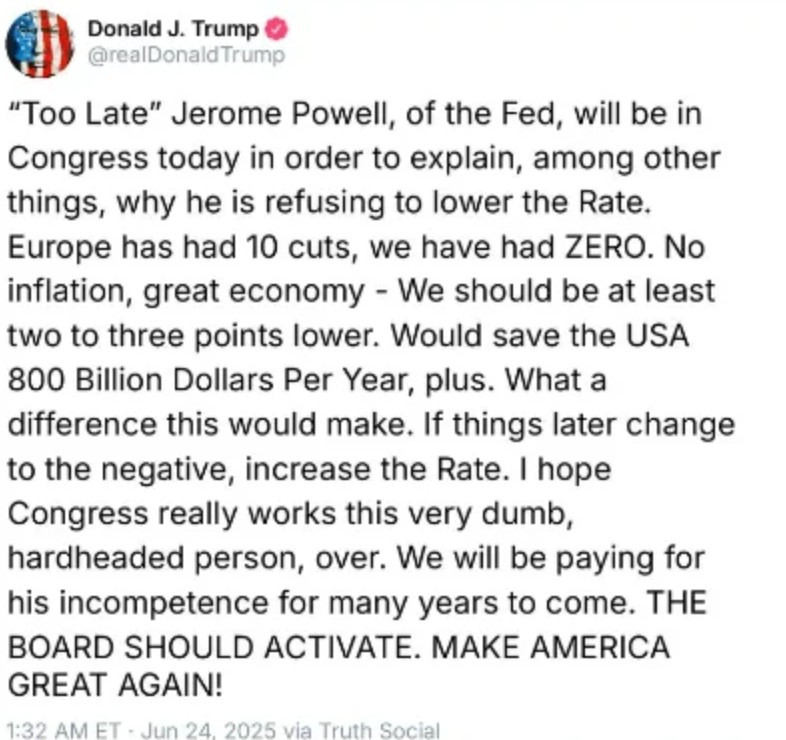
Powell has repeatedly emphasized that the committee “is well positioned to wait for more information before adjusting rates,” suggesting he won’t be swayed by partisan calls alone.
Republican committee members will press him on why, with inflation ebbing and growth intact, he refuses immediate relief.
Yet he’s equally poised to remind lawmakers that Fed decisions must remain “data-driven” and “non-political,” even as the White House amplifies its clamor for action.
Why Are Fed Insiders Split on Rate Cuts?
June’s dot plot revealed the sharpest internal schism in a decade: seven policymakers no longer see any 2025 cuts, while eight still expect two trims by year-end.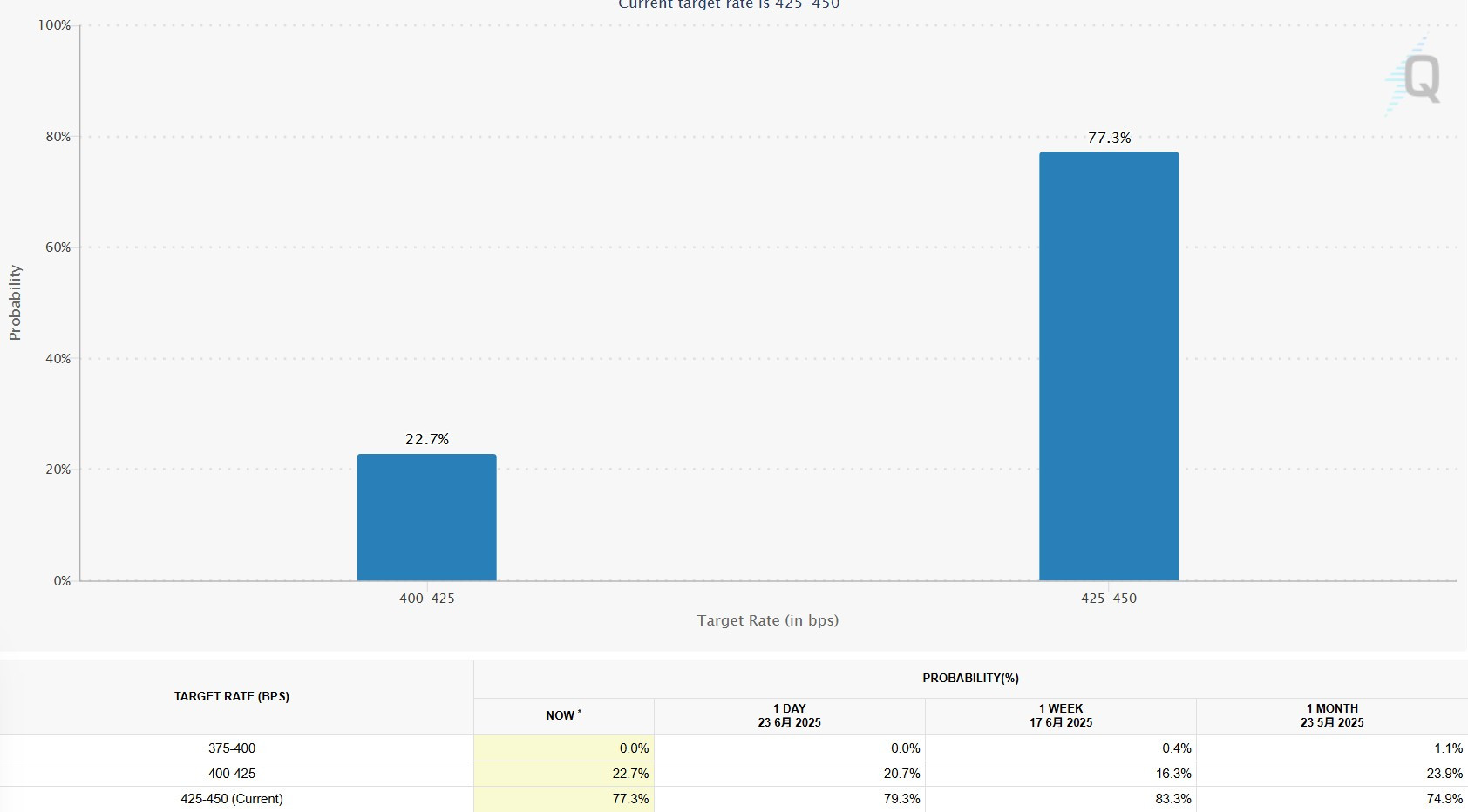
Deutsche Bank economist Matthew Luzzet dubbed this “a fundamental rift over balancing inflation control with growth support,” and warned public airing of disagreements could unsettle markets.
Fed governor Christopher Waller—long cast as the Fed’s most dovish voice—reiterated his openness to a July cut, consistent with his year-long stance.
Yet the surprise was Governor Michelle Bowman, a Trump appointee seldom aligned with dovish views, who joined in backing near-term easing, fueling speculation about political alignment.
Could Congress Really Rein in the Fed?
Calls by Senators Cruz and others to strip the Fed’s authority to pay interest on reserves signal an unprecedented bid to constrain monetary tools.
Cruz argues eliminating IORB payments could save $1.1 trillion over a decade, but JPMorgan strategists warn this move risks destabilizing overnight funding markets and impeding rate control.
While Senator Tim Scott has so far blocked codifying Cruz’s proposal into the tax-and-spending bill, the very debate underscores how political winds are gusting toward Fed oversight.
Powell must walk a fine line, assuring legislators of Fed independence while acknowledging the democratic accountability that comes with public testimony.
Geopolitical Ripple Effects on Monetary Policy
Last weekend’s U.S. strike on Iranian nuclear sites drove West Texas Intermediate toward $80/barrel, only for prices to tumble back by Monday.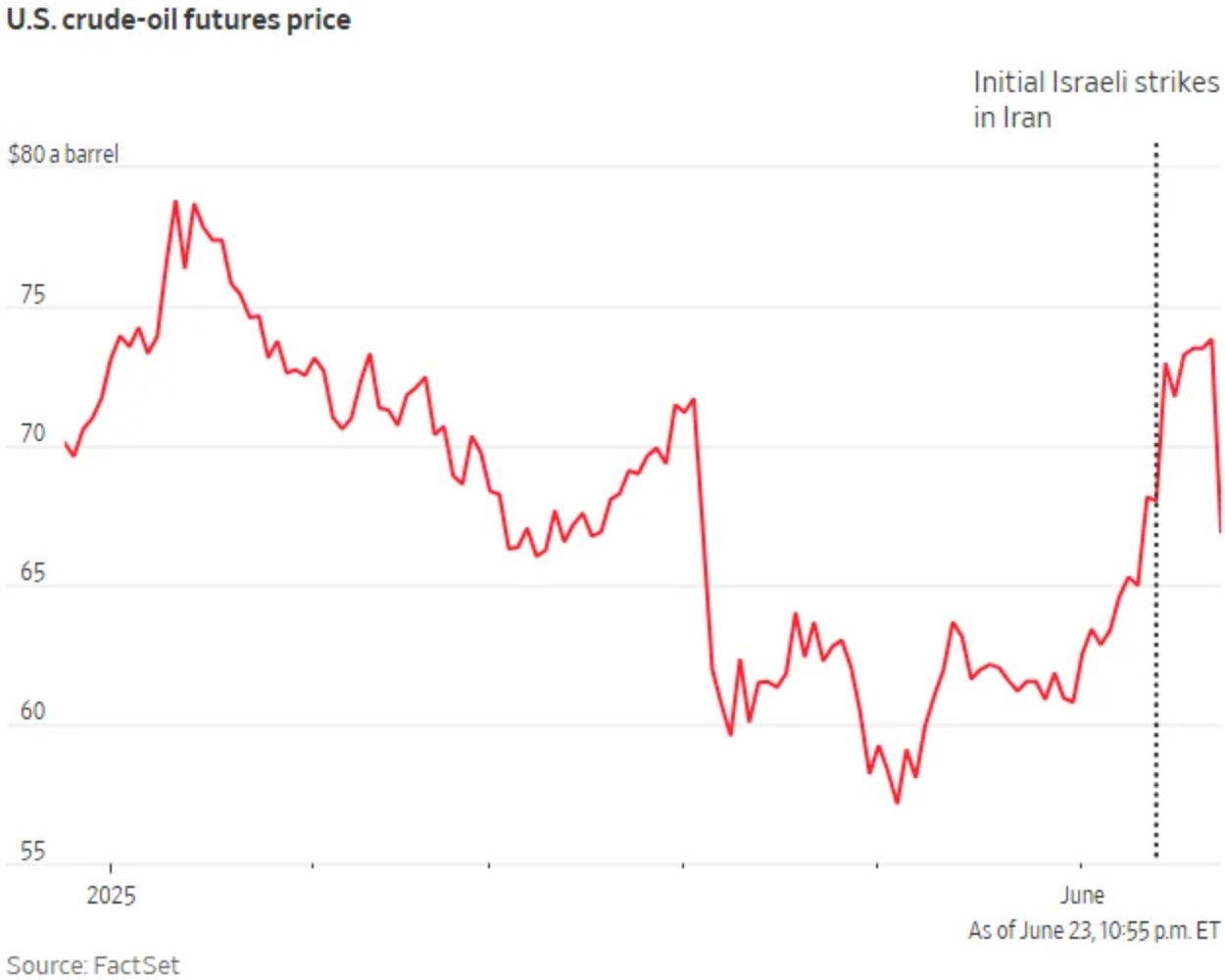
JPMorgan analysts caution that a protracted conflict or a chokehold on the Strait of Hormuz could send oil to $120, reigniting inflation pressures that the Fed has so far judged temporary.
Powell’s past comments have downplayed lasting fallout—“energy prices often spike then ease back,” he noted—but tonight he’ll face renewed queries on scenario-analysis: how persistent price shocks might force a shift from patience to pre-emptive easing or tightening, depending on the inflation impulse.
Charting the Fed’s Future Path
Market-implied odds of a July cut have climbed to roughly 23%, while September expectations hover above 80%.
Yet Atlanta Fed President Raphael Bostic recently reiterated that only “one 25-basis-point cut later this year” seems likely, contingent on steady unemployment and modest inflation.
Looking beyond 2025, the Fed’s roadmap remains foggy. Powell’s mandate to balance price stability with maximum employment grows stiffer as fiscal stimulus wanes and global headwinds intensify.
His testimony tonight may offer few new clues on timing—but it will cement the narrative that the Fed’s journey will unfold “data point by data point,” not by political decree.
Detailed Analysis
Will Powell Cave to Political Pressure?
Powell enters tonight’s hearing acutely aware that President Trump’s successive social-media barbs have escalated expectations of aggressive monetary easing.
Trump’s latest post demanded a 2–3 percentage-point rate cut, arguing Europe has eased ten times—and the U.S. not once.
Analysts foresee lawmakers echoing these complaints, probing why the Fed won’t align with the “no-inflation, strong-growth” narrative the White House touts.
Nevertheless, Powell’s communication history suggests he’ll double down on his mantra: patience and data. At the June press conference, he stressed that the Fed “is well-positioned to wait for more information.” Tonight, he’s likely to reiterate that hasty cuts risk undermining long-term credibility if inflation resurges.
Why Are Fed Insiders Split on Rate Cuts?
June’s Summary of Economic Projections painted a stark picture of Fed discord. Seven officials now project no cuts in 2025, a mirror image of the eight who still anticipate two rate trims by year-end.
Deutsche Bank’s Matthew Luzzet called this a “ten-year high” in dissent, reflecting a fundamental clash between hawks worried about rekindled inflation and doves focused on downside growth risks.
Governor Michelle Bowman’s dovish pivot surprised markets. A Trump appointee and former Kansas banking commissioner, Bowman had historically leaned hawkish on inflation.
Her alignment with Waller on a July cut stoked rumors of political signaling—though Fed spokespeople insist such decisions remain purely economic in nature.
Could Congress Really Rein in the Fed?
Some Republican lawmakers, notably Senator Ted Cruz, propose rescinding the Fed’s power to pay interest on reserves (IORB), claiming it would save taxpayers $1.1 trillion over ten years.
But Fed independence experts warn this could cripple the central bank’s ability to set overnight rates, destabilizing key funding markets.
Senate Banking Chair Tim Scott has resisted enshrining Cruz’s plan in broader legislation. Yet the debate itself illustrates how political actors are seeking leverage over monetary policy.
Powell must navigate these waters delicately, defending Fed autonomy while recognizing that his rate decisions have profound fiscal and political ramifications.
Geopolitical Ripple Effects on Monetary Policy
U.S. airstrikes on Iranian nuclear sites last week briefly catapulted crude toward $80/barrel, but oil retreated as markets absorbed the news.
JPMorgan strategists warn that should hostilities escalate or critical shipping lanes close, prices could spike toward $120, re-accelerating headline inflation.
Powell previously characterized such episodes as transient—“energy prices often spike then ease back”—and tonight is expected to reiterate that persistent, economy-wide inflation pressures have yet to manifest.
Still, he may outline contingency plans, signaling readiness to pivot policy should geopolitical shocks become a sustained driver of higher prices.
Charting the Fed’s Future Path
Fed futures imply roughly a 23% probability of a July cut, soaring to over 80% for September. Yet Atlanta Fed President Raphael Bostic, speaking Monday, forecast only a single 25 basis-point cut “later this year,” predicated on steady labor market data and contained inflation.
Beyond this year, the Fed’s longer-term guidance is shrouded in uncertainty. Powell must balance risks: premature easing could reignite inflation, whereas delayed cuts risk stifling growth if the economy slows more than forecasts.
His testimony tonight will underscore that the Fed’s strategy remains “opportunistic and measured,” sequencing policy moves in step with evolving economic signals.
Conclusion
Jerome Powell’s Capitol Hill testimony unfolds at a unique crossroads of political demands, internal Fed fractures, and external shocks. Though markets clamor for immediate relief, the Fed chair’s unwavering commitment to “data-dependence” suggests he will carefully calibrate any policy shift.
Tonight’s hearing won’t settle the rate-cut debate, but it will illuminate how the Fed plans to steer through increasingly turbulent economic and political currents.