
Does BigBear.ai Still Have Upside Potential?

BigBear.ai has recently seemed to gain popularity again.
Despite an 8% drop in its stock price yesterday, BigBear.ai (BBAI) has surged over 55% in the past three months.
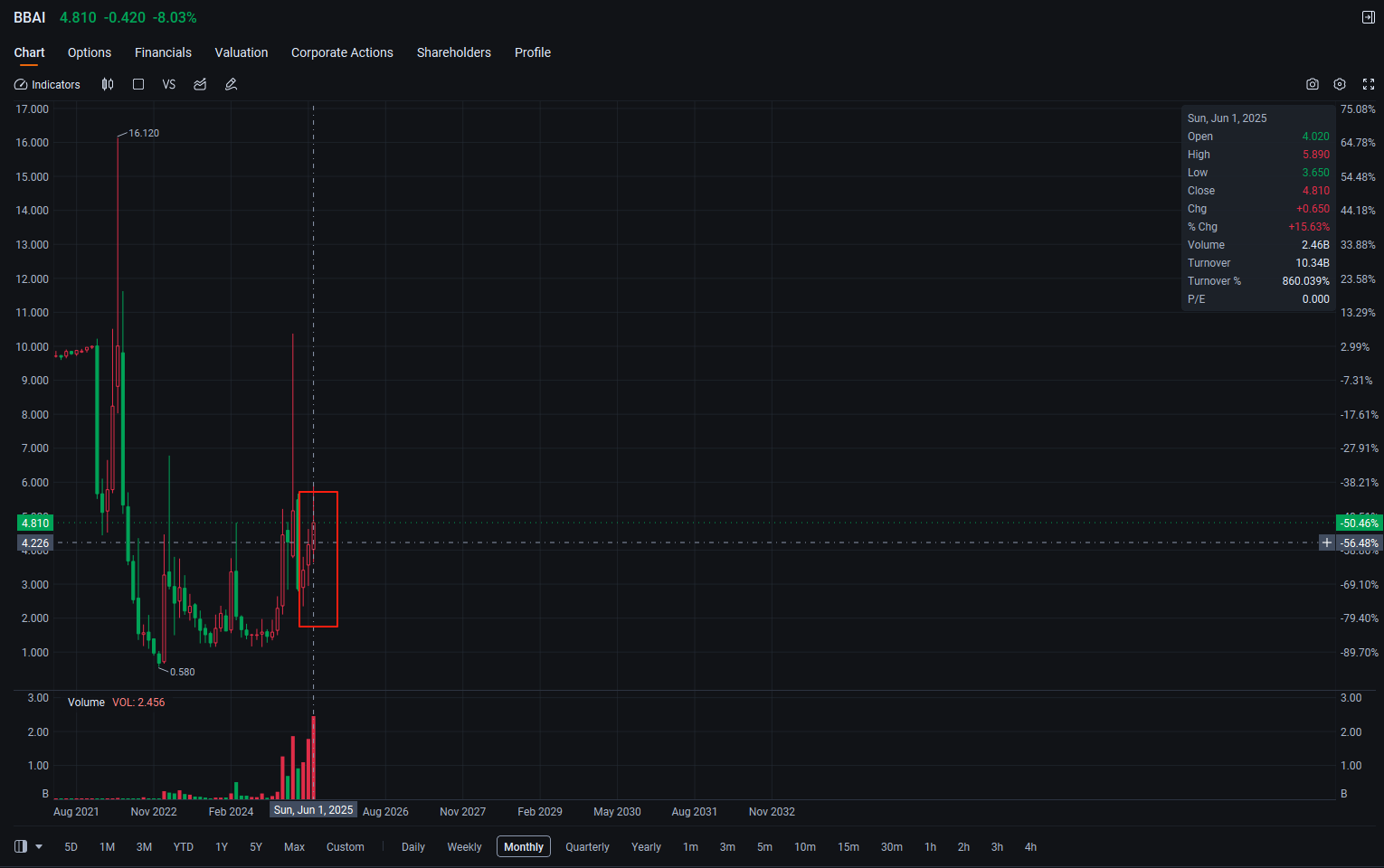
Often called a “small-cap Palantir,” BBAI shares a similar investment thesis to Palantir, though with some nuanced differences.
Today, we dive into this stock.
Q1 Earnings Miss Expectations, Losses Persist
In Q1 2025, BigBear.ai Holdings reported revenue of $34.757 million, up 4.94% year-over-year but below the $35 million market expectation.
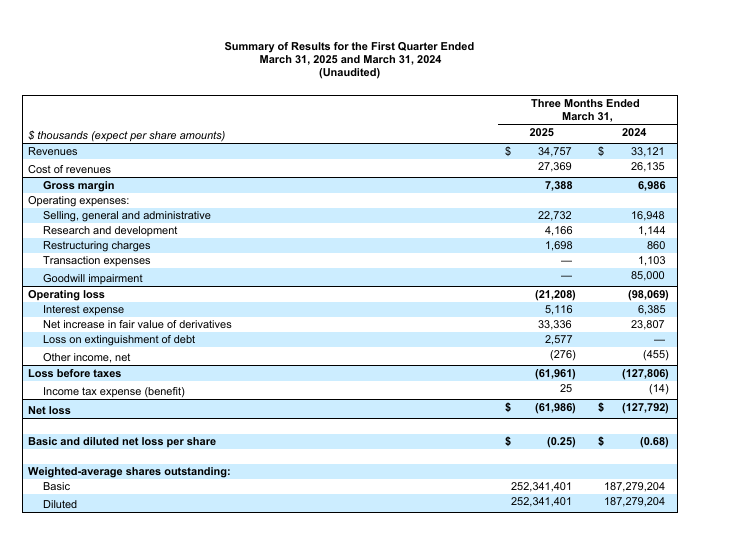
Growth was driven by ongoing U.S. Department of Defense contracts, like the $165 million Army GFIM-OE deal and an AI project with Hardy Dynamics.
However, the company's net loss still reached $61.986 million, which I found was mainly due to adjustments in non-cash items such as changes in the fair value of convertible notes and warrants.
The company's gross profit margin is 28.5%, which is still quite profitable. In addition, as of the data I investigated, the company's unfulfilled orders reached $418 million.
How Do Institutions View the “Mini Palantir”?
BigBear.ai is often dubbed a “mini Palantir” in U.S. investment circles.
Serving U.S. government clients like the DoD and intelligence agencies, BBAI offers a comprehensive suite of solutions, including AI, machine learning, data science, advanced analytics, cyber offense/defense, data management, cloud solutions, digital engineering, and systems integration.
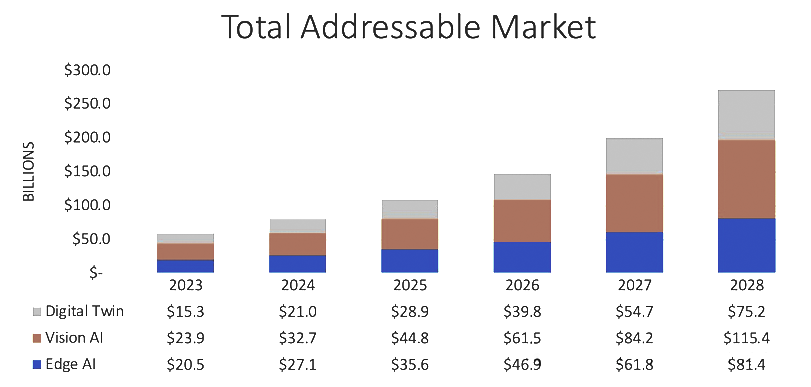
Like Palantir, BBAI operates in a fast-growing market with a total addressable market (TAM) of $80 billion in 2024, projected to reach $272 billion by 2028, spanning edge AI, visual AI, and digital twins.
And institutional views on BBAI are mixed.
H.C. Wainwright analyst Scott Buck raised the price target from $3 to $7, reaffirming a “Buy” rating, citing growing demand for BBAI’s AI services across industries and its inclusion in the GSA’s OASIS+ unrestricted multi-agency contract, which expands market reach. Progress in defense, aviation, and tech—like securing Army production contracts and implementing biometric verification systems—is seen as positive.
Cantor Fitzgerald maintains an “Overweight” rating with a $6 price target, acknowledging revenue shortfalls and weaker guidance but praising efforts to reduce balance sheet leverage.
However, Iceberg Research is skeptical, arguing BBAI isn’t a true AI company and inflates contracts to boost stock prices.
It noted 2024 revenue growth was just 2%, with core business sales down 21.2% excluding acquisitions, alongside a $257 million loss and $38.1 million in cash burn.
Many “big contracts” were small or non-binding, used to spark short-term stock surges with minimal business impact.
Is It Still a Buy?
Recent Israel-Iran ceasefire news has dampened risk appetite, weighing on AI and defense assets.
Long-term, U.S. defense spending rises annually, and global arms races intensify.
My take on defense stocks: in the second half of 2025, defense stocks with AI or drone exposure are a clear investment theme.
BBAI’s price may fluctuate, offering opportunities for dip-buying and swing trading.
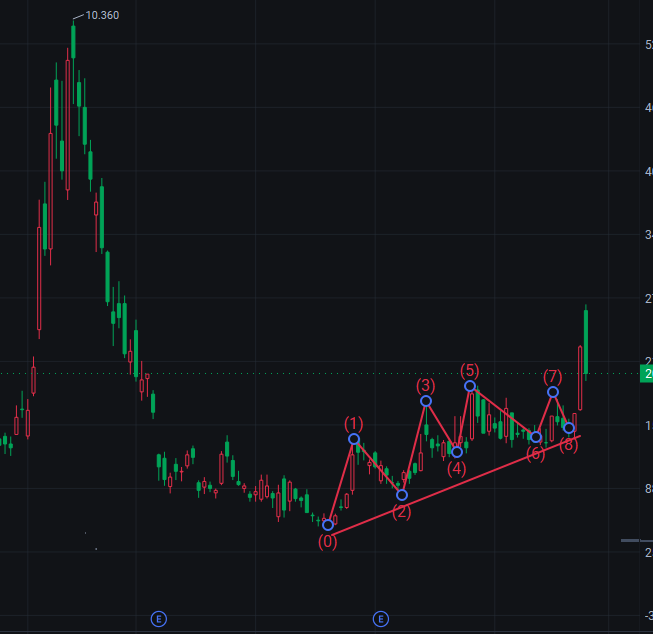
As a small-cap stock, it’s easier for investors to participate, but its low float makes it susceptible to manipulation by large players, so caution is warranted.$BBAI