
Private Infrastructure Investing: A Durable Play Amid Global Shifts – Reports Decoded

Kevin Insights
June 26, 2025
GoGPT Summarizes Articles
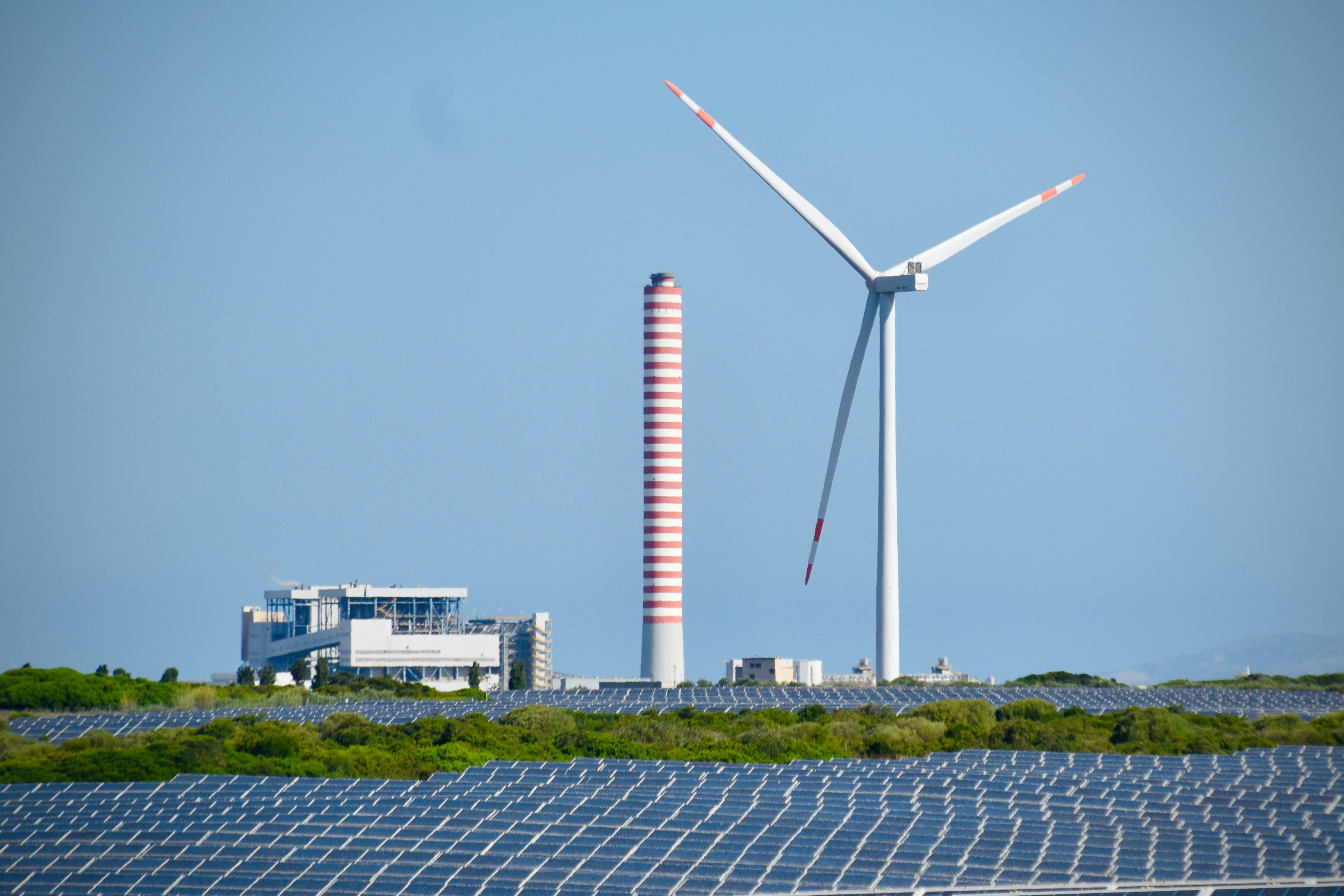
As traditional markets sway under the pressure of persistent inflation, geopolitical tensions, and tightening financial conditions, a quieter but increasingly relevant asset class is emerging as a key diversifier in institutional portfolios — private infrastructure.
In a recent CIO View report by UBS Global Wealth Management, the case for infrastructure has never looked stronger. The asset class sits at the intersection of three structural mega-trends: deglobalization, digitalization, and decarbonization. These trends are not cyclical but long-term and transformative, making infrastructure a durable investment story for the next decade.
Resilient Returns and Low Correlation
Over the past 10 years, private infrastructure has delivered an average annual return of 11.1%, with 7.6% returned in 2024 alone, according to Cambridge Associates data cited in the report. Perhaps more importantly for portfolio construction, infrastructure assets have shown low correlation to traditional asset classes, including equities, bonds, and even other private market investments.
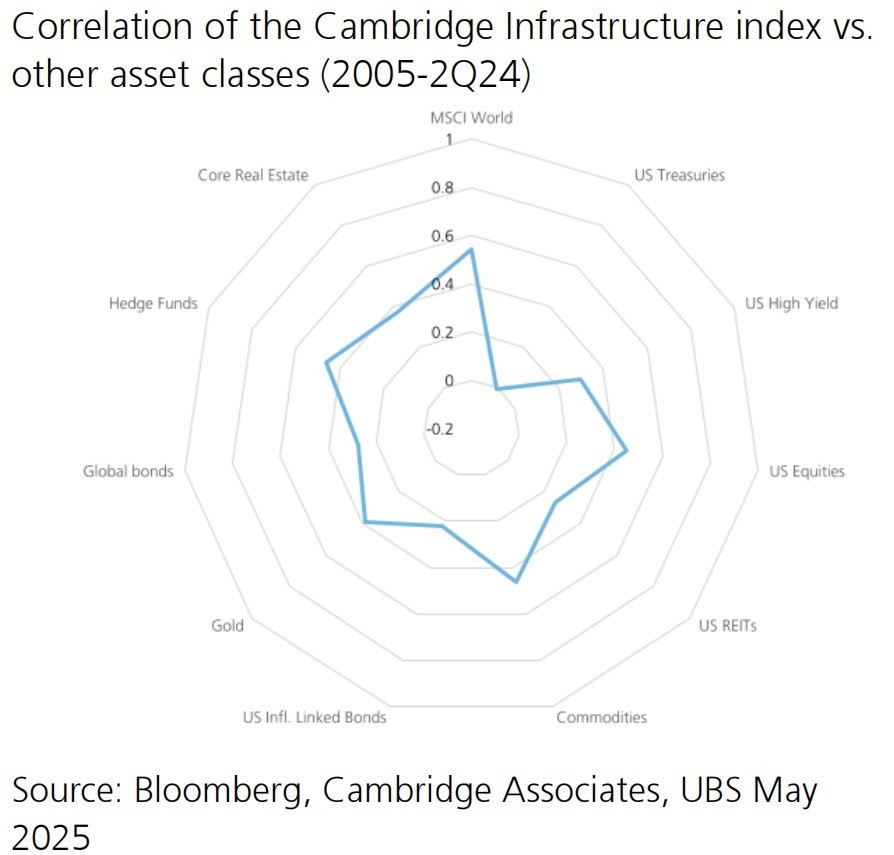
This low correlation profile reinforces infrastructure's role as a defensive allocation — a stable performer amid both inflationary surges and recessionary fears. Core/core-plus infrastructure assets, in particular, offer inflation-linked cash flows with lower operational and GDP sensitivity.
Structural Strengths: Why Infrastructure Is Different
The report emphasizes that infrastructure investments, especially core/core-plus strategies, possess several qualities that make them resilient in today's macroeconomic environment:
-
High barriers to entry: Many infrastructure assets are monopolistic by nature — such as regulated utilities or toll roads — offering predictable revenue streams.
-
Inflation pass-through: Contracts often include inflation escalation clauses, allowing revenues to rise alongside costs.
-
Demand certainty: Essential services like energy transmission, water, and digital connectivity remain in high demand regardless of economic cycles.
-
Attractive valuations: The recent slowdown in transaction activity, driven by higher financing costs, has left room for better pricing and less competition.
What’s more, current investment levels in global infrastructure still fall short of what is needed to support economic growth, particularly in emerging markets and in the renewable energy transition. This supply-demand imbalance underpins the long-term growth story.
Where to Focus Now: Core/Core-Plus vs Opportunistic
UBS makes a clear call: In today’s climate, core and core-plus assets are the preferred approach. These include mature, income-producing assets such as digital infrastructure, power transmission networks, and regulated utilities. They offer:
-
Robust, inflation-linked cash flows
-
Lower GDP sensitivity
-
Moderate leverage and predictable returns
In contrast, value-add and opportunistic strategies, which involve new construction or asset repositioning, are currently facing more risks. These include project delays, cost overruns, and exposure to tariff-related disruptions in a fragmented geopolitical landscape.
“Development assets may face project delays and increased costs due to tariff-related disruptions, and are more at risk of repricing.”— UBS CIO Report, June 2025
Therefore, infrastructure investors are advised to diversify across sectors, but prioritize assets that are non-cyclical and benefit from stable regulation and long-term contracts.
Macro Tailwinds: The 3Ds and Beyond
The report outlines several structural forces driving demand for infrastructure:
-
Decarbonization – The global push for net-zero emissions is accelerating investment into renewable energy, grid modernization, and EV infrastructure.
-
Digitalization – Data consumption and connectivity needs are skyrocketing. Think fiber networks, 5G towers, and hyperscale data centers.
-
Deglobalization – Supply chains are being reconfigured for resilience, not efficiency, prompting renewed demand for logistics hubs, ports, and transportation upgrades.
Additionally, emerging technologies like AI, automated logistics, and smart energy management are only increasing the need for resilient infrastructure systems.
Risks and Considerations
Despite its strengths, private infrastructure is not without challenges. Investors must weigh several factors:
-
Geopolitical risk: Shifting trade dynamics and political uncertainty, especially around clean energy subsidies, could impact project timelines.
-
Cost of capital: Elevated interest rates reduce deal activity and raise hurdle rates.
-
Illiquidity and complexity: These are long-term, locked-in investments, often with limited disclosure and control.
-
High minimums: Direct investment is generally limited to institutions or via funds with substantial entry thresholds.
For most investors, infrastructure exposure will come via private fund structures, where manager selection and strategy fit are key.
Final Thoughts
As global portfolios continue to adapt to a higher-for-longer inflation regime and slower growth expectations, private infrastructure stands out as a long-duration, inflation-hedged allocation that also aligns with sustainability goals. With returns that have historically outpaced private equity in down years and resilience through rate cycles, it's becoming less of a niche and more of a necessity.
#Private Market: Unlocking Potential#privatemarket