
Innovation Unleashed: Can Xiaomi’s YU7 and AI Glasses Forge the Future?

Instant Impact: Xiaomi’s June 26 “People•Car•Home” launch revealed two headline-grabbers: the YU7 electric SUV, which secured 200,000 preorders in just three minutes, and the AI Glasses, starting at ¥1,999. Both products blend cutting-edge specs, sleek design, and aggressive pricing—signals that Xiaomi is doubling down on its “smart living” ecosystem.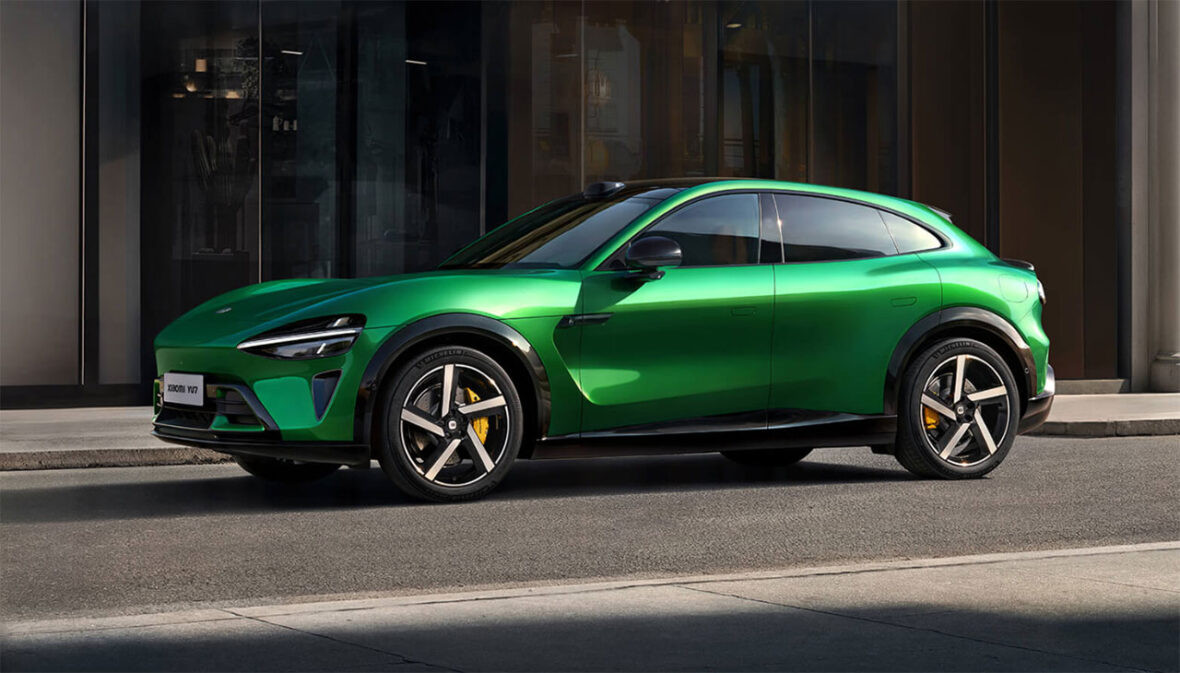
Market Reaction: Following the event, Xiaomi’s U.S. ADR soared over 10% as investors cheered the integrated strategy spanning mobile devices, home appliances, wearables, and now vehicles.
What You Need to Know Now
- 200,000 Preorders in 3 Minutes: The YU7 electric SUV hit 200,000 reservations just three minutes after orders opened—a testament to pent-up demand.
- AI Glasses at ¥1,999: Dubbed the “pocket AI gateway,” the glasses weigh only 40 g, pack a 12 MP camera, open-ear speakers, and on-device AI for real-time translation and object recognition.
- SUV Specs That Turn Heads: The YU7 standard model delivers 835 km range, 0–100 km/h in 3.23 s (effective 2.98 s), and up to 690 PS—performance once reserved for million-yuan supercars.
- Fast Charging Feats: With an 800 V silicon-carbide platform, the Max variant charges from 10% to 80% in just 12 minutes, enabling 620 km of driving range.
- Ecosystem Synergy: Xiaomi pledges seamless integration across phone, glasses, car, and home—complete with lifetime free HAD driving assistance (¥26,000 value) and luxury interior upgrades (¥29,000 value) for early YU7 buyers.
First Impressions: Record-Breaking Demand
Within moments of the live stream, the YU7 preorders exploded past 200,000, underscoring consumer excitement for Xiaomi’s foray into electric SUVs.
CEO Lei Jun likened his nerves to the SU7 launch, emphasizing this model as a “crucial exam” for the company’s automotive ambitions. Investors echoed that sentiment: Xiaomi’s U.S. ADR leapt over 10% on the Nasdaq following the announcement.
Early momentum also favorably impacted analyst forecasts. Deutsche Bank projects 100,000 YU7 deliveries in 2025, while Goldman Sachs positions the model as a serious challenger to Tesla’s Model Y. Both reports highlight YU7’s blend of high-end specs and aggressive pricing as a formula for market share gains.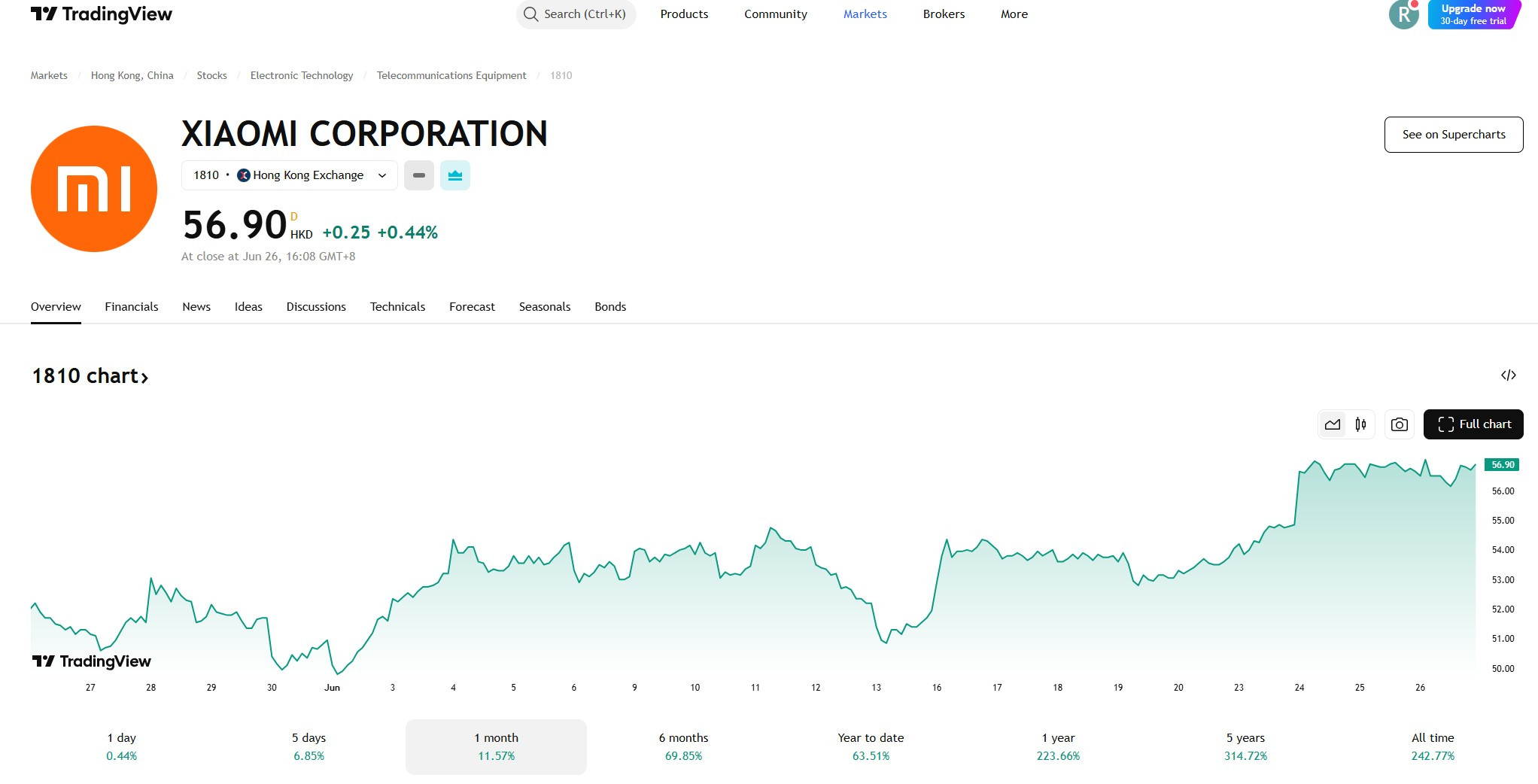
Here’s the Tech Breakdown
AI Glasses:
- Design & Comfort: D-frame optimized for Asian faces; 40 g weight ensures all-day wear without pinch points.
- Imaging & Audio: 12 MP large-aperture camera with optical stabilization; five microphones plus open-ear dual speakers with anti-leak technology.
- AI Features: On-device “Xiao Ai” assistant powers object recognition, live translation, and hands-free video/photo capture.
- Pricing Tiers: Standard at ¥1,999; single-color electrochromic at ¥2,699; full-color electrochromic at ¥2,999.
YU7 SUV:
- Performance: Up to 690 PS, 0–100 km/h in 3.23 s (2.98 s net), top speed 253 km/h.
- Range & Charging: Standard 835 km WLTP; Max variant 770 km; 800 V SiC platform enables 10→80% in 12 min for 620 km range.
- Interior & Safety: Nappa leather, zero-gravity seats with 10-point massage; tri-MiniLED “Tianji” panoramic display; next-gen EC dimming glass blocks 99.85% light.
- Price & Perks: Standard ¥253,500; Pro ¥279,900; Max ¥329,900. Early buyers get ¥29,000 of premium upgrades and ¥26,000 of lifetime HAD free.
Beyond the Headlines: Deep Dive into AI Glasses
At just 40 g, Xiaomi’s AI Glasses deliver a “pocketable AI portal.” CEO Lei Jun framed them as the next-gen personal intelligence device—always on your face, ready to capture life at the press of a temple-mounted button.
Sporting a 12 MP camera with high dynamic range and electronic stabilization, they promise crisp first-person video and photos of children, pets, or spontaneous moments.
On the audio side, open-ear dual drivers pair with five microphones to offer immersive stereo sound and noise resilience. Xiaomi’s proprietary anti-leak “inverse sound‐field” technology ensures privacy even in quiet environments.
Users can live-stream over third-party apps, take hands-free calls, and even pay by scanning QR codes, all via on-device AI that runs Xiaomi’s “Xiao Ai” assistant.
Industry experts warn of challenges: chip performance, battery life, and display optics remain constraints for broad adoption; privacy and data security also loom large. Yet, the glasses’ sub–¥2,000 entry point could accelerate consumer trials, aligning with forecasts that 2025 marks a pivotal growth phase for AR wearables.
Unpacking the YU7: A Rival for Million-Yuan Supercars?
Lei Jun repeatedly underscored the YU7’s “million-yuan performance” at sub-¥330,000 pricing. The standard model’s WLTP-rated 835 km range leads its class, while the four-wheel-drive Max’s 770 km still tops many rivals.
The advanced 800 V carbon-silicon architecture and 5.2 C charge rate allow a lightning-fast 10–80% fill in 12 minutes.
Performance figures rivet enthusiasts: 690 PS, 0–100 km/h in 3.23 s (2.98 s net), and a 253 km/h top speed. On track, a 24-hour endurance test logged 3,944 km at an average speed above 210 km/h, swapping drivers but not cars, and charging 30 times for 10–20 minute spurts—a spectacle meant to validate durability under extreme conditions.
Inside, the tri-panel MiniLED “Tianji” display blends HUD, infotainment, and passenger screens. Nappa leather zero-gravity seats minimize fatigue; cutting-edge EC dimming glass blocks 99.85% visible light and nearly all UV/infrared rays.
Standard has end-to-end Nvidia Thor ADAS chips, while lifetime free HAD service adds £26,000 of value.
Ecosystem Ambitions: How “People•Car•Home” Comes Together
Xiaomi’s vision extends beyond hardware. The “People•Car•Home” philosophy fuses smartphones, wearables, EVs, and home appliances under the MIoT platform.
Early YU7 buyers receive complimentary high-end upgrades worth ¥29,000—Nappa leather, massage seats, HEPA air filtration—and lifetime free HAD valued at ¥26,000, cementing loyalty.
Strategic partners like BYD, GAC Toyota, and Zhengzhou Nissan endorse open-platform alliances, while Apple users gain optimized iOS-to-car connectivity. Plans to upgrade the Xiaomi XLA large-language model this fall hint at richer in-car AI for navigation, voice controls, and smart-home integration.
Analyst consensus: Xiaomi’s ecosystem approach—tightly linked hardware, software, and services—will differentiate it from standalone EV startups. If YU7 meets or exceeds delivery projections, the car division could become a key profit driver alongside smartphones and IoT devices.
What Comes Next? Betting on Xiaomi’s Auto Future
With SU7 sales already surpassing expectations, the YU7 launch represents Xiaomi’s boldest automotive push yet. Investor optimism runs high: Deutsche Bank forecasts 100,000 YU7 units in 2025, and Goldman sees Xiaomi challenging legacy automakers in the high-end EV SUV segment.
Critical questions remain: Can production scale meet demand? Will charging infrastructure support rapid-charge promises? And can in-car AI truly stand out amid rising competition? Yet, with 200,000 preorders in three minutes, consumer sentiment seems firmly in Xiaomi’s corner—at least, for now.