
Hedge Fund Titan: Bitcoin’s Market Cap to Soar to $5 Trillion in Five Years!

A billionaire investor predicts Bitcoin’s market valuation could double by 2030, regretting not investing in the cryptocurrency sooner.
Coatue Management founder Philippe Laffont recently included Bitcoin in his “Fantastic 40” investment list through 2030.
In a recent interview, he ranked Bitcoin alongside tech giants like Microsoft, NVIDIA, Amazon, and Meta, believing it could become one of the world’s most valuable assets within five years.
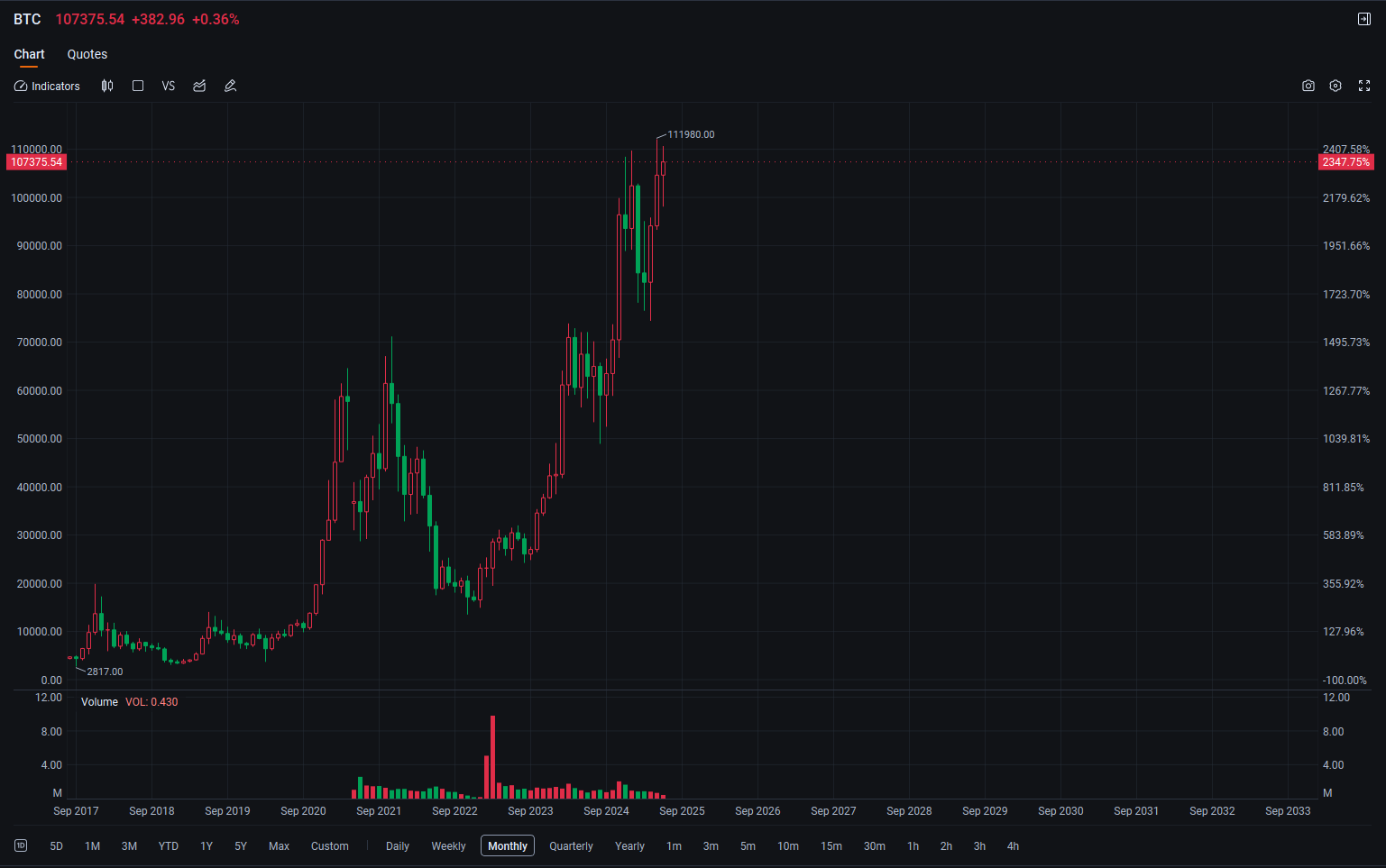
He emphasized that by 2030, Bitcoin could be a major winner, with its total market cap potentially reaching $5 trillion—a 134% surge from its current $2.1 trillion.
“I didn’t get into Bitcoin. I wake up at 3 a.m. every day thinking, ‘Why was I so foolish? What was I waiting for?’ And the price keeps going higher,” he said.
Amid tariff-related volatility and geopolitical and economic concerns, Bitcoin’s price has fluctuated significantly this year. Recently, it rose to $107,000, up 14% year-to-date, after hitting a record high above $111,000 in May.
Laffont, initially skeptical of Bitcoin’s investment appeal, now sees its value continuing to soar for several reasons:
First, Bitcoin’s valuation seems undervalued relative to other assets. Laffont noted global asset net worth is around $500 trillion, with Bitcoin accounting for just 0.5%. He believes a 1%-2% share is reasonable.
He added that global equities represent about $120 trillion and gold about $20 trillion of global assets.
Second, Bitcoin’s volatility appears to be declining compared to stocks. After President Trump’s broad tariff announcements, Bitcoin fell 11%, milder than the Nasdaq 100’s 12% plunge from April 2 to April 8.
“I always thought Bitcoin was wild, and its volatility should be two or three times that of the Nasdaq. But the opposite is true—its volatility as an asset class seems to be decreasing,” he said.
Third, Bitcoin could benefit from concerns over “de-dollarization” and the end of “American exceptionalism.”
Global investors are showing signs of reluctance to hold wealth in U.S. assets after tariff-driven sell-offs. A June Bank of America survey found over half of respondents believe international stocks will outperform in the next five years, with only 23% favoring U.S. stocks.