
Nike Surges 10% After Earnings Beat, But Tariff Troubles Loom Ahead

Shearing sheep
June 27, 2025
GoGPT Summarizes Articles
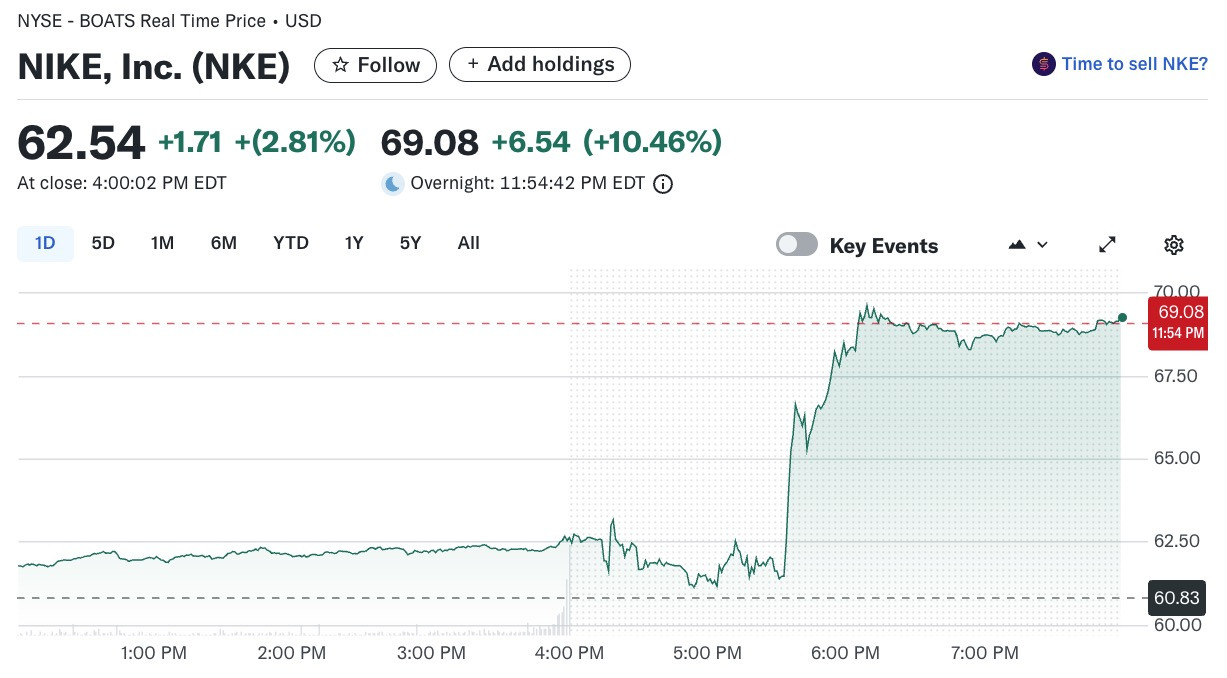
After months of gloomy sentiment and investor skepticism, the sportswear giant reported Q4 FY2025 results that were better than expected—despite a 12% year-over-year revenue drop. The market liked what it saw: $NKE jumped more than 10% in after-hours trading Thursday.
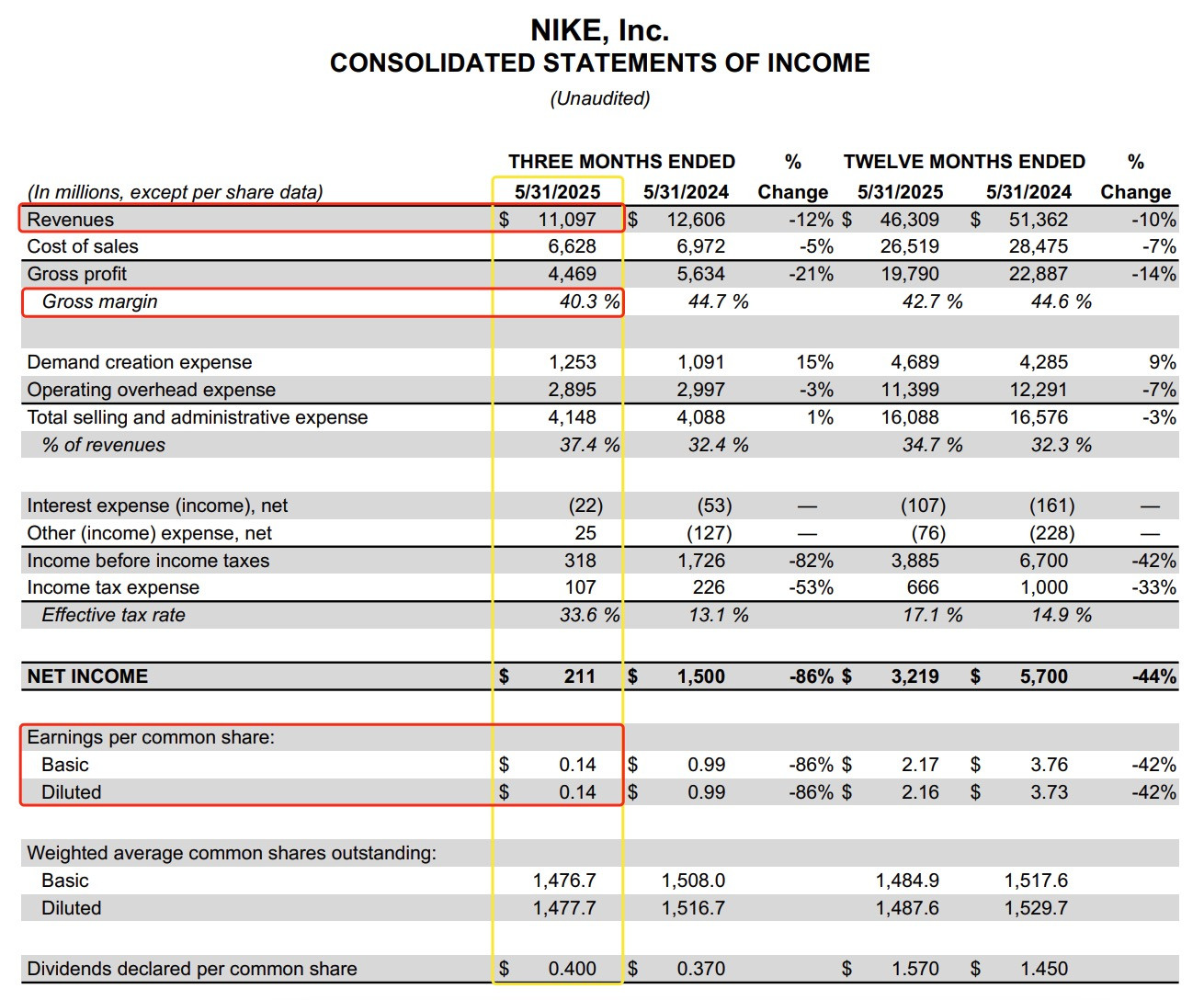
Nike reported Q4 revenue of $11.1 billion, down from $12.6 billion a year earlier but beating the consensus estimate of $10.72 billion. EPS came in at $0.14—an 86% drop—but still ahead of the $0.13 Wall Street had expected.
Margins took a hit too. Gross margin fell by 440 basis points, mainly due to heavy discounting and efforts to clear old inventory. Yet again, the damage was slightly better than analysts anticipated.
The key message? Nike’s results were ugly, but not uglier than the market had priced in.
Nike’s leadership insists that this quarter marks the low point of its business reset.
CEO Elliott Hill and CFO Matt Friend emphasized that the Q4 pain was expected—and necessary—as the company continues its transition. The “Win Now” initiative is starting to show traction, and they believe FY2026 will bring improvement.
As part of this transition, Nike is working to rebalance its digital and wholesale channels. Notably, wholesale actually outperformed direct-to-consumer sales this quarter, signaling a partial return of consumers to third-party retail partners.
At the same time, the company has been aggressively clearing out aging inventory through discounting—painful in the short term but meant to reset the product mix and clear the decks for fresh launches.
On the innovation front, Nike is also doubling down on key product categories like footwear and apparel, sharpening its focus on design and performance to recapture consumer interest.
Interestingly, even though footwear—still Nike’s flagship segment—declined 13% this quarter, it still came in above expectations. The same story played out across apparel and equipment: down year-over-year, but better than feared.
But there’s still a cloud on the horizon—tariffs.
Nike said it expects an additional $1 billion in costs in FY2026 due to the latest round of U.S. import tariffs, particularly those affecting Chinese-made goods.
About 16% of Nike’s supply chain is still based in China, and although the company plans to reduce that to a “high single-digit” percentage by next year, the shift won’t happen overnight. To adapt, Nike has already begun raising prices on select U.S. products to help offset rising costs.
At the same time, it's working to diversify sourcing away from China and reevaluating its cost structure for potential corporate cutbacks.
These efforts are designed to cushion the financial impact of tariffs while keeping long-term strategy intact. Still, a $1 billion hit is no small thing—especially when global consumer sentiment remains fragile.
Overall, Nike’s turnaround isn’t over, but Q4 shows that the worst may be behind it—or at least that’s what the market seems to think. Investors clearly liked the narrative that Nike’s reset is progressing, and that leadership has taken back control of the storyline.
That said, the tariff wildcard—especially if Trump’s trade policies expand—could become a major headwind next year. It's something investors will need to keep a close eye on.
If you're betting on Nike long-term, this may be the inflection point you’ve been waiting for. Just be prepared for more bumps along the way—especially if global trade gets messier.
#Market Spotlight: The Stories Driving Today’s Trading#$Nike Inc.(NKE)