
Tariff Tides Incoming: Could Q3 Be Inflation’s Inflection Point?

The U.S. Bureau of Economic Analysis will release May’s Personal Consumption Expenditures (PCE) index at 8:30 PM ET on Friday.
Consensus forecasts point to a 0.1% month-over-month rise, matching April, and a 2.3% year-over-year gain. Core PCE, excluding food and energy, is expected to climb 0.1% M/M and 2.6% Y/Y.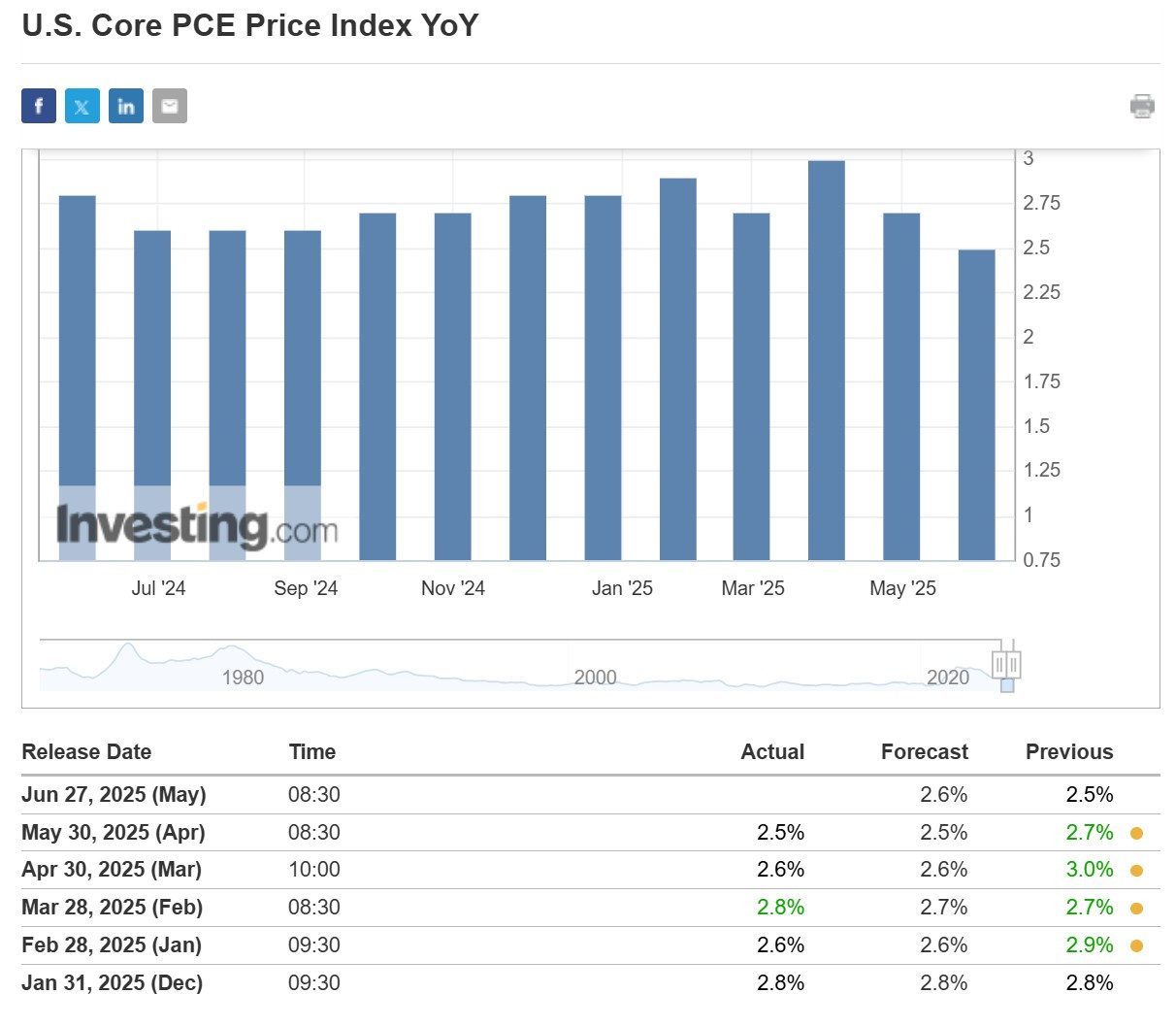
Economists warn that these figures capture only the early impact of tariffs. Despite muted readings so far, the bulk of the cost pressures from newly imposed duties has yet to filter through supply chains and retailers’ shelves.
Key Takeaways at a Glance
- Modest May uptick: PCE and core PCE both forecast at 0.1% growth M/M.
- Tariff iceberg: Estimated 5–6% effective rate in May versus 10–15% expected by Q4.
- Lagged effect: Full tariff pass-through likely by September or October, per inventory turnover.
- Inflation peak: Tariffs could add 0.9–1.5pp to PCE by year-end, according to Kelly.
- Fed split: Policymakers divided on timing of rate cuts; markets favour rate hold.
How Will Tariffs Unfold Over Time?
Tariffs are levied as goods enter warehouses, but they don’t immediately affect consumer prices. Inventories bought before duty hikes cushion retailers, delaying passthrough.
Once older stock runs out and fresh imports incur higher tariffs, sticker-shock will spread from wholesalers to shoppers.
Morgan Stanley’s estimates suggest the bulk of this pass-through will emerge between June and August. Yet, as supply chains clear in Q3, analysts expect a sharper acceleration in headline inflation—potentially marking a decisive pivot point.
Fed Divisions and Market Sentiment
Even with subdued data recently, the futures market sees a 77% chance of unchanged rates at July’s Fed meeting. Some officials, like Governors Waller and Bowman, believe tariff impacts are mild and favour early rate cuts as soon as July.
In contrast, Chair Powell has maintained a cautious, data-dependent stance, underscoring uncertainty around trade shocks. With internal forecasts diverging more than at any time in the past decade, markets are hanging on every dovish whisper—and on whispers of Trump’s prospective Fed chair nominees.
Where Do Markets Turn Next?
Longer-term rates have already reacted: the 10-year U.S. Treasury yield slid from 4.443% on June 20 to 4.261%. The dollar index (DXY) stands at three-year lows.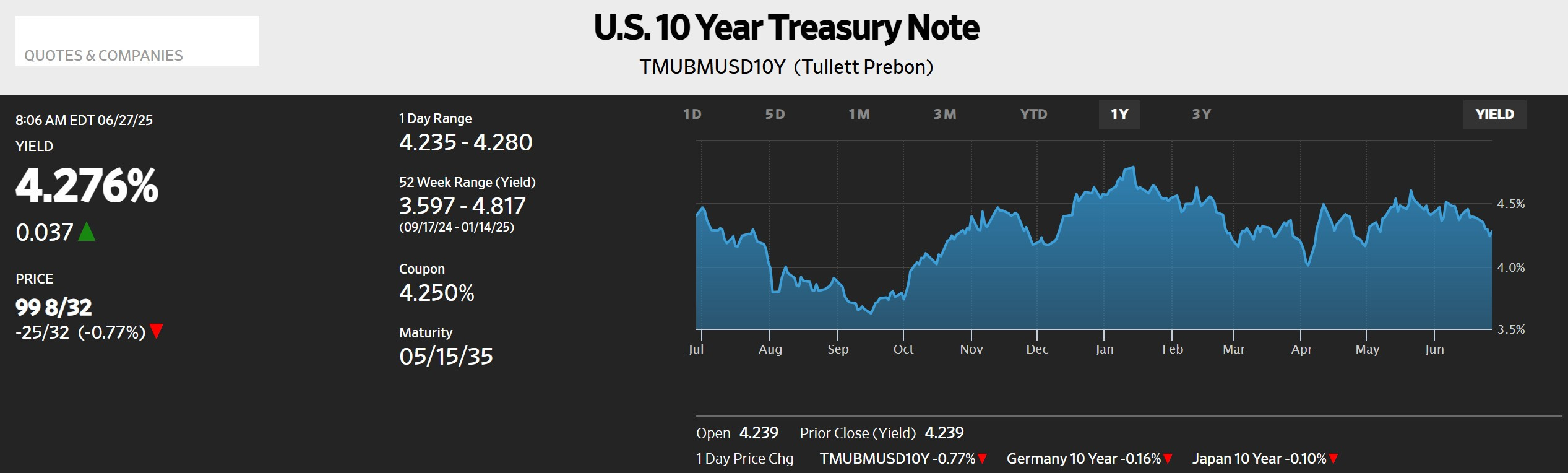 As tariff-driven inflation bites, bond investors will reassess yield expectations, while currency markets weigh Fed dovish bets against rising price pressures.
Geopolitical uncertainties, such as potential Middle East supply shocks, could further sway oil prices and headline inflation. Equity markets, however, have rallied on easing risk aversion, with the Nasdaq-100 hitting fresh highs and Nvidia stock reaching new records.
What Lies Ahead for Commodity Prices?
Spot oil prices briefly spiked amid Middle East tensions, but recent ceasefire hopes helped reverse gains. Any renewed supply disruptions, however, could reignite energy-driven inflation, testing the Fed’s resolve to keep policy “sufficiently restrictive.”
In the gold market, technician Haresh Menghani highlights a potential bearish breakdown if prices breach the 200-period SMA on the 4-hour chart. A retreat toward $3,245 could pave the way to key supports near $3,200 and $3,175.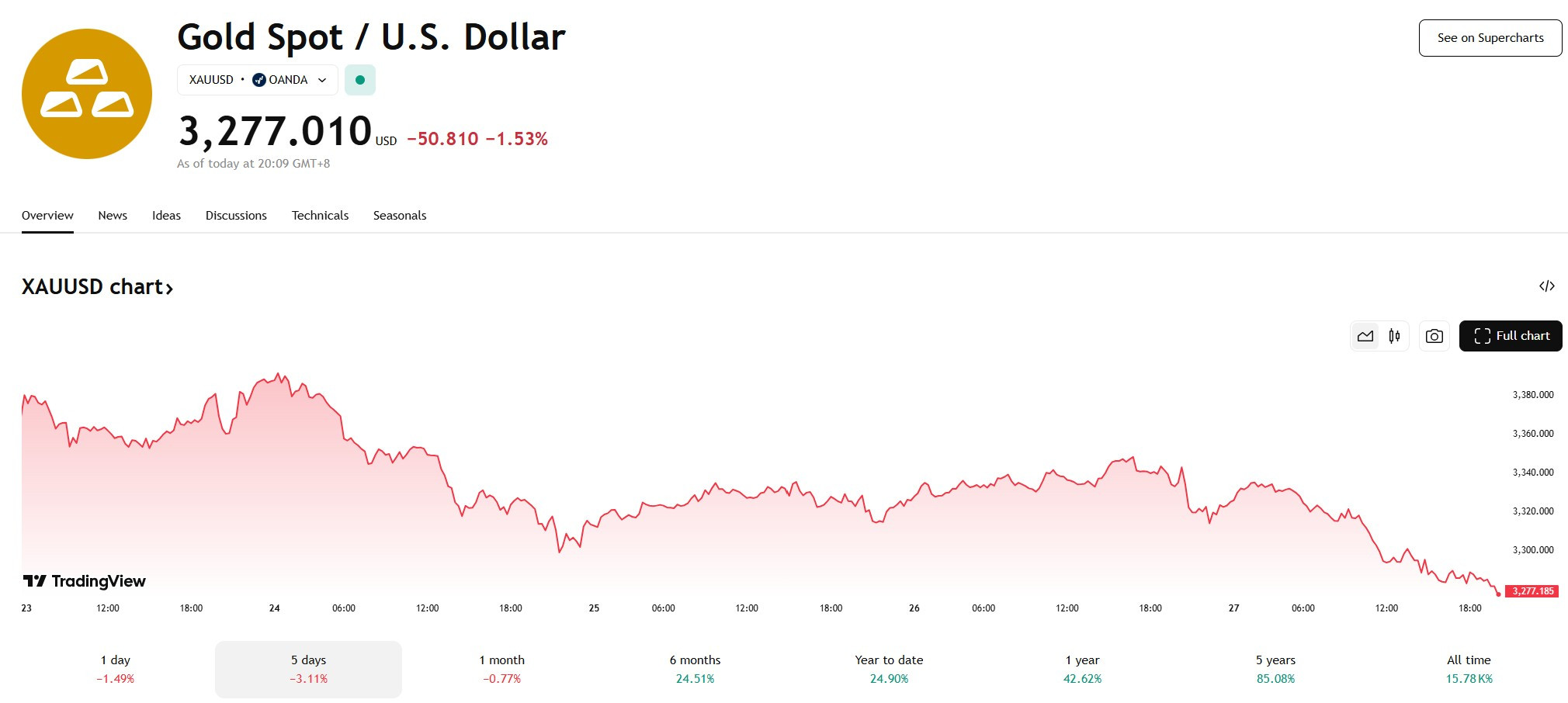 A sustained rebound above the rising-channel midpoint around $3,368–$3,370 would shift the bias back toward $3,400.
Why Q3 Could Mark the Turning Point?
By September or October, the delay inherent in the tariff pass-through cycle should lift PCE readings markedly. With domestic and global supply chains adjusting to higher duties, price pressures may intensify just as Fed officials ponder the first cuts since 2023.
A sharp uptick in core PCE could fracture the fragile consensus on rate cuts, forcing the Fed to delay easing until 2026. Alternatively, if consumer demand softens under higher prices, the central bank might retain its patient stance but signal a shallower cut path.
Eyes on the Iceberg’s Peak
May’s PCE report will offer a preliminary glimpse of tariff-induced inflation, but the real story lies ahead. As warehouses clear and new imports carry heftier duties, the iceberg’s tip will give way to a looming wave of price increases—potentially reshaping the inflation narrative and the Fed’s policy trajectory by Q3.