
BofA Warns of Sell Signal as Market Narrowness and Policy Risks Raise Bubble Concerns

Shearing sheep
June 30, 2025
GoGPT Summarizes Articles
Michael Hartnett, Bank of America’s Chief Investment Strategist, is back with another timely note—and this one’s raising eyebrows. According to Hartnett, the U.S. equity market is now nearing a technical “sell signal,” driven largely by stretched positioning, narrow leadership, and surging inflows. And yet, he says, the real story might be what comes next: the risk of a policy-driven bubble in the second half of 2025.
Tech Signals Say Caution, But the Fed May Say Go
Hartnett’s latest note highlights how several of BofA’s key technical indicators are flashing warning signs:
-
Global breadth is strong, with 73% of MSCI country indices trading above their 50- and 200-day moving averages. A move above 88% would officially trigger a “sell” signal.
-
S&P 500 is dangerously close to a breakout point—if it crosses 6,300 in July, that could trip the trigger.
-
Greed levels are rising: Global equity and high-yield bond inflows over the past four weeks reached 0.99% of AUM, just shy of the 1.0% “greed” threshold.
BofA’s Bull & Bear Indicator has climbed to 5.8, the highest since November 2023, driven by breadth and flows into risk assets. Hedge funds are also starting to hedge more aggressively against a potential correction.
But here’s where it gets interesting: despite all the red flags, the policy environment could actually extend this rally—possibly into bubble territory.
From Tariffs to Tax Cuts: A Setup for Asset Inflation?
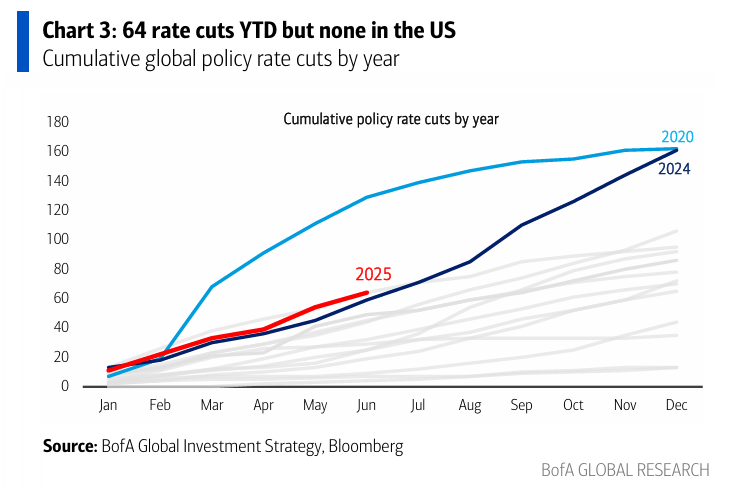
Hartnett points out that central banks around the world have already cut rates 64 times this year. If the Fed joins the party—particularly in the face of slowing U.S. growth—it could pour more fuel on the fire.
Trump, widely expected to announce a new Fed chair nominee in early fall, may set the stage for both rate cuts and tax cuts. The so-called “Beautiful Act” aims to reduce taxes by $90 billion a year starting in 2026. Meanwhile, government spending may also slow, adding another layer of policy-driven complexity.
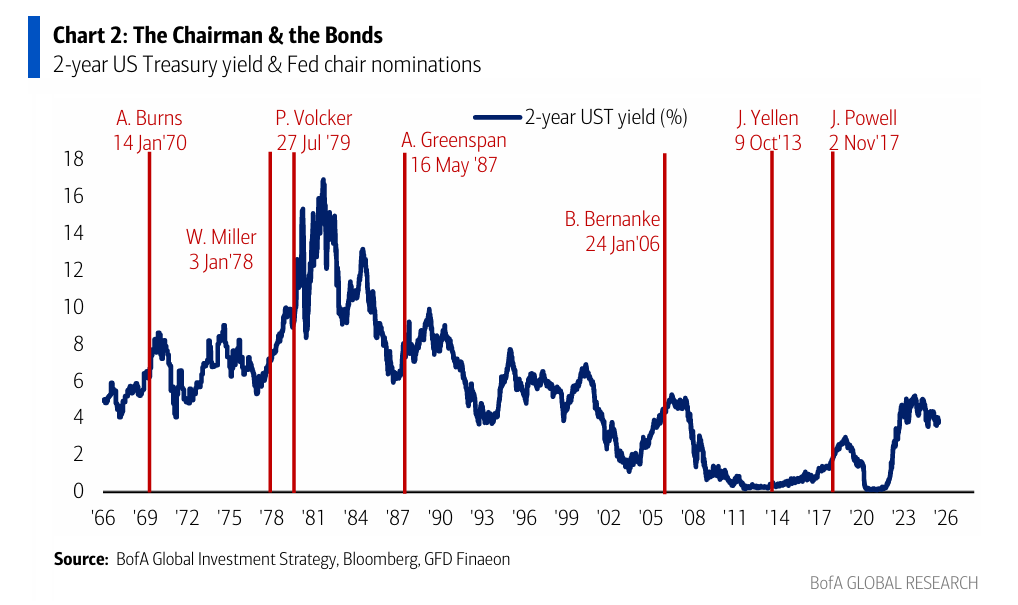
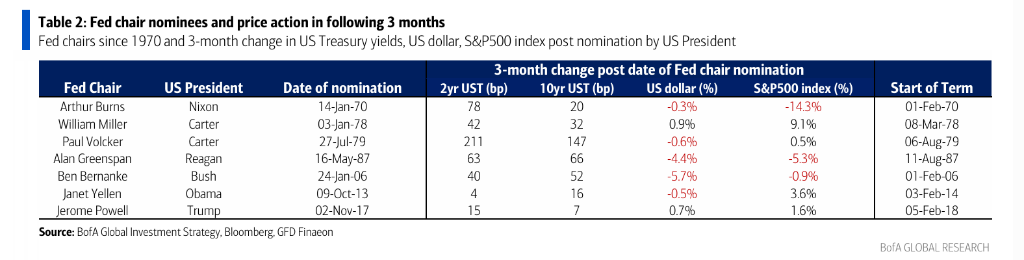
Interestingly, Hartnett notes that Fed chair nominations have historically triggered bond market volatility—with 2-year yields rising an average of 65 basis points and 10-year yields up 49 basis points in the three months following the announcement, while the dollar typically weakens by around 2%. The S&P 500’s performance, however, has been mixed.
This, in his view, creates the perfect setup for a gold rally—and possibly a broader asset bubble.
Narrow Leadership = Fragile Rally
One of the more troubling trends Hartnett highlights is how few stocks are actually participating in the rally. Despite the S&P 500 touching record highs, only 22 stocks are currently at all-time highs.
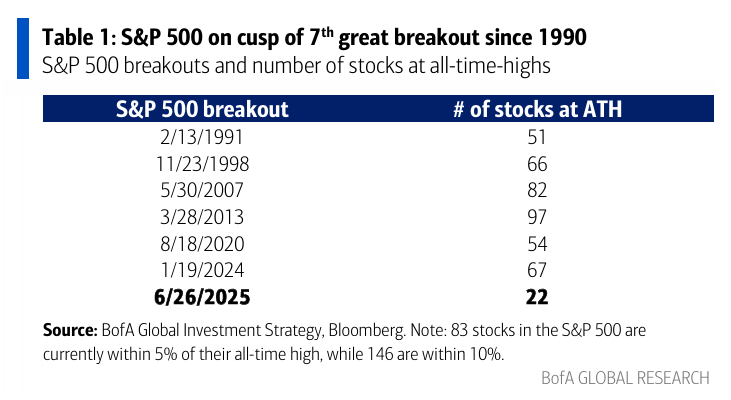
This narrow leadership is mostly concentrated in the “Magnificent 7,” which make up 14.8% of BofA’s private client stock and ETF portfolios.
In short: this isn’t a broad-based bull market—it’s a tech-led surge with low participation, which often precedes volatility.
Flows Suggest Caution—and Rotation
Latest weekly fund flows show divergence:
-
$35B into equities,
-
$28B into gold,
-
$21B into crypto,
-
$121B into bonds,
-
$260B into cash
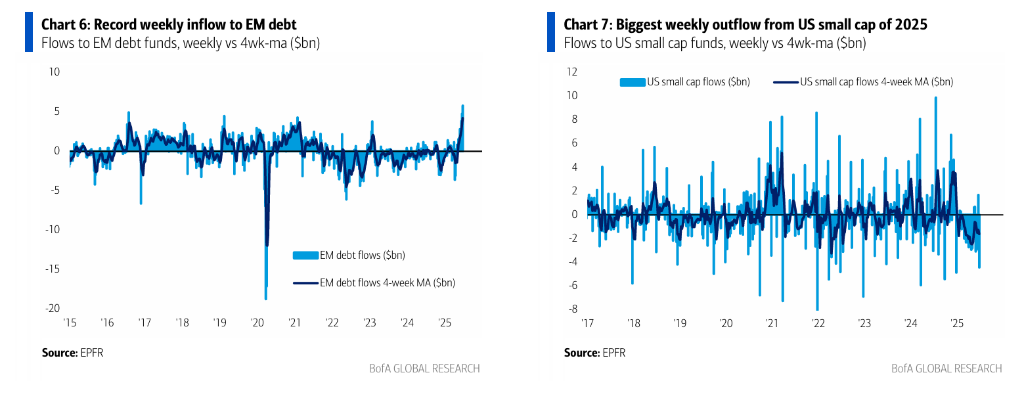
Emerging market debt saw record inflows ($5.8B), while U.S. small caps faced $4.4B in outflows—the largest since December 2024.
Meanwhile, large-cap U.S. stocks continue to attract massive flows, with year-to-date equity inflows hitting $164B—on track to be the third-largest in history. U.S. large caps alone saw $224B in inflows.
Hartnett’s Advice: Stick to “BIG”
Despite the warning signs, Hartnett is sticking with his “BIG” allocation strategy:
-
Bonds: Especially U.S. Treasuries, as yields could fall with Fed rate cuts.
-
International Equities: U.S. outperformance over non-U.S. equities may have peaked.
-
Gold: The best hedge against a weakening dollar and a potential Fed pivot.
He also outlined a few contrarian second-half trades:
-
Long USD / Short gold & commodities
-
Long U.S. consumer discretionary / Short EU banks
-
Long airlines / Short defense stocks
Still, he warns: “Trading rules may say sell, but bubbles often ignore the rules.” Unless we see a major jobs shock (e.g., NFP < 100k) or a bond market tantrum (10-year yields > 5%), the risk of a Fed-fueled, tax-cut-assisted bubble remains very real.
My Take
This feels like a classic case of “bearish on signals, bullish on liquidity.” If the Fed pivots, if Trump injects tax stimulus, and if flows remain strong—even narrow market leadership might not be enough to break the rally, at least not right away.
That said, I do agree with Hartnett on one thing: gold looks like an elegant hedge in a weak-dollar regime, and investors underestimating the policy shifts ahead might be caught off guard.
#stockmarket#gold#bond