
OpenAI Embraces Google’s TPU: What Implications Unfold for Google, Nvidia, and AWS?

As OpenAI shifts its compute backbone from primarily $NVDA GPUs to Google’s TPU accelerators, the AI-infrastructure landscape faces a pivotal inflection point.
This collaboration--OpenAI’s first large-scale embrace of non-NVIDIA silicon--simultaneously endorses $GOOGL ’s ASIC prowess, underscores $NVDA ’s capacity constraints, and spotlights potential gaps in $AMZN Web Services’ custom chip strategy.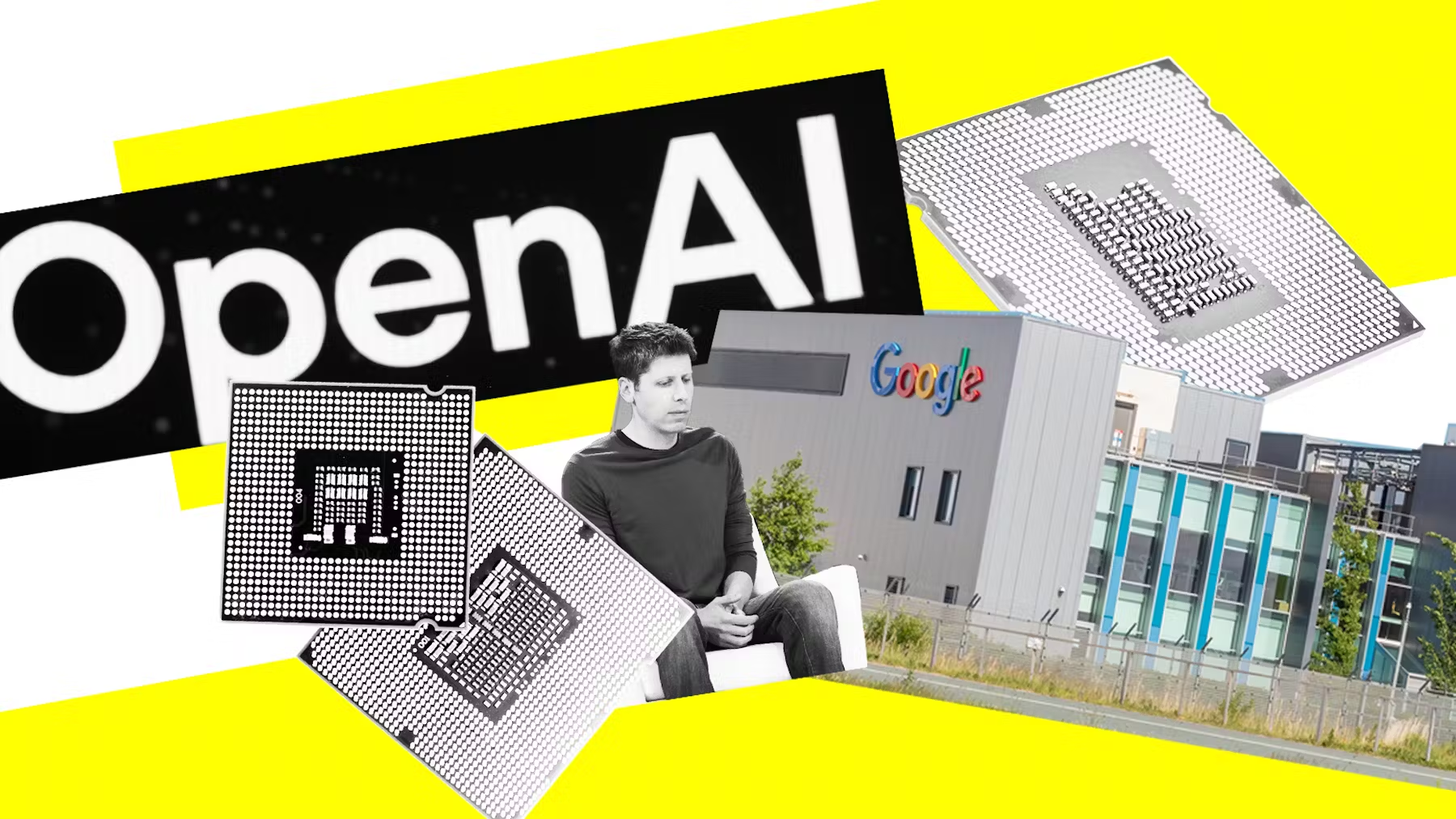
Key Takeaways
- Major Endorsement for $GOOGL Cloud: Morgan Stanley calls OpenAI “the most important external TPU customer” and expects this partnership to accelerate $GOOGL Cloud revenue and cement its ASIC leadership.
- $NVDA ’s Enduring Leadership, but Capacity Strained: Despite selling out rack-scale GPUs and tripling revenue with Google customers, $NVDA ’s supply shortages leave AI teams seeking alternatives.
- AWS’s Trainium in the Spotlight: AWS’s absence from OpenAI’s accelerator roster hints at unmet capacity or softness in Trainium performance versus $GOOGL ’s prior‐generation TPUs.
- Cost and Dependence Dynamics: By tapping Google Cloud TPUs, OpenAI aims to reduce inference costs and ease reliance on $MSFT Azure data centers.
- Ecosystem Effects Ahead: As developers grow comfortable with TPUs, broader adoption beyond $GOOGL may reshape cloud providers’ competitive positioning.
What Does This Mean for Google Cloud?
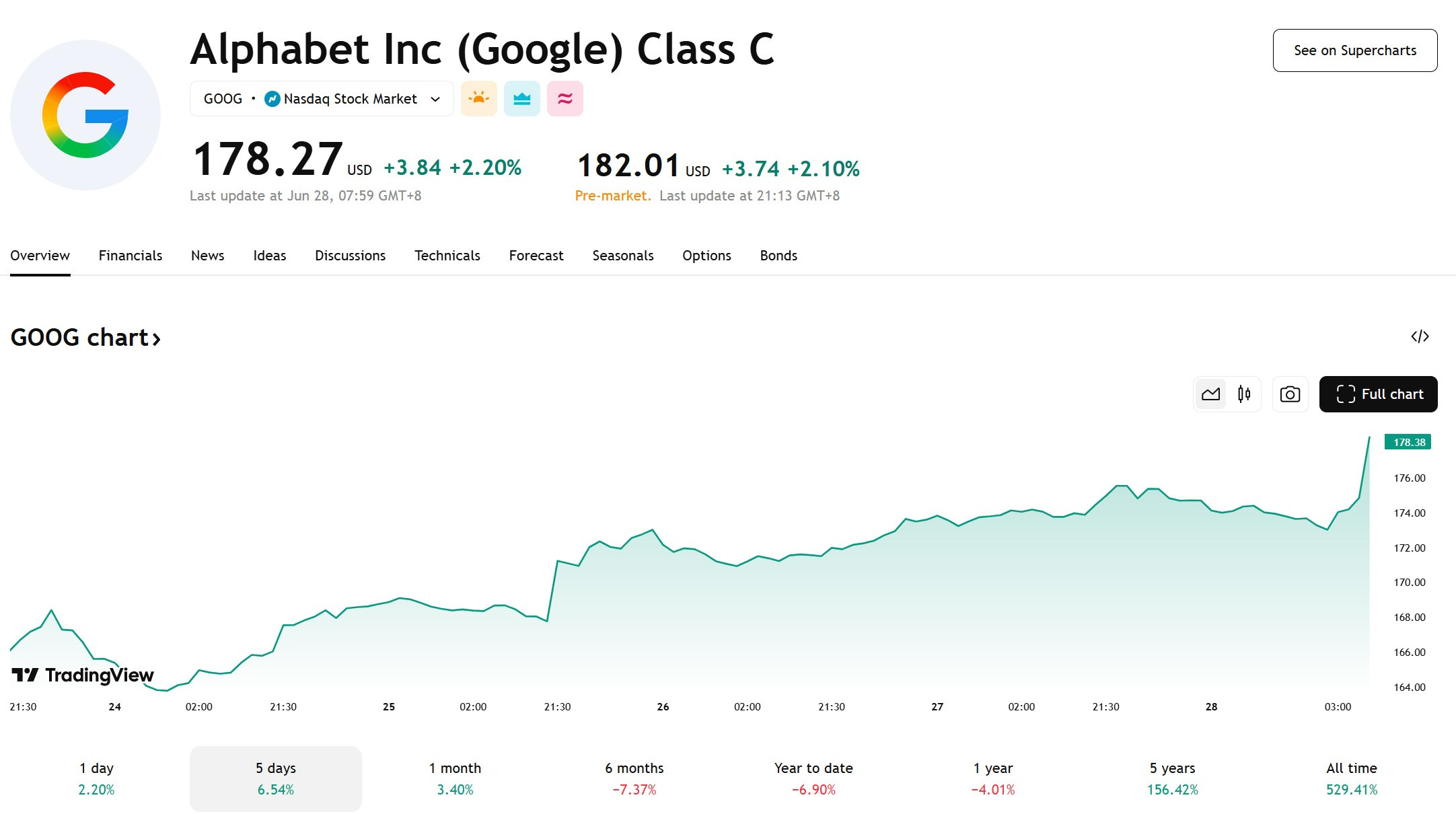
OpenAI’s move is a powerful validation of $GOOGL ’s decade-long TPU investment. Morgan Stanley’s June 30 report flags OpenAI as the single most significant external TPU customer--a stamp of confidence that has yet to be fully priced into $GOOGL equity.
By opening TPUs to a marquee tenant like OpenAI, $GOOGL Cloud not only diversifies its customer base beyond in-house workloads but also carves out a clearer path to monetizing its ASIC ecosystem.
The deal may catalyze an upward revision in Google Cloud’s Compute TAM projections. Analysts estimate that if other high-profile AI developers follow suit--like Apple, Anthropic, and Safe Superintelligence did after gaining TPU access--Google Cloud’s growth curve could steepen sharply in 2026 and beyond.
Will NVIDIA’s GPU Reign Be Shaken?
Despite $NVDA ’s unassailable market share—projected by Morgan Stanley at nearly 65% of AI-GPU expenditure through 2028--OpenAI’s TPU pivot signals that architectural alternatives are maturing.
$NVDA ’s H100 and forthcoming Blackwell chips remain performance gold standards, but chronic capacity constraints, especially at rack scale, have left customers scrambling for secondary supply streams.
Morgan Stanley forecasts $NVDA ’s GPU TAM at over $243 billion by 2027, dwarfing TPU outlays. Yet, the immediate GPU shortages underscore a critical risk: unmet demand can erode even dominant positions.
As TPUs become a viable substitute for inference workloads, $NVDA must quash supply bottlenecks to defend its slice of the AI-compute pie.
Is AWS Facing a Capacity Crisis?
It’s striking that OpenAI’s TPU alliance lists Azure, Oracle Cloud, and CoreWeave among its execution venues--but omits AWS.
While the precise cause remains undisclosed, Morgan Stanley suggests this reflects deeper issues: AWS’s Trainium chips may lack the performance punch or volume availability to meet OpenAI’s rigorous service-level and cost targets.
AWS pioneered custom silicon for AI, yet its absence here raises red flags about its readiness to support the most demanding workloads.
If AWS cannot rapidly scale Trainium production and prove competitive against TPUs, customers eyeing model inference alternatives may bypass AWS altogether, putting pressure on its market share.
The Rise of Google’s TPU Ecosystem
$GOOGL ’s TPUs debuted in 2015 and have evolved through four major generations, each optimized for deep-learning workloads.
Initially an internal secret weapon—powering Google Search, Translate, and YouTube recommendation--TPUs opened to the broader market only in recent years.
Now, with OpenAI aboard, they enter the mainstream AI toolkit.
Long‑term, developer familiarity will be key. As ML engineers integrate TPU-optimized libraries and frameworks into production pipelines, the barrier to entry for non-Google environments lowers.
Should this trend continue, we could see a virtuous cycle: more TPU users driving richer software support, which in turn attracts new customers seeking cost-efficient inference options.
Navigating the AI Infrastructure Landscape
This partnership is not a zero-sum game. Microsoft remains OpenAI’s cloud partner for training workloads, and $NVDA GPUs continue to dominate high‑throughput model development.
Yet the diversification of hardware suppliers reduces systemic risk--for AI providers and cloud platforms alike.
Moving forward, three dynamics will shape the market:
1.Cost Sensitivity: Inference costs are rising as model sizes swell; cheaper per-unit computation will win share.
2.Supply Assurance: Customers demand reliable access; capacity shortages breed multi-vendor strategies.
3.Software Ecosystems: Robust tooling and optimized libraries tilt the balance; hardware without a thriving dev community struggles to gain traction.
Ultimately, OpenAI’s TPU alliance underscores that in AI infrastructure, adaptability and ecosystem depth may eclipse raw silicon performance alone.