
Trump Calls Out Musk for Living Off Subsidies and Says He Should Head Back to South Africa

A Public Clash Over Electric Cars Rockets and Billions in Government Support
In a fiery Truth Social post this week, President Donald Trump lashed out at Elon Musk, claiming the Tesla and SpaceX CEO is “probably the most subsidized individual in history.” Without massive government support, Trump said, Musk would “shut it all down and head back to South Africa,” saving taxpayers “a fortune” in the process.
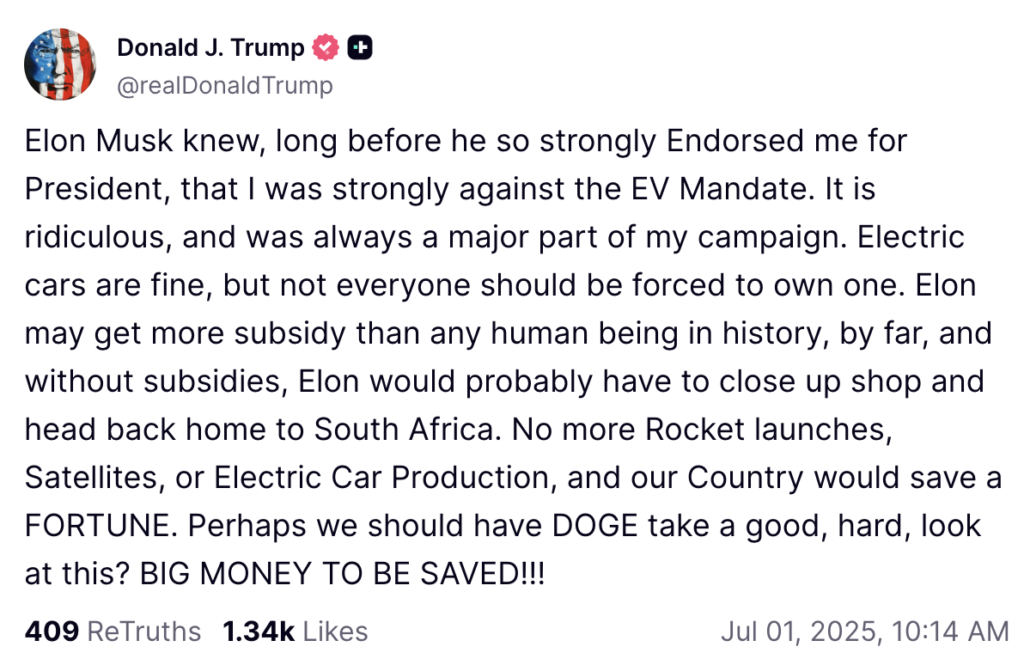
This wasn’t just political theater. It marked a full-on collision between two power players—one representing the state, the other Silicon Valley’s most visible face. At the heart of it is a fundamental question about what role the government should play in supporting innovation, industry and the economy of the future.
Musk Says "Cut It All. Now", in response to Trump post saying DOGE should look at subsidies Musk's companies receive.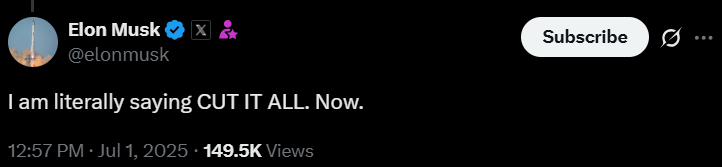
Is Musk Really Living Off Subsidies
Let’s start with a quick explainer. Government subsidies aren’t handouts in the traditional sense—they’re tools. These can include tax breaks, direct funding, or large-scale procurement contracts, often used to support emerging industries like clean energy, high-tech manufacturing and aerospace.
Musk’s two biggest ventures—Tesla and SpaceX—have absolutely benefited:
-
Tesla has leaned heavily on both federal and state EV tax credits, which helped make its cars more affordable for consumers, especially in its early growth years.
-
SpaceX is NASA’s largest commercial contractor, generating a big portion of its revenue through U.S. government launch missions.
By some estimates, Musk-linked companies have received more than $50 billion in government-related support since 2008. That’s the “runway,” as Trump framed it, that allowed Musk to take off.
Why Trump Is Going After EV Subsidies
On the surface, this feels like Trump simply throwing red meat to his base. But there’s more going on.
He’s taking aim at President Biden’s clean energy policies, especially rules that encourage or even mandate EV adoption. These include:
-
Tax incentives for electric vehicles
-
Tougher emissions standards for gasoline cars
-
Plans to phase out gas-powered vehicles in favor of electric alternatives
Trump’s position is clear: “Electric cars are fine. But not everyone should be forced to own one.”
Beneath that line lies a deeper political divide—between fast-paced green transition and concerns about cost, consumer choice, and regional economic impact. Trump is betting that opposing EV mandates will win back voters in manufacturing-heavy states.
Even though Musk was once part of Trump’s advisory circle and donated over $250 million to his 2024 campaign, their relationship has soured. Musk openly criticized Trump’s massive post-election spending bill, calling it “insane.” Now Trump is taking the gloves off—using subsidies as ammunition in a broader political and economic fight.
Trouble Is Already Hitting Tesla
This public feud isn't happening in a vacuum. Tesla’s fundamentals are under pressure:
-
In Quebec, Tesla’s Q1 2025 sales plunged 87% year over year. Yet the company is still operating 35 showrooms in the region.
-
The stock has dropped more than 30% since the beginning of the year.
-
Analysts now warn that Tesla could report its first GAAP loss by Q1 2026.
And then came Trump’s post—hitting just as sentiment was weakening. In extended trading on June 25, Tesla shares slid another 5.7%.
But Is Musk Really to Blame
Here’s the truth: Musk has certainly benefited from government programs. But he also delivered products that changed global markets.
-
Without EV tax credits, we may not have seen electric cars go mainstream this quickly.
-
SpaceX’s reusable rockets have slashed launch costs and expanded the reach of private spaceflight.
-
Tesla has pushed the boundaries of energy storage, autonomous driving, and AI-powered computing.
You can argue he "took the subsidies"—but plenty of others did, too. Musk actually built things with them.
So the issue isn’t whether subsidies are bad. It’s whether they produced value. And in many ways, Musk’s ventures did.
What Investors Should Watch Next
From a financial perspective, the outlook hinges on three key factors:
1. Policy risk and timing
Trump’s threats to cut EV subsidies are serious, but real changes would need congressional approval. That’s not guaranteed, especially with swing states deeply invested in green tech.
2. Tesla’s moat beyond subsidies
Even without support, Tesla’s lead in autonomous driving, energy storage and manufacturing efficiency could sustain its valuation. But execution matters—investors want to see these technologies commercialized, fast.
3. Valuation reset
Tesla is now trading at around 40x forward earnings. If GAAP losses emerge in 2026, that multiple could look steep. For now, the stock may be better suited to tactical plays rather than long-term heavy positions.
What This Feud Really Tells Us
This isn’t just about Elon vs. Donald.
It’s a snapshot of what happens when political cycles collide with industrial transformations. The EV boom is still alive—but government support is no longer a given. Markets are beginning to ask a different question:
Without subsidies, what exactly is Tesla’s edge?
The EV race is no longer about who started it.
It’s about who can survive the next lap without a government tailwind.