
AI Frenzy Returns, but Can Tech Stocks Keep Climbing in H2?

Shearing sheep
July 2, 2025
GoGPT Summarizes Articles
After a volatile start to 2025, U.S. tech stocks have staged a striking comeback—one that’s starting to look a lot like last summer's AI-driven rally.
According to Goldman Sachs’ TMT head Peter Callahan, the recent strength in the Nasdaq 100—up 37% from its earlier trough—feels reminiscent of the 2024 frenzy. AI is once again dominating headlines, fueling optimism and aggressive dip-buying.
But the first trading day of the second half delivered a sharp reminder: momentum has limits.
A Strong H1, Fueled by Familiar Name
Let’s start with the big picture. The Nasdaq 100 is up just 7% year-to-date, but that headline number hides a major rebound. After a 25% peak-to-trough decline earlier this year, the index ripped higher by 37% into June, driven largely by the AI megacaps—Nvidia ($NVDA), Microsoft ($MSFT), and Meta ($META). AMD ($AMD), Broadcom ($AVGO), and other semiconductor names also caught fire, especially in pre-market trading where 2–3% jumps became common.
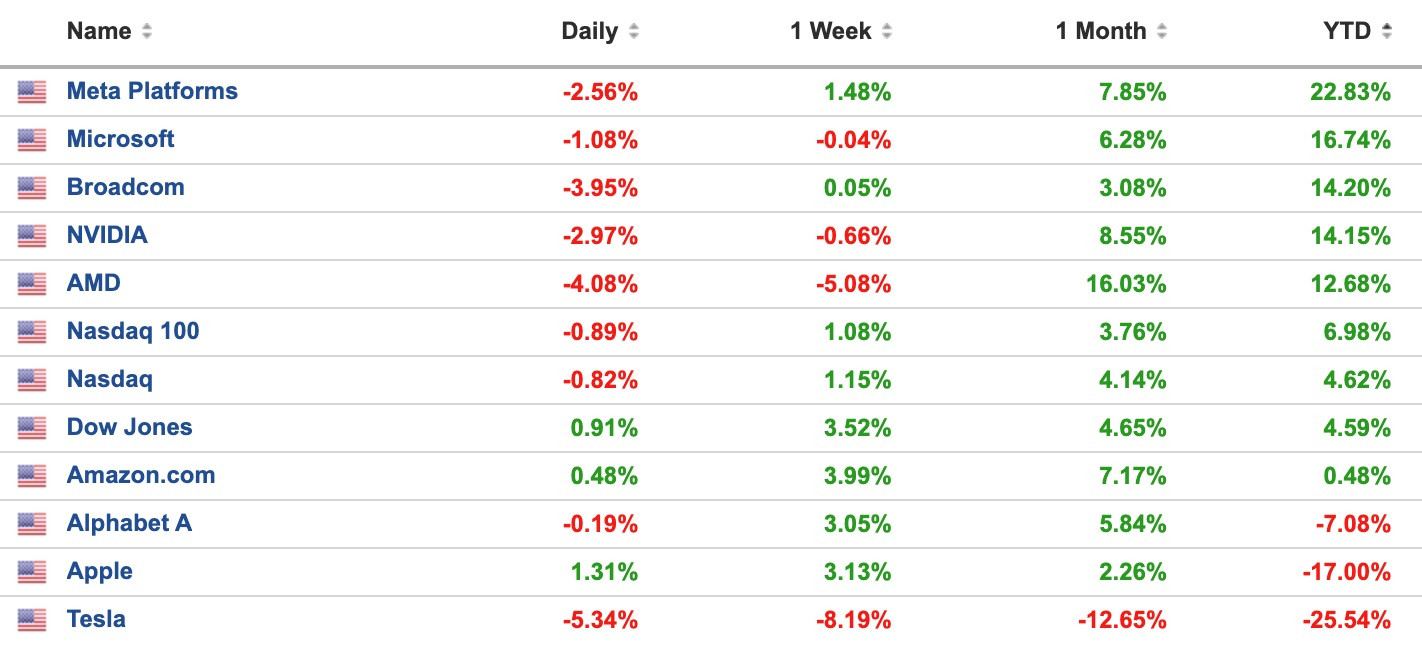
Goldman’s Callahan noted a clear divergence: while AI darlings outperformed, names like Amazon ($AMZN), Alphabet ($GOOGL), and Apple ($AAPL) lagged. Nvidia and Microsoft alone pulled the index forward, reinforcing investors’ preference for “clean, popular, and effective” names.
Even more telling? Since the April bottom, the Nasdaq 100 only posted three single-day drops of more than 1%. That suggests buyers are stepping in quickly on weakness, encouraged by falling bond yields and expectations for Fed rate cuts.
Valuations Look Reasonable, But RSI Flashes a Warning
Despite the enthusiasm, Goldman warns that we’re now entering “overbought” territory. The 14-day RSI for the Nasdaq 100 hit 73, the highest since July 2024. Historically, readings above 70 tend to signal short-term caution, especially when paired with seasonal volatility.
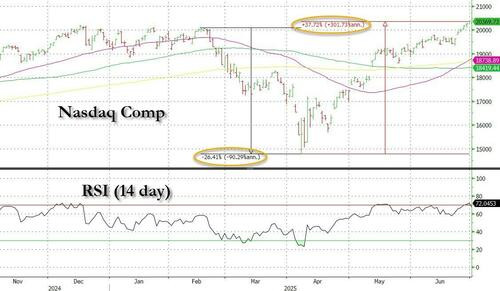
Still, valuations haven’t gone off the rails. The index trades at around 28x forward earnings, right in line with the 5-year average and below the 30x+ peaks seen in prior AI hype phases. Bulls argue that AI-driven efficiency, potential Fed cuts, and relatively light Q2 earnings expectations (only 4% YoY growth) give tech stocks room to run—at least for now.
Then Came July… and the Mood Shifted
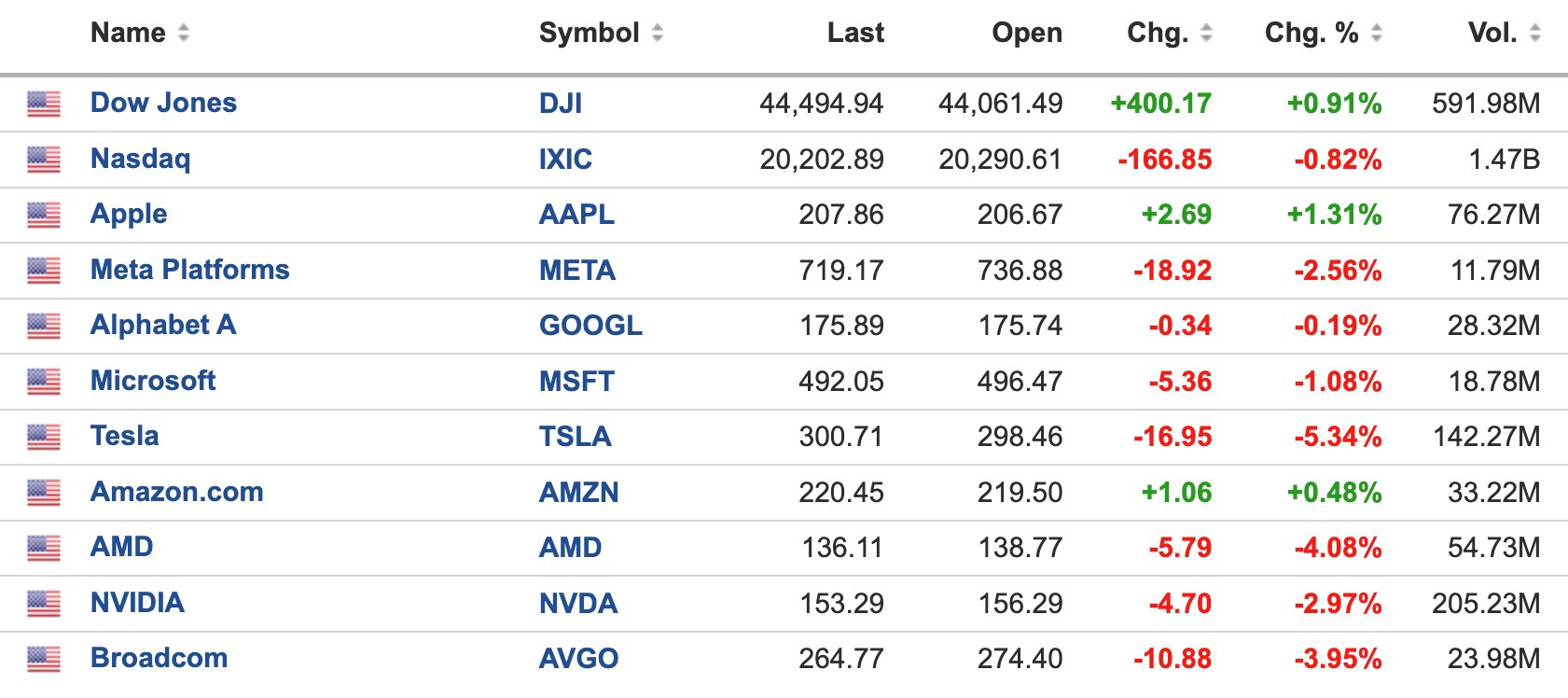
July kicked off with a sharp reversal. The Dow Jones Industrial Average ($DJI) surged 400 points, led by defensive plays in healthcare, while the Nasdaq Composite ($IXIC) sank 0.82%. Big tech—the very names that led H1—saw broad selling: Nvidia, Meta, Broadcom, AMD, and others all dropped notably.
This was the largest wave of momentum unwinding since January’s DeepSeek-driven tech drawdown, according to Goldman’s trading desk.
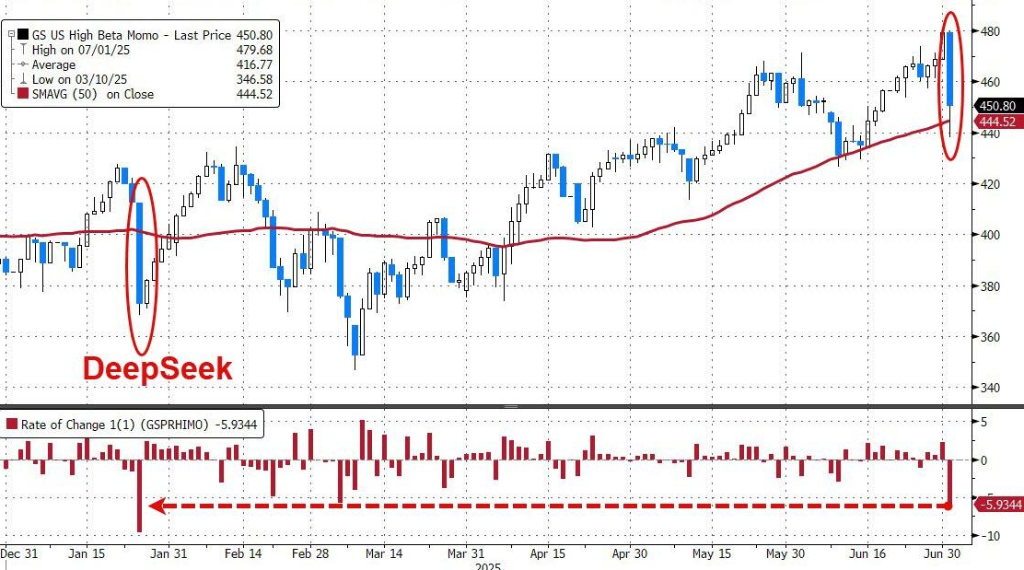
Their traders attributed the sell-off to three main factors:
1. Quarterly repositioning – Fund managers often rebalance at the start of a new quarter, especially after holding off sales near quarter-end to keep paper gains.
2. Powell’s tone shift – While not hawkish, Fed Chair Jerome Powell highlighted tariff-related inflation risks and kept rate cuts uncertain.
3. NFP anticipation – With key U.S. jobs data around the corner, some investors chose to lock in profits and reduce risk.
Interestingly, Apple—down 18% YTD—was one of the day’s rare tech gainers, while Tesla ($TSLA) fell 5% after Trump hinted at an investigation into Musk's subsidies.
A Defensive Rotation Gains Momentum
Healthcare and consumer stocks stood out. UnitedHealth ($UNH) and Amgen ($AMGN) jumped over 4%, Merck ($MRK) rose 3%, and Johnson & Johnson ($JNJ) climbed nearly 2%. Goldman analysts noted that healthcare had massively underperformed the S&P 500 ($SPX) in Q2, making it a natural candidate for rotation.
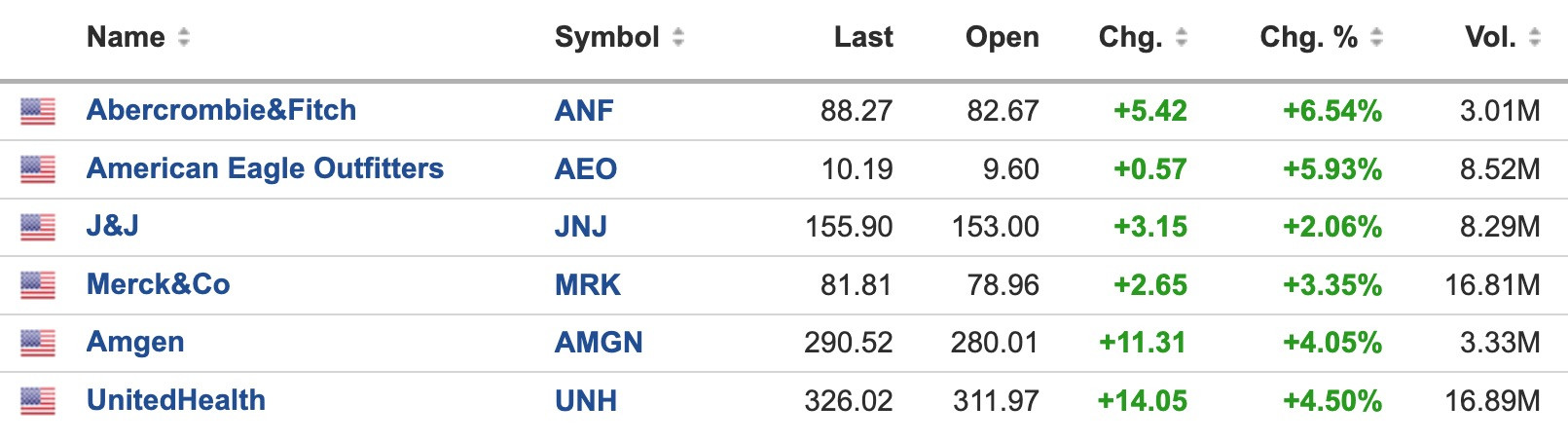
Even consumer names like American Eagle Outfitters ($AEO) and Abercrombie & Fitch ($ANF) bounced—many of these stocks had been heavily shorted earlier in the year. This rotation hints at investors looking for value outside of crowded AI trades, especially amid geopolitical risks and the looming expiration of Trump’s 90-day tariff freeze.
What’s Next?
The key focus for H2 remains unchanged: AI. But investors should keep a close eye on market breadth, rising RSI levels, and potential macro shocks—like trade tensions or weaker-than-expected earnings. While there's no immediate bearish catalyst, the market is walking a tightrope between hype and valuation discipline.
In short: AI is still the story. But the market just reminded us that even the strongest trends need breathers.
#Market Spotlight: The Stories Driving Today’s Trading#TechStocks#ai#$Nvidia Corp(NVDA)#$Microsoft Corp(MSFT)#$Meta Platforms Inc. Class A Common Stock(META)#$Advanced Micro Devices(AMD)#$Broadcom Inc. Common Stock(AVGO)#$Amazon.Com Inc(AMZN)#$Alphabet Inc. Class A Common Stock(GOOGL)#$Apple Inc.(AAPL)#$DOW JONES(DJI)#$NASDAQ(IXIC)#$Tesla Inc. Common Stock(TSLA)#$UNITEDHEALTH GROUP INCORPORATED (Delaware)(UNH)#$Amgen Inc(AMGN)#$Merck & Co. Inc.(MRK)#$Johnson & Johnson(JNJ)#$S&P 500(SPX)#$American Eagle Outfitters(AEO)#$Abercrombie & Fitch Co.(ANF)