
Big Banks Hand Out Cash but There’s More to the Story

America’s biggest banks just delivered some good news for investors. After clearing the Federal Reserve’s annual stress test, many of them wasted no time announcing plans to hike dividends and ramp up stock buybacks. To the market, it’s a sign of strength. But if we look a bit deeper, there’s a much bigger game being played behind the scenes.
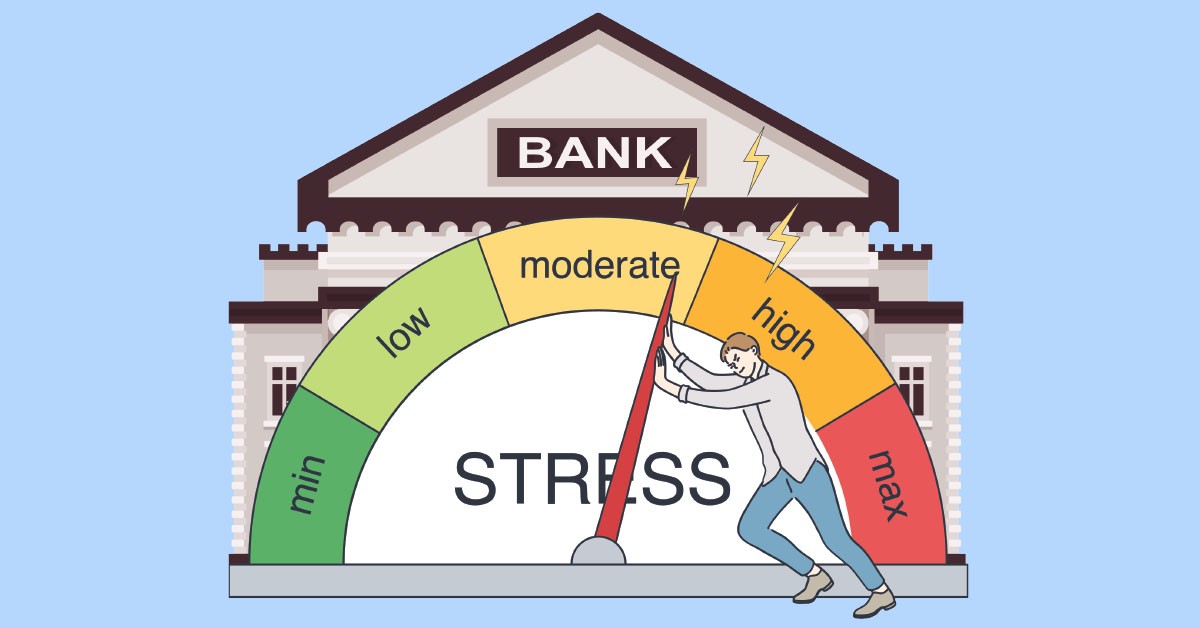
What Stress Tests Are and Why Banks Celebrate When They Pass
Every year, the Fed runs a financial fire drill called a stress test. It’s basically a worst-case-scenario simulation: What if the U.S. went into a deep recession, unemployment jumped to 10%, and housing prices fell by a third? Would the biggest banks still hold up?
:max_bytes(150000):strip_icc()/stresstesting.asp-final-b2577fb8ba804e1fa1069b8bd96bf3bc.png)
If the answer is yes—and the bank has more capital than needed—it gets the green light to return some of that extra cash to shareholders. That’s what just happened. This year’s stress test scenario was a little less severe than last year’s, and all 22 tested banks passed. So, naturally, they’re opening their wallets.
Who’s Spending Big and What It Tells Us
Several banks jumped into action right after the results:
-
JPMorgan $JPM Chase boosted its dividend to $1.50 per share and announced a massive $50 billion buyback plan.
-
Goldman Sachs $GS raised its dividend to $1.00 and reauthorized a $20 billion multiyear buyback program.
-
Morgan Stanley $MS , Bank of America $BAC , Wells Fargo $WFC , Citi $C and others also increased dividends.
-
Investors are still waiting on a few others, like Capital One $COF , to share their capital plans.
The message is clear: these banks are not just healthy, they’re confident about staying that way.
Why Buybacks and Dividends Matter
Stock buybacks and dividends are two classic ways companies reward investors.
-
Dividends are direct payouts—cold hard cash in shareholders’ pockets.
-
Buybacks reduce the number of shares in the market, which usually boosts the stock price and earnings per share.
For investors, both are signals that the company is not only profitable, but also confident enough in its future to give back money rather than hoard it. On Wall Street, that confidence matters almost as much as the cash itself.
The Test Was Easy This Year but the Debate Is Heating Up
Here’s the twist: While the banks breezed through the test this time, the broader debate about how these tests work is getting more intense.
Bank CEOs and their lobbyists have long pushed back against the stress tests, arguing that they’re unpredictable and make it hard to plan. The parameters change every year, and the Fed doesn’t share how the scenarios are built. Banks say that’s unfair, especially since they’ve made major improvements in risk management since the 2008 crisis.
Regulators argue that’s exactly the point. If the tests became too predictable, banks would just "teach to the test" and ignore other risks. Former Fed Vice Chair Michael Barr warned that easy tests could discourage banks from strengthening their own risk systems. Even Fed Chair Jerome Powell has said that stress testing must evolve—and stay tough—to prepare banks not just for what’s likely, but for what’s not.
Meanwhile, Powell’s potential successor, Michelle Bowman, is seen as more open to softening oversight. So the direction of regulation could shift.
My Take on What This Means
There’s no doubt that these dividend hikes and buybacks are good news for shareholders, especially in a shaky market. But I’d be careful not to read them as a sign that all is perfectly well.
Here’s why:
-
This year’s test was easier than the last. It didn’t account for some very real risks like geopolitical conflict, AI-driven disruptions, or persistent inflation.
-
The regulatory tide might be turning. If oversight weakens too much, we could be setting the stage for trouble down the road.
-
Banks are sending a strategic message. These capital return plans aren’t just financial decisions—they’re part of a campaign to win public and political support in the coming regulatory battles.
This year’s stress test looked like a victory lap, and the big banks responded with a splash of cash. But behind the scenes, a bigger fight is brewing over how much freedom Wall Street should really have. As investors, we’d be wise to watch not just the payouts—but the playbook that’s being rewritten while the crowd is cheering.