
Bitcoin and Crypto Drop as Trump’s Big Spending Bill Passes Signaling Trouble Ahead

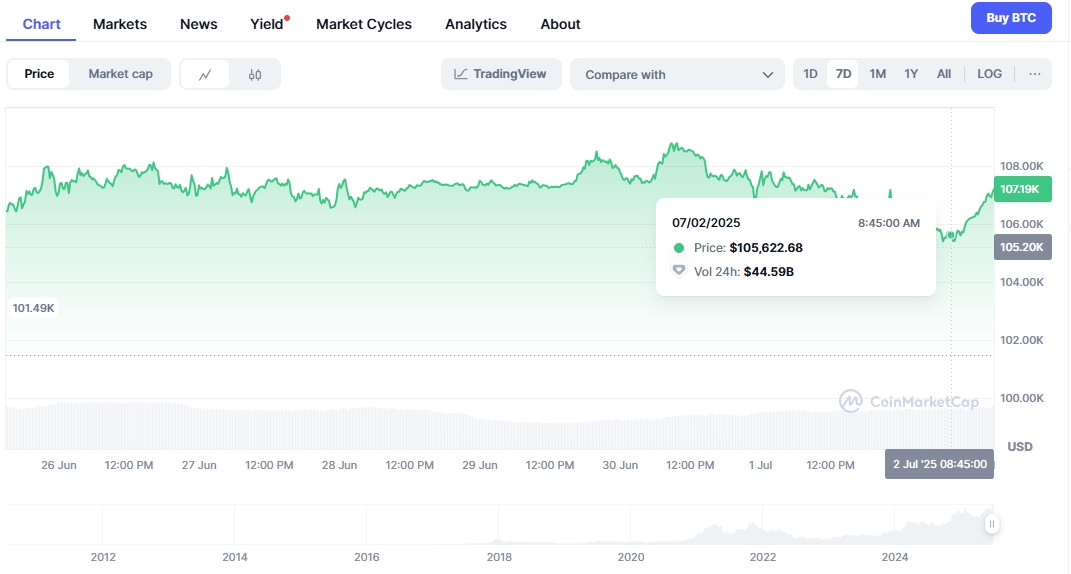
Early July saw a sharp sell-off in the crypto market. Bitcoin tumbled to around $105,000, while Ethereum and Dogecoin also slipped. In just a few hours, over $220 million worth of long positions got liquidated. But this wasn’t just a crypto-only event — it was part of a broader market reaction.
The real trigger? The Senate’s passage of President Trump’s massive tax-and-spending bill, which many see as a game changer for the economy and markets.
What exactly happened
The bill is huge, covering tax cuts, government spending, and stimulus measures. The key worry is that it will drive up the US deficit significantly, increasing inflation risks.
On the day the bill passed, tech stocks led the sell-off: the Nasdaq fell over 0.8%, Tesla dropped 5%, Nvidia lost nearly 3%. Cryptocurrencies, often viewed as high-risk assets, followed suit.
-
Bitcoin fell 1.8% on the day, hitting a low near $105,157;
-
Ethereum dropped more than 4% to about $2,395;
-
Dogecoin also slid 4.7%.
On-chain data showed $258 million in liquidations in the last 24 hours, confirming strong selling pressure.
Why does this affect crypto so much?
Crypto assets, especially Bitcoin, have increasingly started to move in sync with traditional markets, especially tech stocks. They are highly sensitive to interest rates, government spending, and overall economic policy.
This bill’s passage sparked several market fears:
-
Rising US debt burden could push long-term interest rates higher;
-
Higher inflation risk makes it less likely the Fed will cut rates anytime soon;
-
Risk assets get repriced as investors reduce exposure to volatile investments like crypto.
Put simply, it’s not a “crypto-only” problem. The entire market is recalibrating risk — and Bitcoin often leads the way on the downside when uncertainty rises.
The technical picture adds to caution
Popular crypto analyst Ali Martinez flagged a rare quarterly sell signal from the TD Sequential indicator, which historically has predicted major Bitcoin downturns.
Martinez warned this signal might mean Bitcoin could fall back toward $40,000 if history repeats itself.
Though controversial, this technical warning lines up with the on-chain data showing:
-
Open interest on Bitcoin contracts fell 3.4%, signaling long positions are closing;
-
Meanwhile, Ethereum’s open interest rose slightly, suggesting shorts might be increasing;
-
Over $500 million in Bitcoin shorts could get wiped out if the price spikes back over $109,000, which could fuel some short-term rebounds.
What’s my take — expect more volatility but not a crash yet
This pullback doesn’t mean the bull market is over. On-chain flows and market sentiment don’t show panic selling yet.
Here’s how I see it:
-
Near term: Risks are rising, uncertainty is high, and we’ll likely see choppy price action;
-
Medium term: The core bullish case remains intact as long as the Fed holds steady and liquidity stays supportive;
-
Key growth areas: AI-related crypto projects, Layer 2 solutions, and tokenization remain hotspots for capital.
Don’t ignore how macro factors now dominate crypto moves
More than ever, crypto is tied to the broader financial system. What happens in Washington, Wall Street, and global markets shapes crypto’s path.
Trading Bitcoin isn’t just about charts or blockchain data anymore — it’s about understanding how fiscal policy, inflation, interest rates, and stock market sentiment all play a role.
To sum up
-
Bitcoin’s recent drop is part of a wider risk-off move triggered by Trump’s huge spending bill passing Congress;
-
Technical and on-chain indicators are flashing caution but not panic;
-
Macro factors are the real puppeteers now, making cross-market awareness essential for crypto traders.
If you’re interested in following how big policy moves influence crypto and markets, hit follow. I’ll keep tracking the key stories and unpacking what they mean for your portfolio.