
Are Treasury Bulls Overextended: Will June’s Jobs Data Spark a Sell‑Off?

Treasury bulls have amassed hefty long positions, betting that Thursday’s nonfarm payroll (NFP) report will sustain the recent rally.

Citi warns that if June’s headline jobs figure surprises to the upside, crowded long positions could abruptly unwind, forcing traders to exit ahead of any Fed rate‑cut repricing.
Recent JOLTS data already triggered a mini sell‑off. May’s job openings jumped unexpectedly, sending 10‑year yields from 4.40% to 4.185%. With futures positioning stretched “highly one‑sided,” any strong NFP print may catalyze a sharp reversal.
Key Points
1.Citi strategists see bond bulls’ tactical positions as “highly extended,” heightening vulnerability to upside surprises in June’s NFP.
2.ADP’s June report showed a 33,000‑job decline in private payrolls, the first drop since March 2023, fueling mixed signals.
3.Futures open interest surged in 10‑ and 2‑year Treasury contracts as yields tumbled, signaling record bullish bets.
4.Option flows echoed the trend: $32 million in call premiums on 10‑year Treasuries suggest traders paid up to hedge further rallies.
5.Fed‑funds futures price roughly a 20% chance of a July rate cut; a blowout NFP print could reset that view to near zero.
Why Did ADP’s Report Shock the Market?
ADP’s private payroll gauge for June tumbled by 33,000 jobs, against forecasts of a 95,000 gain. No economist in the Bloomberg survey had predicted contraction.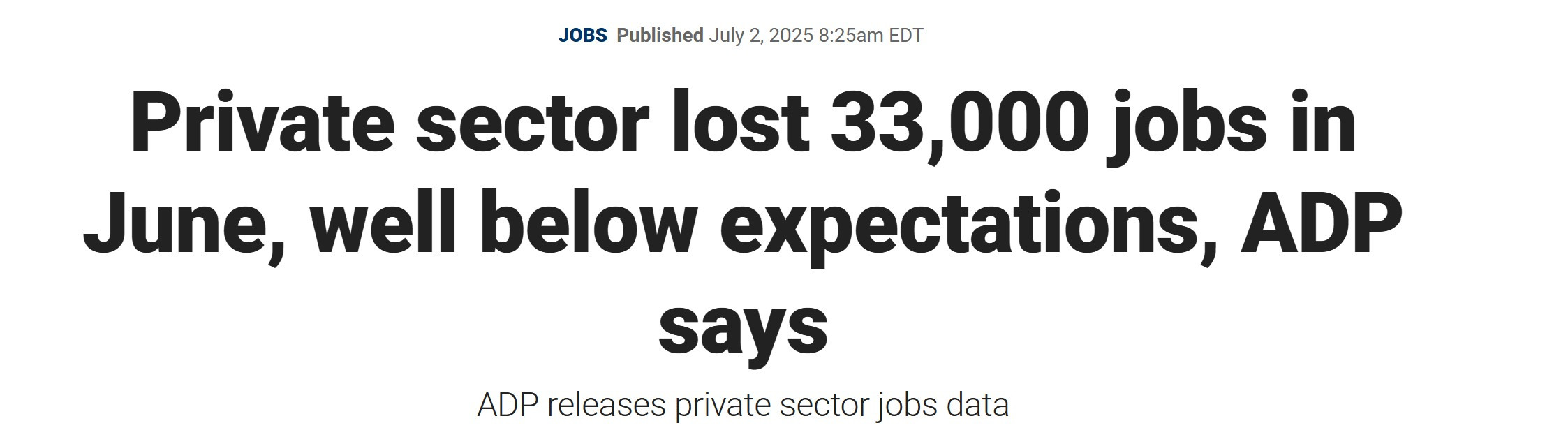
This marked the worst monthly drop since March 2023 and stoked concerns over corporate hiring caution amid trade‑policy uncertainty.
Service sectors bore the brunt, shedding 66,000 positions. Professional services and healthcare led losses as firms hesitated to replace departing staff.
Conversely, goods‑producing industries added 32,000 jobs, partially offsetting the decline and illustrating uneven sectoral dynamics.
Geographically, the Midwest and West saw the deepest cuts, losing 24,000 and 20,000 jobs, respectively. The Northeast recorded a modest 3,000‑job decline, while the South bucked the trend with an increase of 13,000 positions—the only region posting gains.
Firm size also shaped outcomes: businesses with fewer than 20 employees cut 29,000 roles, while enterprises with over 500 staff added 30,000 jobs. The divergence underscores smaller firms’ heightened vulnerability to cost pressures.
Wage growth moderated slightly. Year‑over‑year pay gains for existing employees eased from 4.5% to 4.4%, and for new hires from 7.0% to 6.8%, hinting at a subtle cooling in labor cost inflation—yet still well above the Fed’s comfort zone.
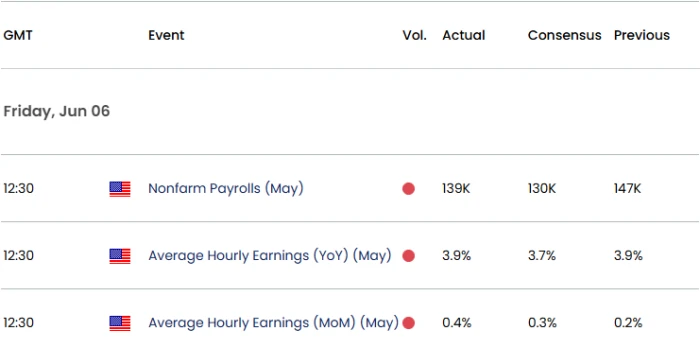
Despite ADP’s volatility history, the market took the print seriously. Dow Jones consensus projects 110,000 NFP additions on Thursday, with unemployment inching from 4.2% to 4.3%. A weaker-than-expected official figure would bolster bond bulls, while a robust beat could ignite profit-taking.
As the short holiday week unfolds, traders also eye initial jobless claims, forecast at 240,000. Holiday‑shortened hours will compress trading into Thursday’s session, intensifying pre‑NFP positioning.
How Have Bulls Built Their Positions?
Over recent weeks, bond bulls have rapidly expanded their net long exposure. According to CME data, open interest in 10‑year note futures climbed sharply as yields fell.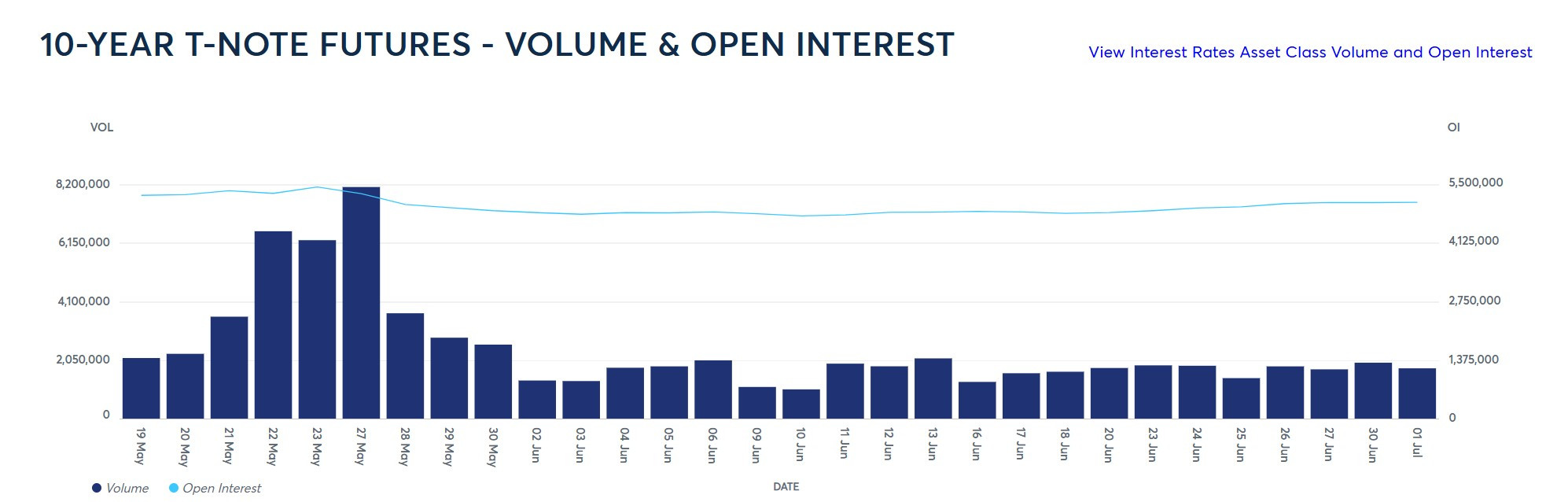
The two‑year contract saw ten consecutive days of rising open interest—an uncommon streak in a volatile market.
Equally telling, the 10‑year Treasury options market has skewed toward calls. Traders shelled out $32 million in option premiums on Monday to lock in bets on further government bond gains, signaling willingness to pay for upside protection rather than downside hedges.
JPMorgan’s June client survey mirrored the trend: absolute long positioning reached two‑week highs, with net longs shifting two percentage points from neutral into bullish territory.
Institutions that had been underweight bonds pivoted back as yields flirted with multi‑month lows.
Liquidity‑seeking flows have amplified momentum. With benchmark rates down nearly 25 basis points since early June, portfolio managers chasing returns have piled into Treasuries, raising concerns over crowded trades. Once institutional bid pressure fades, even modest selling could destabilize prices.
Citi’s David Bieber warns that “one‑sided” extension will likely prompt tactical de‑risking around major events—chiefly the NFP release.
Should headcount additions notably exceed 200,000, the repositioning could extend beyond tactical profit-taking into structural risk‑off.
Meanwhile, SOFR option activity highlights growing alarm. Traders have loaded up on strikes at 96.1875 for September, December, and March contracts, reflecting anticipation of rate volatility. A sudden swing could trigger margin calls and rapid deleveraging.
Taken together, the weight of bullish bets has set a trap: a strong employment print may not only unseat July cut odds but also squeeze the legions of leveraged players.
Market Implications for Fed Policy: A Balancing Act
Fed officials remain cautious. Despite futures pricing in a 20% chance of a July cut, policymakers such as Bowman and Waller have downplayed imminent easing. Any outsized NFP surprise could reinforce a data‑dependent pause well into the autumn.
If Thursday’s NFP exceeds expectations—say, near 200,000─the odds of a July rate cut would likely slump to near zero, recalibrating futures markets and bolstering dollar strength. Conversely, a sub‑100,000 print could reignite early easing bets, pushing yields lower.
Labor‑market resilience has been the Fed’s Achilles’ heel. While inflation has cooled toward 2.7% core, employment metrics have stayed stubbornly firm.
A divergence between soft headline job growth and sticky wage gains would pose a tricky policy dilemma.
Equity markets have been watching closely. Tech and growth stocks benefitted from the rally in bond markets, enjoying lower discount rates.
Yet a reversal in Treasury yields could trigger equity sector rotation and dampen risk appetite broadly.
For fixed‑income strategists, the coming days are pivotal. Risk models calibrated to low volatility may be inadequate against the twin shocks of NFP surprises and forced deleveraging. Stress‑testing portfolios for rapid yield spikes is now a top priority.
As the nonfarm payroll “exam” approaches, market participants brace for swift repricing. Whether bond bulls maintain their grip or capitulate will hinge on the raw data—underscoring once more the market’s iron discipline in letting facts, not forecasts, drive outcomes.