
Tesla Bounces Nearly 5% as Q2 Deliveries Beat Pessimistic Forecasts

Shearing sheep
July 3, 2025
GoGPT Summarizes Articles
Tesla ($TSLA) just pulled off a bit of a comeback.
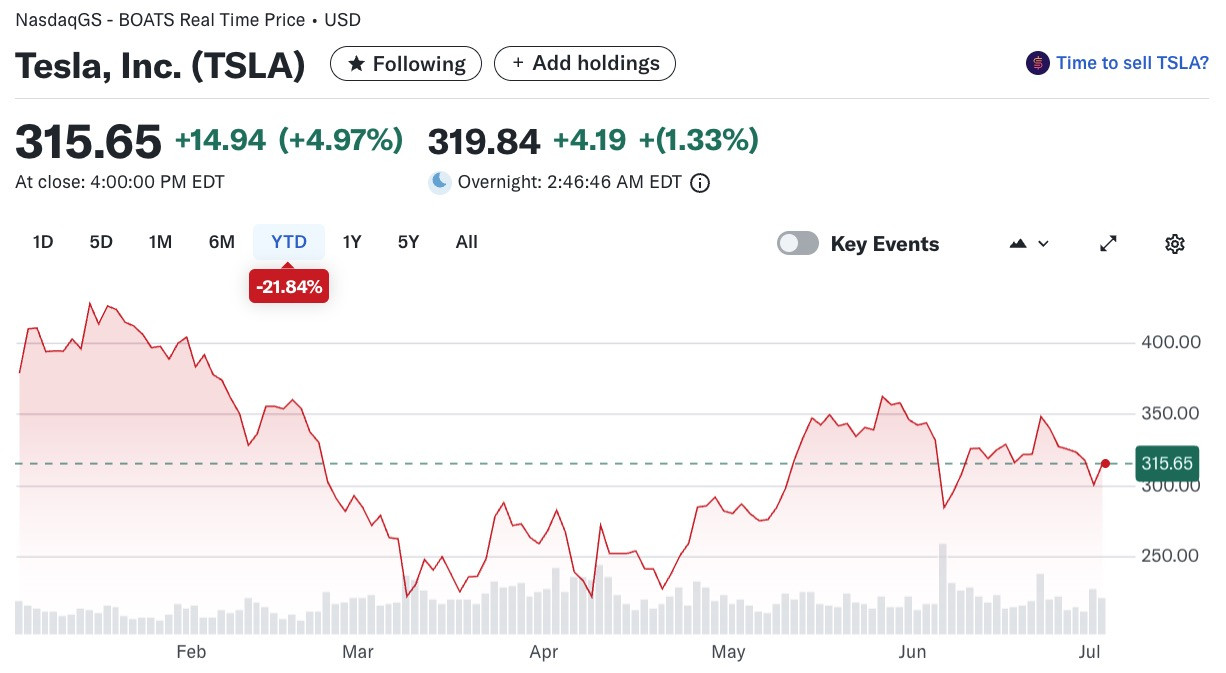
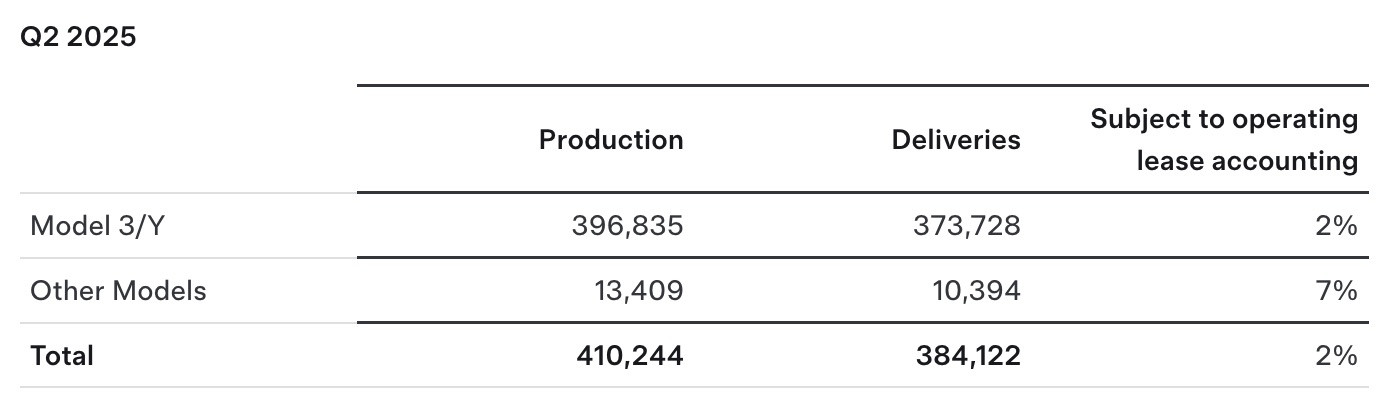
On Tuesday, the EV giant reported Q2 deliveries of 384,122 vehicles—just shy of the analyst consensus of 389,000 but well above the more pessimistic 350,000–360,000 whisper numbers that had started to circulate last week. The market responded swiftly: Tesla shares jumped nearly 5% on Wednesday, snapping a six-day losing streak.
The Numbers: Better Than Feared, But Still Down YoY
Here’s a quick breakdown of the Q2 results:
-
Deliveries: 384,122 vehicles, down 13% YoY but up from Q1's 336,681
-
Production: 410,244 vehicles, roughly flat YoY
-
Model 3/Y deliveries: 373,728 vehicles, down 12% YoY
-
S/X/Cybertruck deliveries: Just 10,394, missing expectations of 14,644
From a headline standpoint, this marks Tesla’s second consecutive quarterly delivery decline. But the stock rose because, frankly, things could have looked worse. Recent reports out of Europe and China painted a bleak demand picture. Wells Fargo had projected a drop to 343,000 units, while JPMorgan expected 360,000.
Why Did Sentiment Improve?
Tesla’s Q2 numbers are being treated as a “relief beat”—not great, but not catastrophic either. As William Blair’s analyst put it, the report “will be seen as a win” because it suggests demand is slowing, not collapsing.
Wedbush’s Dan Ives noted that the “whisper number” for Q2 was around 365,000, meaning the actual print came in well ahead of internal expectations. June sales were likely stronger than expected, especially in Europe and China. In China alone, Tesla sold an estimated 71,599 vehicles last month—flat YoY, but still notable given that Tesla’s European registrations fell nearly 28% in May.
Challenges Remain
Tesla’s biggest challenge now is no longer supply chain or production—it’s demand. Despite aggressive discounting and 0% financing offers for Model 3/Y, global sales still declined YoY. And with Tesla already abandoning its full-year delivery growth target earlier this year, it now needs to deliver nearly 110,000 additional vehicles in the second half to post any annual growth.
To address this, Elon Musk has reportedly taken direct control of Tesla’s sales operations in North America and Europe. His increased involvement follows the exit of key executive Omead Afshar and signals a more hands-on approach to reversing the sales slowdown—particularly in Europe, which Musk himself has described as Tesla’s “weakest market.”
Meanwhile, Tom Zhu, who led the Shanghai Gigafactory’s launch, continues to oversee global manufacturing and Asia sales. Internally, the leadership changes reflect a company that’s recalibrating amid mounting competitive and macroeconomic pressure.
Looking Ahead
Earnings on July 23 will be critical—especially any updates on full-year delivery guidance, automotive margins, and the timeline for its Robotaxi rollout. While the Q2 report provided some short-term relief, investors will be watching closely for signs that Tesla can reaccelerate growth or deliver on its autonomous vehicle ambitions.
Tesla shares are still down about 22% year-to-date, trailing the S&P 500’s 6% gain. Whether this week’s rebound has legs will depend heavily on what comes next.
#Market Spotlight: The Stories Driving Today’s Trading#$Tesla Inc. Common Stock(TSLA)