
U.S. June Non-Farm Payrolls Beat Expectations, Unemployment Rate Unexpectedly Falls

On Thursday, Eastern Time, data from the U.S. Bureau of Labor Statistics showed that June non-farm payrolls significantly exceeded expectations, demonstrating the labor market's resilience against uncertainties from the Trump administration’s trade and immigration policies, effectively extinguishing hopes for a Federal Reserve rate cut in July.
Specifically, U.S. June seasonally adjusted non-farm payrolls recorded 147,000 jobs, surpassing the expected 110,000 and higher than May’s revised figure of 144,000. Additionally, April’s job growth was revised from 147,000 to 158,000, and May’s from 139,000 to 144,000, with combined revisions adding 16,000 jobs compared to prior estimates.
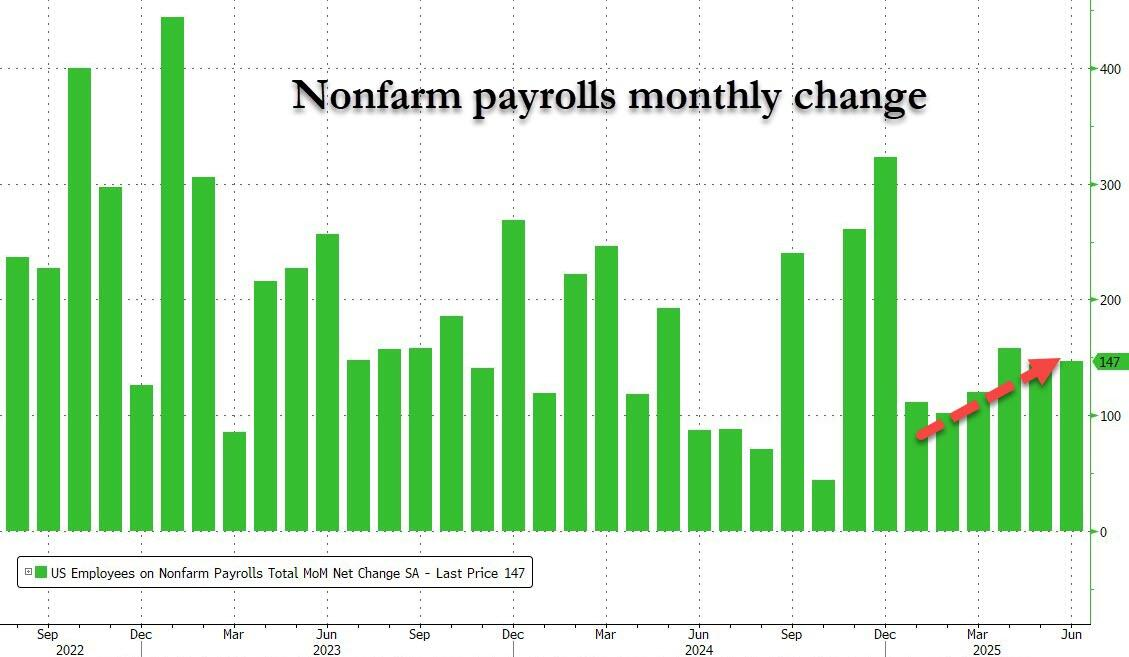
The U.S. June unemployment rate was 4.1%, the lowest since February, against expectations of a slight rise to 4.3%.
The decline in the unemployment rate was partly due to a relative decrease in job seekers, with the labor force participation rate slipping from 62.4% in May to 62.3%, the lowest since late 2022.
A Brookings Institution report indicates that net immigration to the U.S. could drop to zero or negative this year, meaning by the second half of 2025, the U.S. may only need to add 10,000 to 40,000 jobs monthly to keep the unemployment rate stable.
With steady job growth and a declining unemployment rate, average hourly earnings rose 0.2% month-over-month and 3.7% year-over-year, signaling easing inflationary pressures.
Government sector employment surged, leading all categories with an increase of 73,000 jobs, driven by significant gains in state and local government roles, particularly in education-related positions. However, the federal government lost 7,000 jobs due to layoffs from the Musk Department of Government Efficiency.
As Friday is the Independence Day holiday, the non-farm payrolls report was released a day early. Despite the stronger-than-expected job growth, the pace is slowing, primarily reflecting weaker hiring activity. Layoffs remain relatively low, as employers, scarred by labor shortages during and after the pandemic, have been hoarding workers.
Economists note that the Trump administration’s policies—sweeping tariffs, mass deportations, and significant government spending cuts—are dampening economic growth and significantly eroding business and consumer confidence, exacerbating uncertainty and hindering hiring.
Despite the tariffs, inflation has remained below levels feared by some economists, though still above the Fed’s target. This may make it easier for the Fed to lower interest rates, boosting employment. Investors are increasingly betting on at least two rate cuts in the second half of this year.
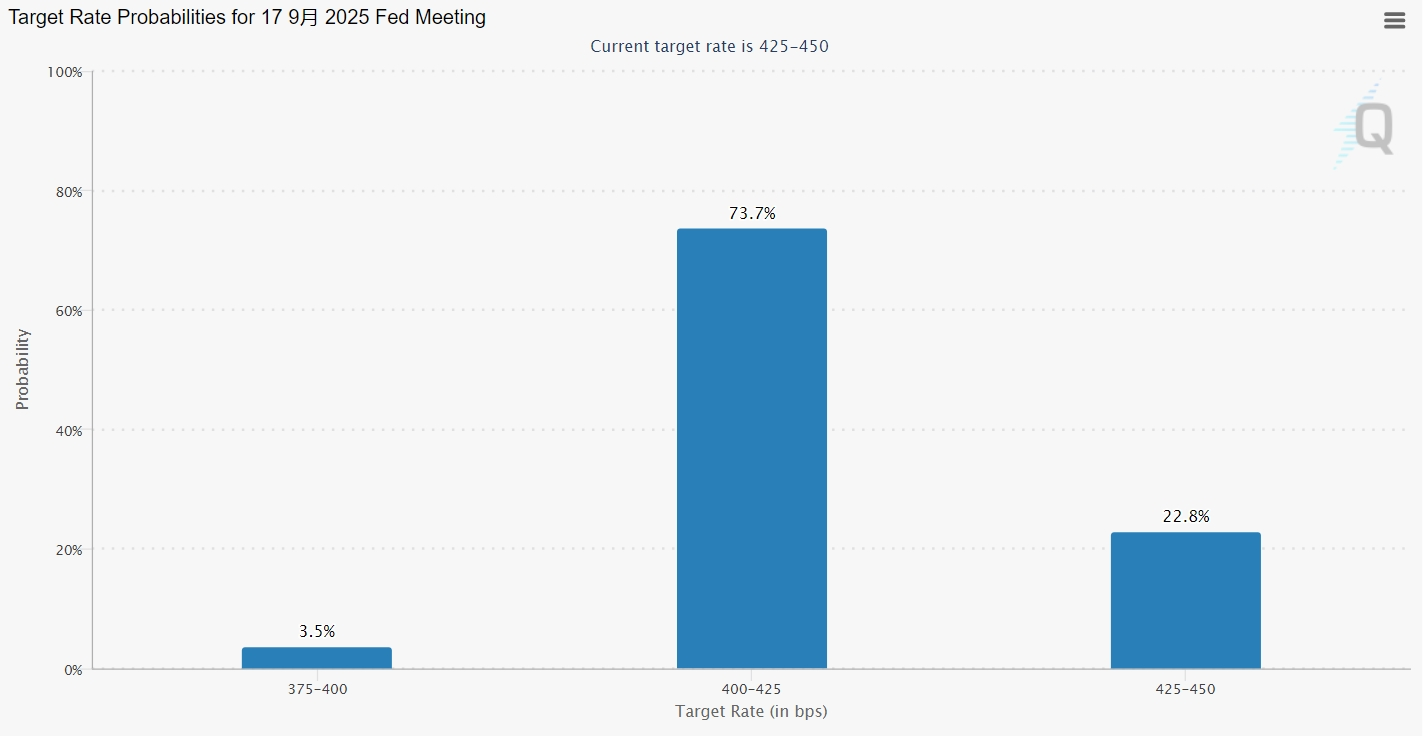
Following the non-farm payrolls report, interest rate futures traders abandoned bets on a July Fed rate cut. The market’s implied probability of a September rate cut is now around 80%, down from 98% before the report.
The U.S. economy currently appears resilient, but underlying tensions are becoming more pronounced. The longer high interest rates persist, the more the already substantial fiscal deficit and national debt will worsen.
Federal Reserve Chairman Powell has repeatedly stated that the U.S. fiscal and debt trajectory is unsustainable.
I believe that the uncertainty surrounding the U.S. economy is becoming increasingly pronounced with the advancement of President Trump’s economic policies, such as tariffs, making the economic outlook worrisome. Combined with potential disruptions from “black swan” events, an economic storm is on the horizon.