
Resilient Jobs Report: Are July Rate Cuts Dead in the Water?

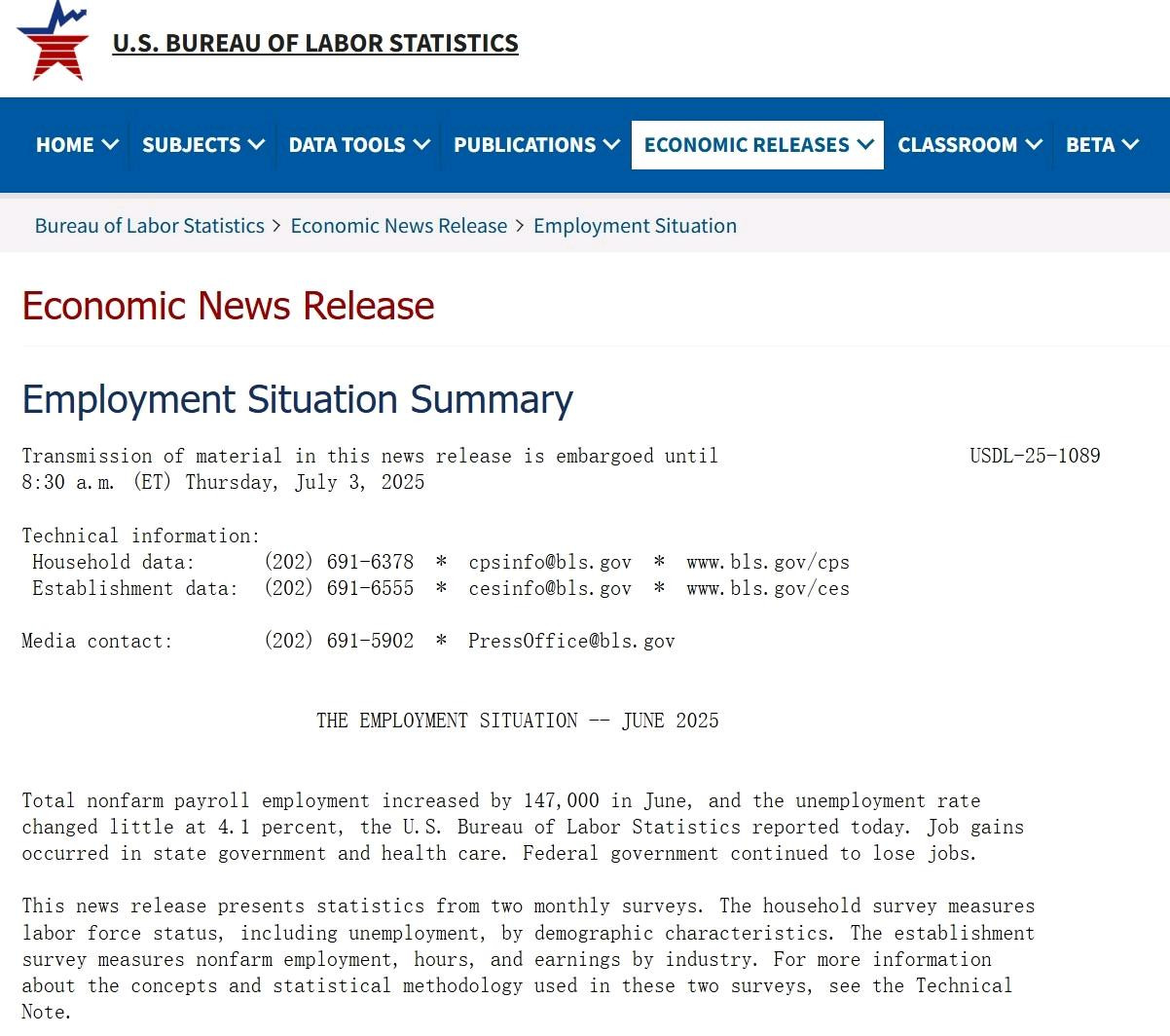
June’s U.S. nonfarm payrolls surged by 147,000, eclipsing the 110,000 forecast, while the unemployment rate fell to 4.1%. State and local government hiring and healthcare gains underpinned the strength.
In response, traders have largely abandoned bets on a July rate cut, heightening uncertainty over the Fed’s next move.
Key Takeaways
- Nonfarm payrolls rose by 147,000 in June, topping forecasts of 110,000.
- Unemployment rate dropped to 4.1%, below the expected 4.3%.
- Private sector added just 74,000 jobs, led by healthcare.
- State and local government hiring jumped by 73,000, largely in education.
- Initial jobless claims fell to 233,000 for the week ending June .
- Futures markets slashed July rate‑cut odds from 98% to under 20%.
- Morgan Stanley warns this payroll beat may derail growth forecasts.
Trump Reacts: What’s the Takeaway?
President Trump hailed the report as “much better than expected,” highlighting that economists had predicted unemployment to rise to 4.3%, yet it held at 4.1%.
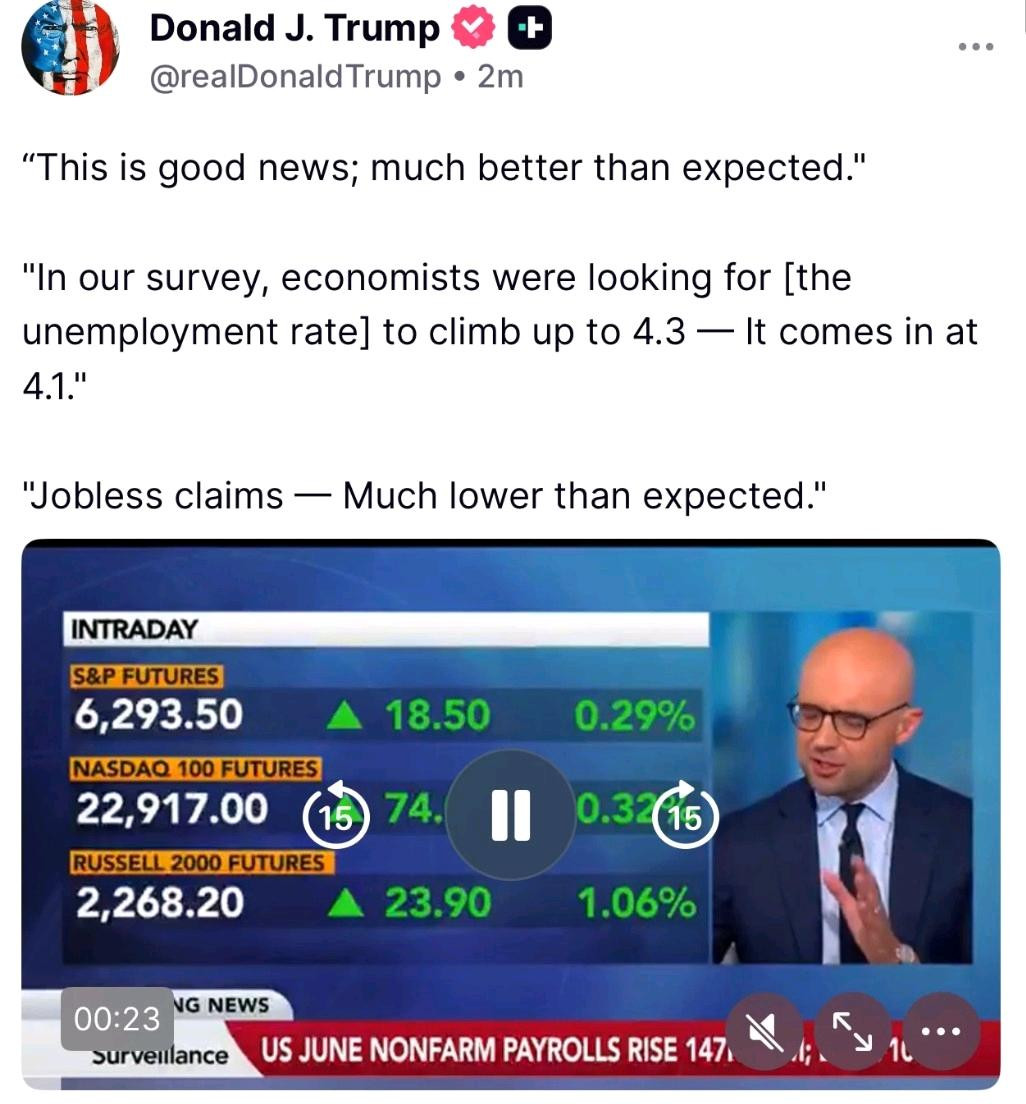
He noted that initial claims for unemployment insurance “remain well below expectations,” reinforcing his view of a robust labor market.
In an election‑year context, the jobs data provides a strong talking point for the administration’s narrative of economic success.
Markets, however, interpret his comments more cautiously, focusing on Fed policy implications rather than political spin.
Trump’s praise underscores the White House’s stake in economic optics, yet investors prioritize Fed signals over presidential tweets.
This dynamic illustrates how political commentary can clash with market realities when central bank decisions hang in the balance.
Bessent’s Bold Claim: Is the Fed Out of Step?
Treasury official Scott Bessent argued that “two‑year yields tell us overnight rates are too high,” suggesting Fed policy may be misaligned with market signals.
He reaffirmed his view that the Federal Open Market Committee’s judgment “appears to be somewhat off,” pressing for sharper rate cuts when labor markets soften.

Pressed about his own prospects, Bessent declined to comment on his potential candidacy to replace Powell, citing private discussions.
Bessent referenced Bill Pulte’s call for Powell’s resignation, but stopped short of endorsing removal, focusing instead on Fed spending and governance.
He hinted that the Fed should fill both Powell’s chair and another governor seat by May 2026, before terms expire.
His critique raises questions about internal dissent at Treasury and potential pressure on the Fed’s leadership and communication strategy.
Sector Shifts: Where Jobs Are Growing
State and local government employment grew by 73,000 in June, driven by a 47,000‑job increase at the state level in education.
Local education added 23,000 positions, reflecting seasonal school staffing and post‑pandemic budget reallocations.
Healthcare netted 39,000 jobs, with hospitals accounting for 16,000 and nursing and residential care adding 14,000.
Social assistance contributed 19,000 positions, fueled by growth in individual and family services.
Federal government payrolls, by contrast, fell by 7,000, marking a continued retrenchment since January’s peak.
Average hourly earnings in the private nonfarm sector rose by just $0.08 (0.2%) to $36.30, while the average workweek dipped slightly to 34.2 hours.
Market Reaction: Are July Cuts Off the Table?
After the report, futures traders slashed the probability of a July Fed rate cut from around 98% to under 20%, effectively abandoning bets on early easing.
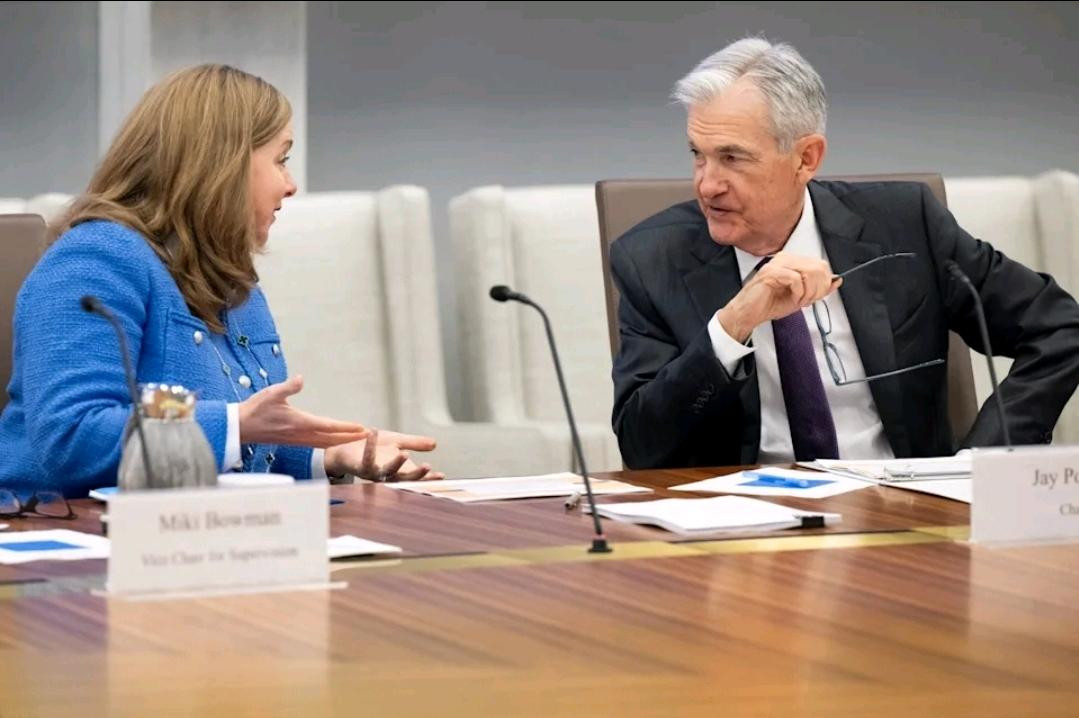
Attention has shifted to September, where markets now assign roughly an 80% chance of the first cut.
Initial jobless claims for the week ending June 28 fell to 233,000, versus forecasts of 240,000, reinforcing labor market resilience.
JPMorgan notes that a 147,000 payroll beat represents a “tail event” that is likely to trigger reassessments of U.S. growth prospects.
Bond yields have climbed in response, with two‑year Treasury yields rising above 3.75% as traders price out near‑term rate cuts.
Equity markets have seen increased volatility, though analysts still expect the S&P 500 and Nasdaq 100 to extend their mid‑ to long‑term bull runs, underpinned by strong corporate cash positions.
The June jobs data, underscored by robust government and healthcare hiring, has reshaped expectations for Fed policy. With markets downgrading the likelihood of a July rate cut and key figures like Trump and Bessent weighing in, the central bank faces a narrow path. Investors will now watch inflation, incoming data, and Fed communications closely to gauge the timing of monetary easing.