
U.S. House Passes "Big and Beautiful" Bill, Trump to Sign into Law on Friday

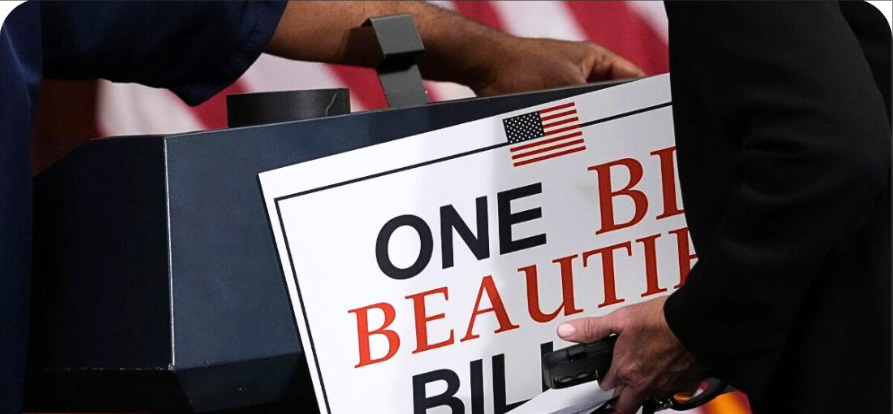
On July 3, the U.S. House of Representatives passed President Trump’s “Big and Beautiful” tax and spending bill with a 218-214 vote.
Named for Trump’s description of it as “big and beautiful,” the bill is not a continuation of his first-term tax cuts but an expansion, alongside reductions and adjustments to Biden administration policies like the Green New Deal and welfare programs.
In brief, the bill plans $4 trillion in tax cuts and at least $1.5 trillion in spending reductions over the next decade.
In late May, the House narrowly passed the initial bill. After over a month of Senate debates and revisions, the Senate approved the amended bill on Tuesday with a 51-50 vote, with Vice President Vance, also Senate President, casting the tie-breaking vote.
The revised bill returned to the House for a final vote, passing with 218 votes in favor and 214 against. Only two Republicans—Thomas Massie (Kentucky) and Brian Fitzpatrick (Pennsylvania)—voted against it, while all Democrats opposed it.
Republicans hold a slim 220-212 majority in the House. Over 20 Republicans initially opposed the bill, but House Speaker Mike Johnson persuaded most dissenters, despite concerns about the bill’s multi-trillion-dollar spending and healthcare cuts.
Notably, House Democratic Leader Hakeem Jeffries delivered an over eight-hour speech before the vote, setting a modern House record, fiercely criticizing the bill as a “crime scene” and advocating for transparency.
Democrats criticized the bill for favoring the wealthy and cutting critical social welfare programs.
White House Press Secretary Karoline Leavitt announced that Trump will sign the bill into law at 5:00 PM Eastern Time on Friday at the White House.
Controversies Surrounding the Bill
Clean energy policy was a key sticking point in final negotiations, with Tesla CEO Elon Musk as a prominent critic. While some anti-renewable energy provisions were removed during Senate debates, the bill still signals reduced government support for clean energy in coming years.
A first step is the elimination of electric vehicle purchase subsidies by September 30, expected to directly impact the EV market.
Economists warn the bill could add $4 trillion in new debt over the next decade, with Republicans using accounting maneuvers to obscure the fiscal deficit.
IMF Warns: Bill Will Worsen U.S. Fiscal Deficit
On July 3, IMF spokesperson Julie Kozak stated that the bill contradicts IMF recommendations for the U.S. to reduce its fiscal deficit over the medium term.
“The IMF has consistently emphasized that the U.S. needs to gradually reduce its fiscal deficit to put the public debt-to-GDP ratio on a clear downward path,” Kozak said. “The sooner this process begins, the smoother the pace of deficit reduction can be.”
Kozak noted multiple policy options exist to lower deficits and debt, stressing the need for U.S. domestic consensus on addressing long-term fiscal challenges.
In recent years, the IMF has suggested raising taxes, including on middle-income earners, to close fiscal gaps. However, the “Big and Beautiful” bill extends Trump’s first-term tax cuts and introduces new tax breaks.
Kozak said the IMF is reviewing the bill’s details and its potential economic impact, with analysis to be included in the July edition of the *World Economic Outlook*.