
‘Margin of Safety’ Master Seth Klarman: Why Future Cash Flow Is What Matters Most

Daniel Value Investing
July 4, 2025
GoGPT Summarizes Articles
In the ever-evolving world of investing, where headlines chase hype and valuations defy gravity, there’s something comforting—almost grounding—about revisiting the core principles of value investing. And there are few better guides than Seth Klarman.
As the CEO of the Baupost Group and author of the legendary (and now out-of-print) Margin of Safety, Klarman has long been considered a disciple of Benjamin Graham and David Dodd, the fathers of value investing. With a career spanning over four decades and annualized returns reportedly around 20% for the first 30 years of Baupost’s existence, Klarman has not only read the playbook—he’s helped write the next chapters.
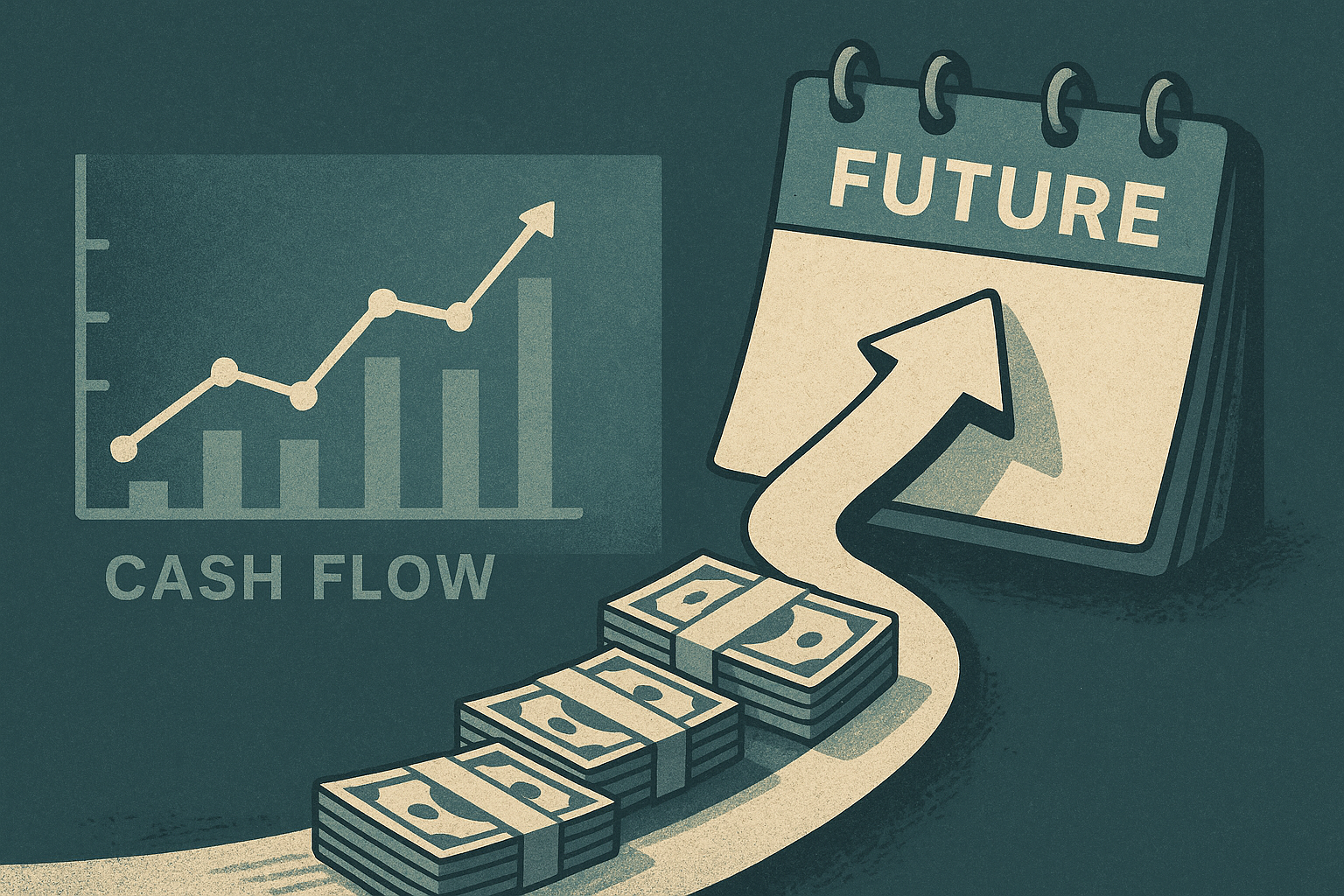
In his foreword to the 7th edition of Graham and Dodd’s Security Analysis, Klarman offers an insightful meditation on why value investing still matters—perhaps now more than ever. His message is clear: future cash flow is what matters most, and the ability to evaluate it accurately separates great investors from the crowd.
Value Investing Is More Relevant Than Ever
“Value investing is buying securities or assets for less than their intrinsic worth,” Klarman writes. “That is, buying a dollar for 50 cents.”
This philosophy isn’t about blindly buying "cheap" stocks based on low P/E or P/B ratios. Rather, it’s about developing a disciplined approach to assess the intrinsic value of a business—focusing not on price charts or market sentiment, but on fundamentals: cash flow, business quality, and risk.
And while Graham's original framework relied heavily on balance sheet metrics like net-net working capital, Klarman acknowledges that many of those tools are less relevant in today’s digital economy. Book value matters far less than it once did; instead, it’s the future free cash flow that defines real value.
Volatility: A Threat for Some, Opportunity for Others
One of Klarman’s most powerful insights is how market volatility, so often viewed as a risk, can be a friend to the disciplined investor.
“When prices fall below intrinsic value, investors can take advantage of the disconnect to buy a share of a business at a discount,” he writes. “Over time, stock prices tend to converge toward intrinsic value.”
This mirrors Graham’s famous quote: “In the short run, the market is a voting machine, but in the long run, it is a weighing machine.” Klarman adds nuance: sometimes, you can be absolutely right about a company’s value—but wrong for a long time in the eyes of the market. That’s the paradox: you may be correct in analysis, but it might feel like a mistake for months or even years.
Thus, emotional discipline, patience, and conviction are not optional—they’re essential.
Security Analysis in the Age of Disruption
Klarman doesn’t shy away from addressing the modern investor’s dilemma: we now live in a digital, tech-driven economy. Unlike in Graham’s time, investors today must evaluate companies that don’t just own tangible assets, but operate in platform-based, network-effect-laden, asset-light environments.
From Google’s ad-driven moat to the recurring revenue models of SaaS companies, many of today’s best businesses don’t look anything like the railroads or steel companies of the 1930s. That said, the same principles apply. “Security analysis,” Klarman notes, “can and must be adapted to assess any kind of business model, no matter how new or disruptive.”
Yes, the tools have changed. But the mindset—skeptical, patient, rational—remains timeless.
The Art and Science of Valuation
“Valuation is both an art and a science,” Klarman emphasizes. While spreadsheets can calculate discounted cash flows, estimating those future cash flows in the first place is full of uncertainty and subjective judgment. Understanding whether growth is sustainable, whether margins are defensible, and whether management allocates capital wisely—these are all judgment calls.
And because of that, left-brain analysis must be balanced with right-brain intuition. Investors need to see not just the numbers, but the narrative: where the business is headed, what its competitive edge is, and how durable it might be.
The lesson: don’t just run the numbers—understand the business.
The Importance of Margin of Safety
Klarman’s original contribution to the value investing canon—Margin of Safety—is more than just a catchy title. It’s a philosophy of investing with a buffer. Buying with a margin of safety means there’s room for error, misjudgment, or unexpected downturns—and your capital can still be protected.
As he writes: “Price is what you pay. Value is what you get.” When you pay significantly less than what a business is truly worth, the odds are tilted in your favor.
Being a Business Analyst First
Klarman argues that today's value investors must also be exceptional business analysts. In an era of fast-paced technological change, investor success depends less on financial engineering and more on understanding business models, competitive dynamics, and disruption risks.
You must be able to distinguish between a company going through a temporary dip—and one facing irreversible decline due to obsolescence.
It’s not enough to be a stock picker. You need to be a business detective.
Final Thoughts: Value Investing in a Modern World
Seth Klarman remains a beacon of clarity in a noisy financial world. His writings remind us that despite new technologies, new industries, and new styles of trading, the principles of value investing have not changed.
-
Focus on future cash flows.
-
Understand the business behind the stock.
-
Buy with a margin of safety.
-
Be patient.
-
Stay rational when others are not.
In a world of fleeting hype, his philosophy is enduring. And that’s exactly why it continues to work.
#Private Market: Unlocking Potential#valueinvesting