
The SEC Just Paved the Way for Crypto ETFs to Go Mainstream

The United States is taking a major step toward integrating crypto into its financial system.
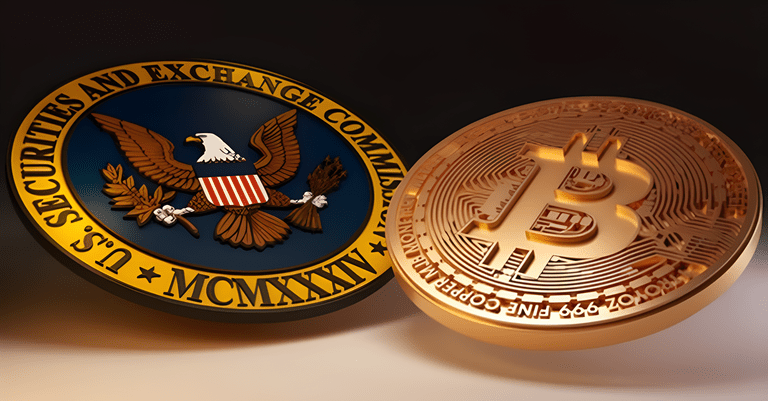
Last week, the Securities and Exchange Commission (SEC) issued a 12-page set of new disclosure guidelines aimed at crypto-related exchange-traded funds (ETFs). Though still just the first part of a broader framework, this document lays critical groundwork for the approval of dozens of ETF applications tied to everything from Solana and XRP to meme coins based on Donald Trump.
More importantly, it signals a major policy shift. Under the current Republican-led leadership, the SEC has not only created a working group for crypto fund rules but also quietly backed off several high-profile enforcement cases many thought it would win.
From Crackdowns to Ground Rules The SEC Is Changing Its Tune
For years, the SEC has been known for its tough stance on crypto. But this latest move is more than just a tweak—it’s a clear signal that the agency is starting to accept crypto ETFs as part of the mainstream market.
“This shows that the SEC is finally acknowledging crypto ETFs are here to stay,” said Matt Hougan, Chief Investment Officer at Bitwise Asset Management. “They’re trying to create rules that make life easier for both issuers and the SEC staff.”
This is the first time the agency has offered a unified disclosure guide for crypto ETFs. It spells out, in plain language, what applicants need to disclose—especially around custody arrangements and the risks of volatile crypto markets.
Approval Timelines Could Shrink from 240 Days to Just 75
One of the biggest issues with launching crypto ETFs has been the long, complex approval process. Right now, every new application requires filing a “19b-4” form that asks for exemptions to current listing rules—a process that can take up to 240 days.
But according to insiders, the SEC is now exploring a universal listing template. If adopted, this would remove the need for individualized forms and cut the approval timeline to as little as 75 days.
Multiple exchanges like Nasdaq and CBOE are reportedly preparing to submit this kind of “template-based” application in the coming days or weeks.
Solana ETFs Likely Coming This Fall Meme Coins Will Have to Wait
Among the dozens of ETF applications now pending at the SEC, those tied to Solana (the sixth-largest cryptocurrency by market cap) are expected to be the first in line for approval—possibly as early as this fall.
Other applications, such as those linked to XRP, Polkadot, Dogecoin, or even Trump-themed meme tokens, are expected to follow later once the SEC issues the second part of its framework.
REX Financial Skips the Line with a Clever ETF Workaround
While the SEC works on streamlining approvals, some firms have found creative ways to jump ahead.
Last week, REX Financial and Osprey Funds launched the REX-Osprey Sol + Staking ETF, a first-of-its-kind U.S. ETF giving exposure to Solana—but through a more indirect route. Instead of holding SOL directly, the ETF invests in an offshore entity that owns SOL and participates in staking.
This legal structure avoids certain U.S. regulations for commodity funds while also giving investors access to staking yields—a process where crypto holders help validate blockchain transactions in return for rewards.
REX’s CEO Greg King acknowledged that this strategy is partly a move to “beat the clock” in the race to launch a Solana-linked product. On its first day, the fund attracted $12 million in assets—strong proof of demand.
My Take
Bitcoin ETFs broke a barrier. But what we’re seeing now is the SEC trying to build an entire highway.
Instead of approving crypto funds one by one, the agency is laying the groundwork for a scalable, repeatable process. Once this system is in place, we could see a flood of new crypto ETFs—not just for coins like Solana, but eventually for more complex assets like AI-native tokens, DePIN, and others.
If successful, this will dramatically expand liquidity, deepen market infrastructure, and bring traditional capital into the crypto space. The next bull run could very well be regulation-driven.