
U.S. DOE: Blackouts May Double in Five Years; SemiAnalysis Report Highlights Grid Risks and Opportunities

On Monday local time, the U.S. Department of Energy dropped a report saying AI’s skyrocketing power needs could double U.S. blackouts by 2030, hinting at big moves to prop up Trump’s coal push.
The report points the finger at shutting down coal and gas plants, plus leaning too hard on renewables, as the culprits behind the energy crunch. It’s a response to a White House push for a tougher, safer grid, with plans for “federal reliability interventions” to target weak spots.
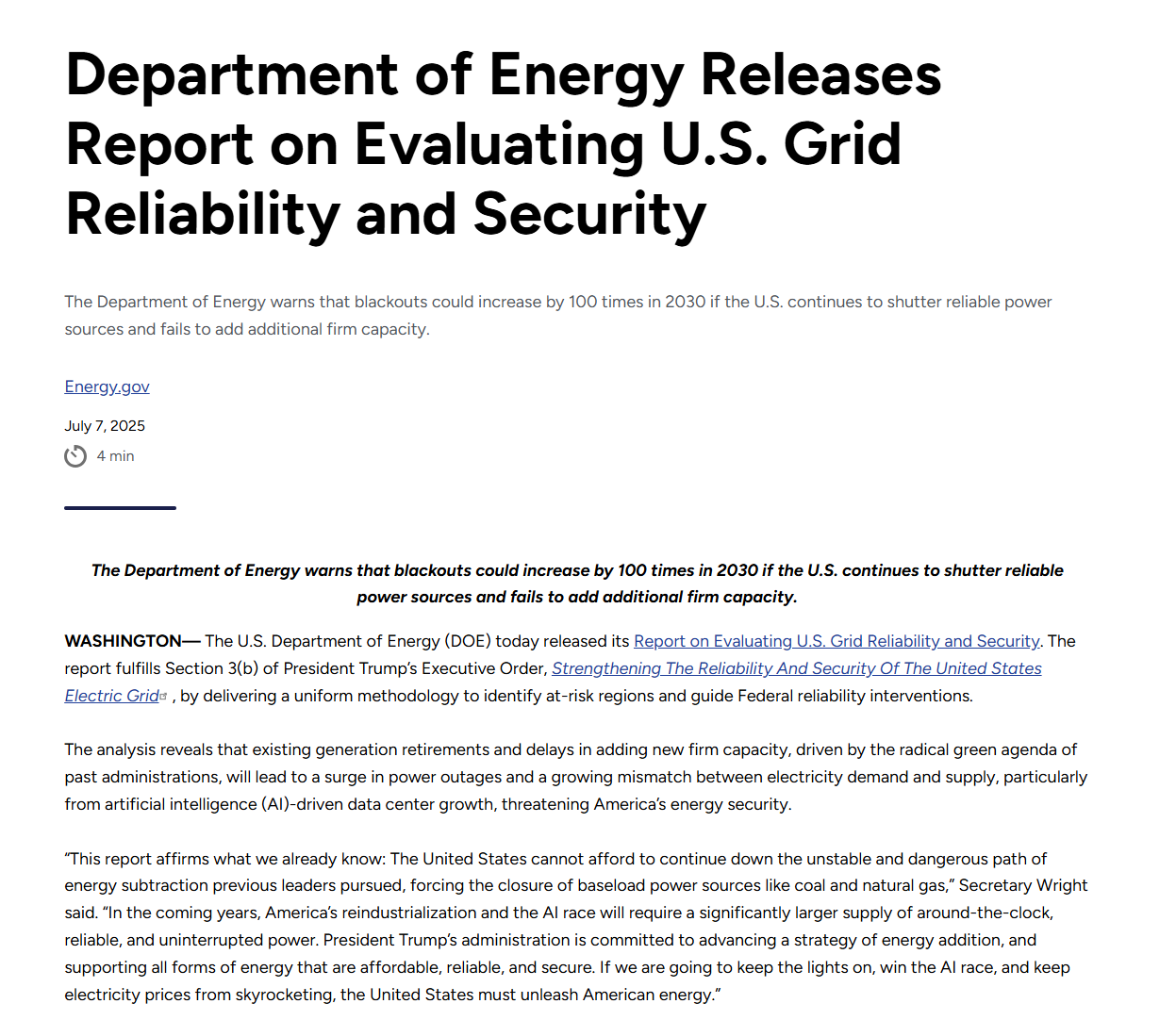
The DOE warns that if old plants close without new ones stepping in, we could see blackout numbers jump 100% in five years.
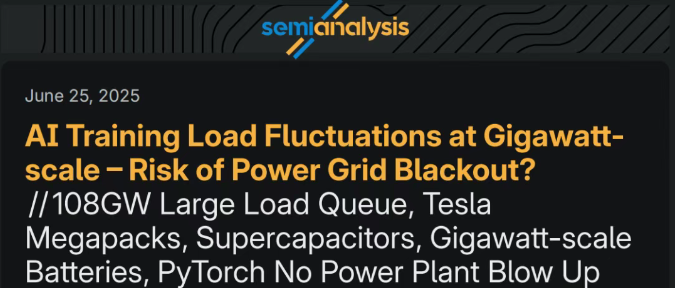
This got me thinking about a wild new 68-page report from SemiAnalysis, asking straight out: “Will Terawatt-Scale AI Training Loads Cause Grid Blackouts?” Their take? Yeah, and it might not take long.
How AI Training Strains the Grid
Starting with the basics of how grids work, the report lays out three big, never-seen-before headaches:
- Rapid Power Spikes and Drops (Second- or Millisecond-Level)
AI training isn’t a steady hum—it’s a wild ride. Thousands of GPUs kick into gear together, with matrix calculations sending power use through the roof, then dropping to almost nothing during comms or checkpoints. Power can swing by tens of megawatts in a flash, and grids just aren’t built for that kind of quick-change act. - Massive Centralized Loads (Over Gigawatts)
OpenAI’s data centers are now hitting 200MW each, with whole campuses nearing terawatt levels. Flip the switch on or off all at once, and it’s like a nuclear blast to the grid. - Synchronized Training Triggers a ‘Herd Effect’
Hundreds of thousands of GPUs don’t go it alone—they train as a team. One glitch or switch, and a whole data center’s power can go from maxed out to zilch in a heartbeat.
Old-school grids, which count on inertia to keep supply and demand in check, can’t handle this.
“Blackouts” Are the Worst-Case Scenario
The real nightmares are two scary risks:
- Cascading Failures (Cascade Blackout)
If a load shift—like 2.5GW dropping off in an instant—pushes the grid past its limit, frequency can go haywire, tripping other generators and loads, and sparking blackouts that could spread region-wide or even nationwide. - Low Voltage Ride-Through Failure (LVRT)
When voltage dips, UPS jumps in for a quick save, but if the dips keep coming, data centers might switch to diesel. That keeps things running but yanks the load off the grid, causing a big ripple effect.
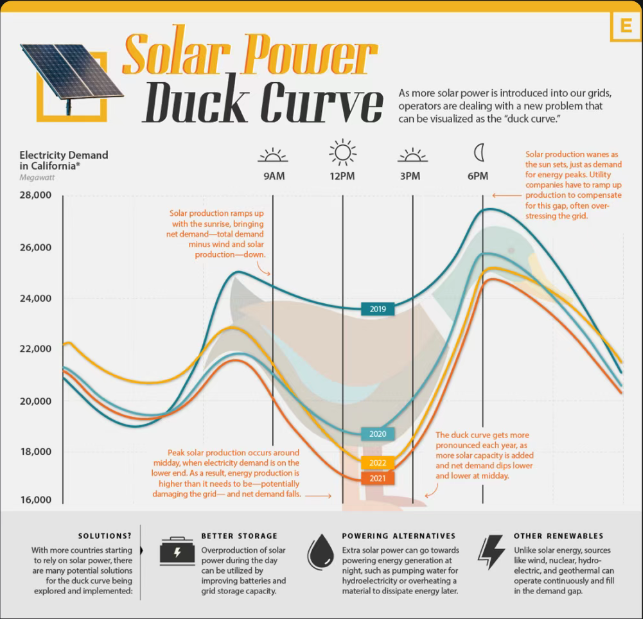
What to Watch For
Worth a mention: Trump’s new “Big and Beautiful” bill is cutting tax breaks for wind and solar, putting a real dent in the U.S. clean energy shift.
The EIA figured renewables would lead the energy pack soon, but the DOE says by 2030, losing 100 nuclear reactor equivalents could mean “severe blackouts” when wind and solar can’t pick up the slack.
This report’s more than just a power lesson—it’s a heads-up:
- AI data centers are turning into the U.S.’s biggest power hogs, outstripping steel and chip plants.
- The AI infrastructure fight isn’t just about chips—it’s an energy showdown. Whoever nails power scheduling and storage could rule the AI game.
- The energy shift (renewables + storage) is locking arms with AI, with wind, solar, lithium batteries, and smart grids as the quiet backbone.