
Market Resilience Under Fire: Are Tariff Threats Really Losing Their Punch?

U.S. equities are on a tear despite fresh threats from the White House to levy 25%–40% tariffs on imports from 14 nations starting August 1.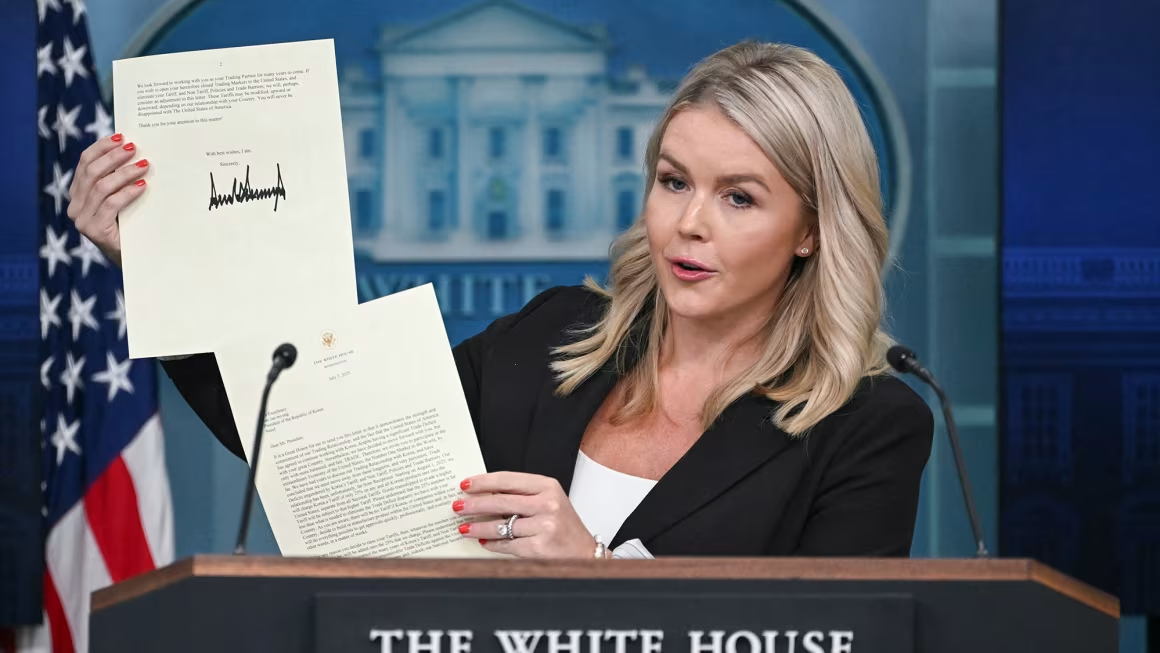
Five major banks—Goldman Sachs, JPMorgan, Barclays, Citi, and Deutsche Bank—have all raised their year‑end S&P 500 targets, signaling a collective bullish bet on American blue‑chips.
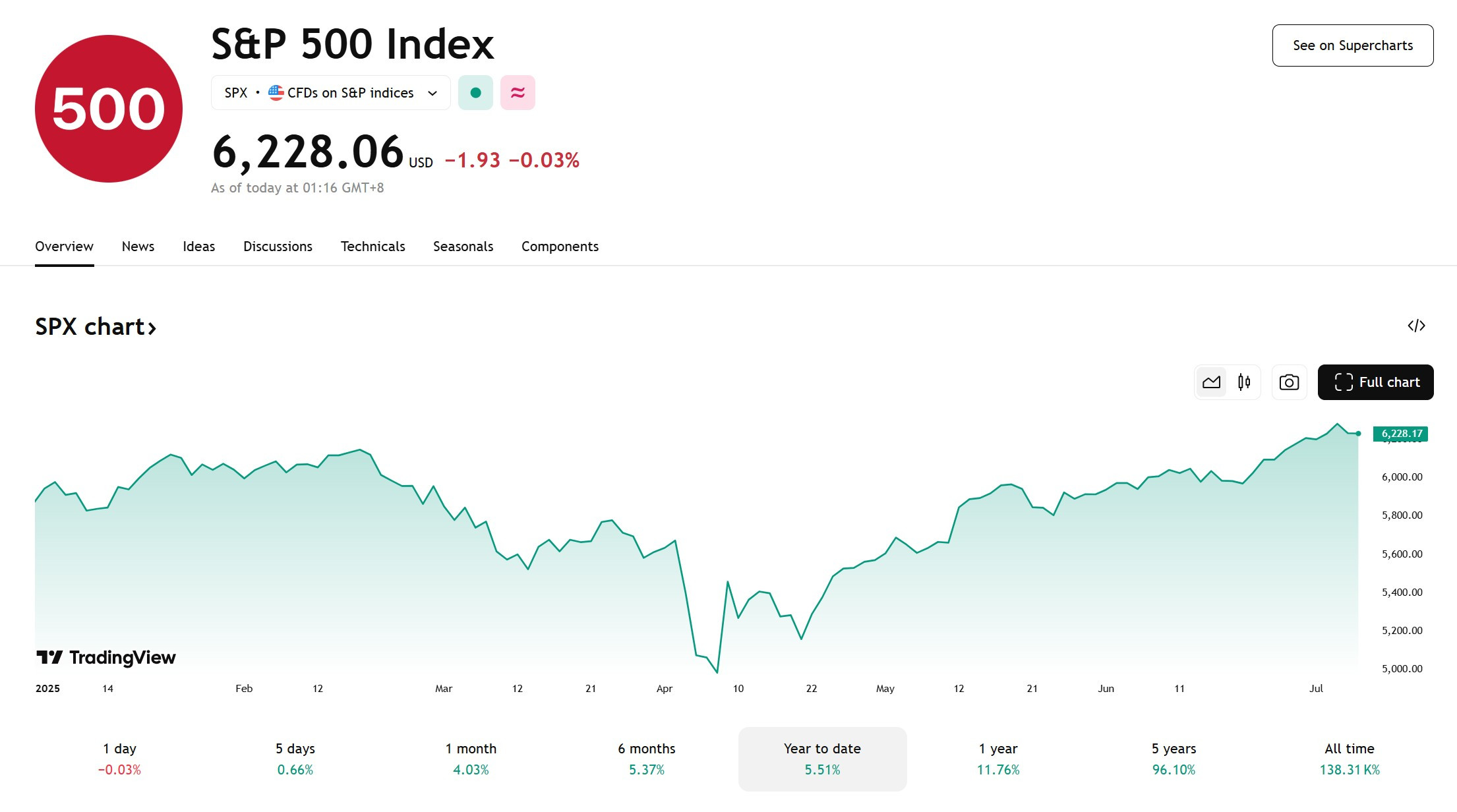
Goldman Sachs’s strategists, led by David Kostin, lifted their $SPX year‑end forecast from 6,100 to 6,600, implying nearly 6% upside from current levels. They point to earlier-than-expected Fed rate cuts, falling Treasury yields, and the robust fundamentals of megacaps as the pillars supporting this optimism.
Key Takeaways
- Consensus Upgrades: Goldman Sachs, JPMorgan, Barclays, Citi, and Deutsche Bank now expect further $SPX gains, driven by Fed easing and strong corporate performance.
- Tariff Desensitization: Investors have shown muted reactions to repeated tariff threats since April, reflecting a belief that firms can absorb or pass on added costs.
- Fed and Yields: Anticipation of earlier, deeper rate cuts is driving Treasury yields lower, creating a supportive backdrop for equities.
- Earnings Catalyst: The impending Q2 earnings season is widely forecast to deliver solid results, reinforced by resilient consumer spending and moderating inflation.
- Tech’s Leadership: Mega‑cap tech companies—Alphabet, Meta, and others—are poised to contribute nearly half of projected earnings growth in $SPX , leveraging global revenues amid a weaker dollar.
What’s Driving the Upward Revisions?
Goldman Sachs’s decision to raise its S&P 500 year‑end target for the second time since May mirrors similar moves at JPMorgan, Barclays, Citi, and Deutsche Bank. Strategists believe that three main factors justify their more optimistic outlook.
First, markets are now pricing in Fed rate cuts sooner than previously anticipated, which should lower Treasury yields and make equities more attractive.
Second, large-cap companies delivered impressive first-quarter earnings that bolstered confidence in their ability to sustain margins amid cost pressures.
Third, investors are focusing on long-term growth potential, choosing to look past the short-term policy noise and concentrate on the durable fundamentals of leading firms.
Who’s Bearing the Tariff Toll?
Although markets seem unfazed, the actual impact of tariffs will become clearer once companies report second-quarter results.
Many multinational firms preemptively built up inventories in anticipation of higher duties, providing a buffer against immediate profit erosion. Some companies may choose to absorb the extra costs, which would squeeze margins, while others could pass them on to consumers, potentially stoking inflation.
Wall Street strategists will be scrutinizing companies’ margin guidance for signs of how each firm plans to manage these added expenses; any downward revisions could prompt swift market reactions.
Earnings Preview: Tech Titans to the Rescue
The second-quarter earnings season kicks off next week with reports from JPMorgan, Citi, and BlackRock, but the real show will be the “Magnificent Seven” tech giants releasing results at month-end.
$GOOGL and $META , in particular, are expected to post strong ad-revenue growth driven by artificial intelligence initiatives and benefited by a weaker dollar. Analysts at Citi anticipate that S&P 500 constituents will see a 4.5% year‑over‑year increase in earnings per share, with mega‑cap tech firms contributing roughly half of that growth.
The 10% decline in the U.S. dollar year-to-date has been a significant tailwind for companies with extensive international revenues, further supporting optimism for tech sector performance.
Beyond Tariffs: What’s Next for Investors?
Despite the prevailing bullish sentiment, several risks remain. Policy volatility could still spark market swings if tariff plans are altered unexpectedly.
Consumer spending, while resilient so far, may eventually feel the strain of higher costs, affecting retail and discretionary names. Crucially, if the Federal Reserve pushes back against market expectations for near-term rate cuts, bond yields could rise, testing equity valuations—particularly in high-growth sectors reliant on low-interest environments.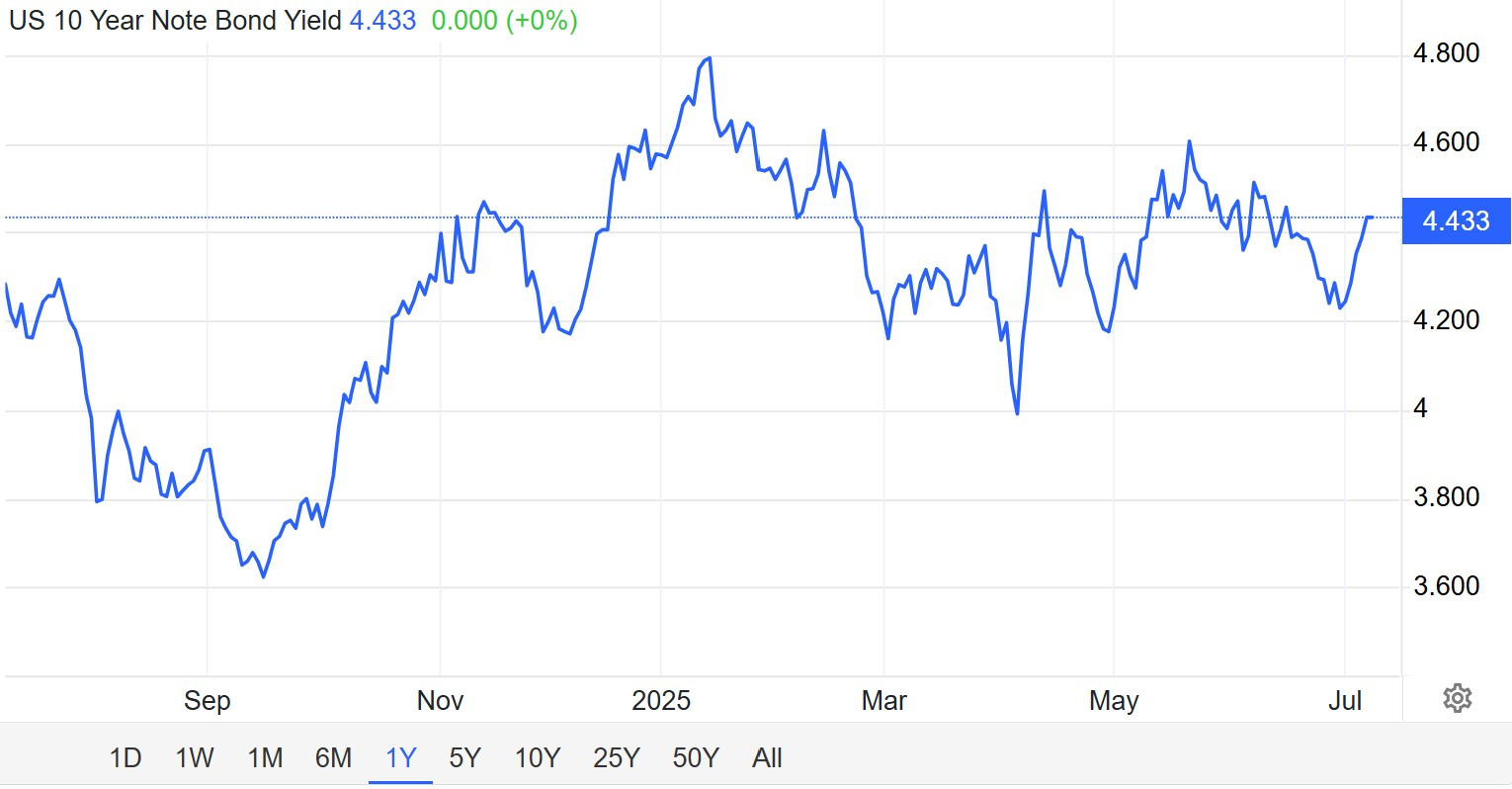
As earnings reports roll in, investors will need to weigh margin commentary alongside topline results to gauge whether today’s market resilience can hold.