
Price Surge, Copper - The New Oil of the AI Era

Today, a headline swept through commodity markets—Trump publicly announced plans to impose a 50% tariff on copper imports.
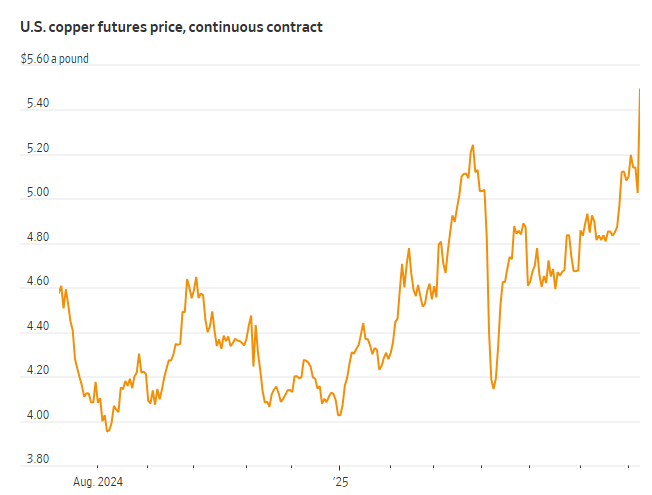
Following U.S. President Trump’s statement on a 50% tariff on imported copper, New York copper futures soared to a historic high on Tuesday, while international benchmark LME copper prices saw a sharp drop at Wednesday’s opening. The divergent fates of “Dr. Copper” prices on global markets have undoubtedly caught the eye of many investors.
Let’s take a look today at why Trump is targeting copper.
Copper Applications
Copper has been widely used in recent years to manufacture everything from cars to phones to computer chips. In construction projects, it carries electricity and water through wires and pipes.
Over the past few decades, copper consumption has spiked with the modernization of emerging economies like China, and in recent years, the growth of renewable energy production and the boom in data center construction have further driven demand.
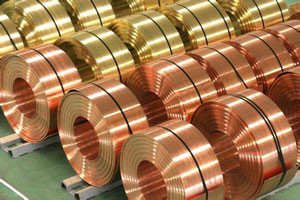
In fact, over the past few months, many global traders have rushed to ship record amounts of copper to the U.S. ahead of potential Trump tariffs, even causing tightness in LME copper inventories and fluctuations in spot premiums.
With Trump’s statement yesterday signaling that copper tariffs will likely take effect soon, the global copper market is clearly at a critical juncture…
Why Is the White House Targeting Copper with Tariffs?
The U.S. Department of Commerce has been investigating factors that might threaten U.S. copper supplies under Section 232 of the 1962 Trade Expansion Act in recent months, which allows tariffs on goods deemed vital to national security.
In February, the White House stated that the U.S. has sufficient copper reserves but “our smelting and refining capacity lags far behind global competitors.” The Trump administration aims to ensure resilience in the U.S. copper metal supply chain. Former President Biden also sought to boost domestic mining and metal processing during his term.
From market expectations, the 50% copper tariff rate may exceed what many industry insiders had anticipated, which is one reason for the dramatic overnight market reaction.
JPMorgan analysts noted, “The market will be surprised by the proposed figure,” adding that the bank had previously expected a 25% tariff on refined copper imports.
How Expensive Is Copper on Global Markets Now?
In fact, while U.S. manufacturers and traders await clearer copper tariff policies, they’ve been aggressively “siphoning” copper into the U.S., clearly to stockpile it. The surge in U.S. demand has made copper one of the hottest commodities globally this year, driving U.S. copper prices well above other major global benchmarks.
After Tuesday’s surge, New York copper prices have risen 23% compared to a year ago. Meanwhile, the premium of New York copper over London has become increasingly pronounced.
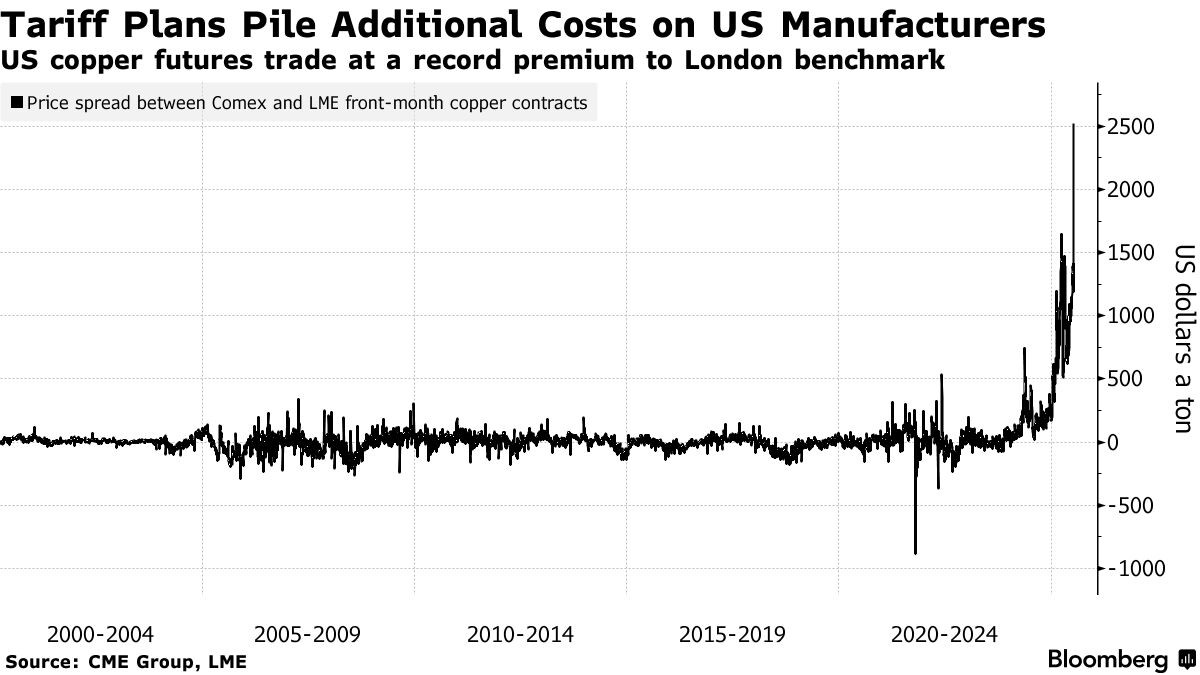
Over the past few months, the New York-London copper spread has hovered between $1,000 and $1,500 per ton, equating to a 10-15% premium. With the tariff rate and timeline now relatively certain, the spread widened overnight to $2,500, corresponding to a 25% super-premium.
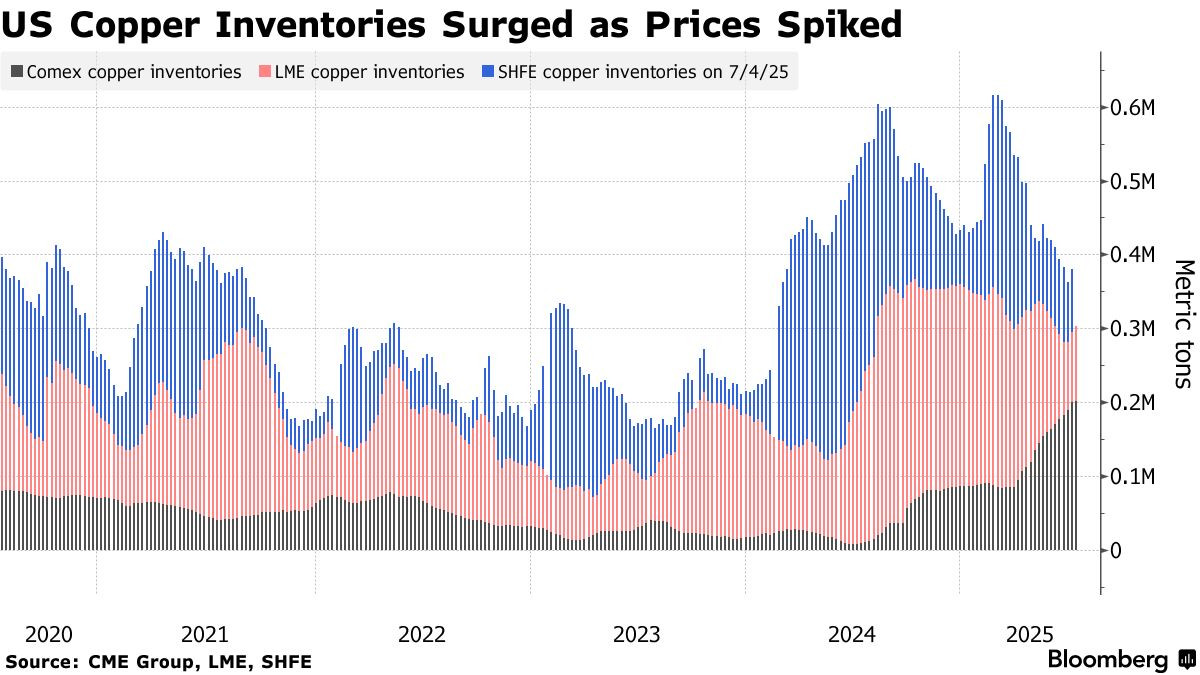
Even more extreme than the price is the shift in copper inventories. Since the beginning of the year, LME deliverable inventory has dropped by about 80%, dipping to just one day’s global usage last month. Over the past few months, China’s copper market has also tightened sharply, creating a stark contrast with soaring U.S. copper inventories—COMEX copper stocks are now at a seven-year high.
Data shows that copper stocks in New York Mercantile Exchange warehouses currently exceed the combined inventories of the London Metal Exchange and Shanghai Futures Exchange.
What Do Copper Tariffs Mean for the U.S. Economy?
Copper has long been nicknamed “Dr. Copper” in economics textbooks—a key barometer of economic growth. Rising copper prices often signal industrial expansion, but many analysts now worry that tariff-driven increases in metal and other imported goods could push up U.S. inflation.
Higher costs could squeeze profit margins for U.S. companies relying on copper for infrastructure or manufacturing. A 50% copper tariff aligns with those already imposed on steel and aluminum, hitting some U.S. factories especially hard.
A representative from Southwire Company LLC, the largest U.S. copper importer, wrote to the Commerce Department in April, “Any restriction on U.S. cathode copper imports will only redirect supply to China. Meanwhile, U.S. copper producers will face severe shortages, especially in the short and medium term, as domestic output can’t ramp up fast enough to fill the gap.”
Pierre Gratton, president of the Mining Association of Canada, noted that the U.S. lacks sufficient copper refining capacity or smelters and relies on Canadian imports, warning that such high tariffs will “harm U.S. manufacturing.”
Of course, the high tariffs on copper imports and surging U.S. copper prices are a boon for domestic mining companies like Freeport-McMoRan. The company’s stock jumped 2.5% overnight and has risen 22% year-to-date.
Has Copper Peaked, or Is This the Start of a New Bull Cycle?
In the short term, the price surge is more a “panic stocking” ahead of the tariff window.
But over the longer term, copper is being revalued by the renewable energy wave: an electric vehicle requires 2.5-4 times the copper of a gas car; over the next decade, global grid expansion and power infrastructure will keep marginal copper demand rising; and renewable energy and data centers are energy hogs supported by copper cables.
Global copper mine expansion cycles are notoriously long, and copper’s fundamentals are starting to mirror oil. Trump’s tariff move isn’t just a copper price driver—it’s a strong signal of global supply chain geopoliticization.
The “global copper price” of the past might be splitting into “U.S. copper price” and “non-U.S. copper price.” The last 20 years were an era of “globalization lowering costs”; the next 10 could be a cycle of “geopolitics raising risks.”
Copper might just be the beginning.