
Recent Private Equity Deals and the Asian PE Surge

Despite the ongoing challenges posed by high interest rates and geopolitical uncertainty, the private equity (PE) sector in 2025 is experiencing a clear uptick in mergers and acquisitions (M&A) activity.
Today, we take a closer look at some recent high-profile deals by PE giants to understand the industries they are prioritizing.
Some recent transactions in the private - equity market
A notable transaction is BlackRock’s $120 billion acquisition of private credit giant HPS Investment Partners, which stands out as a major highlight.
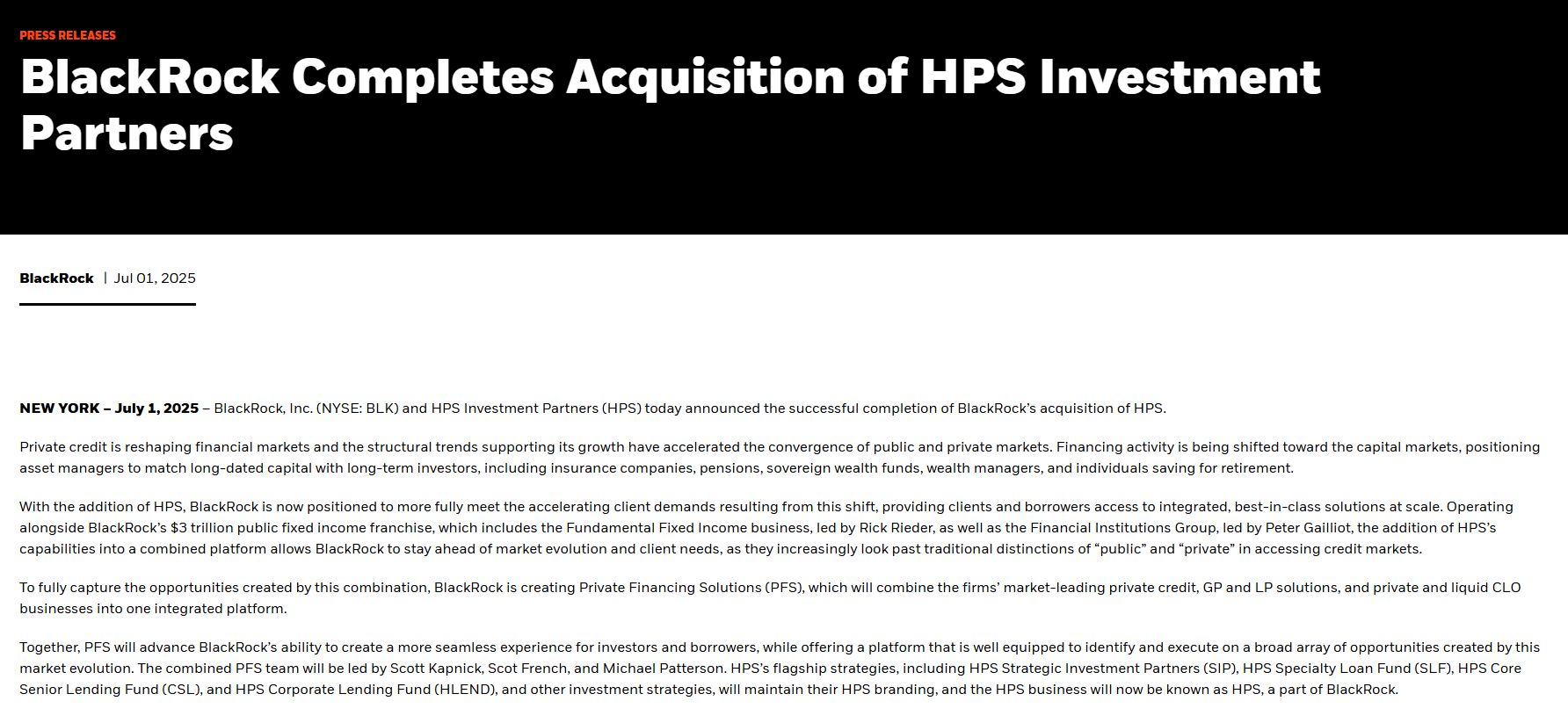
This deal is slated to close mid-2025, pending regulatory approval. Building on its earlier acquisition of infrastructure investor GIP, completed in Q4 2024 and October of that year, BlackRock has now invested approximately $250 billion in less than a year.
This includes two of the largest alternative asset deals in history, with the $2.55 billion all-cash purchase of global private market data leader Preqin still underway. HPS, established in 2007 as a division of J.P. Morgan Asset Management’s Highbridge Capital Management (specifically Highbridge Principal Strategies), currently manages about $1,500 billion in client assets.

This comprises $22 billion in public credit and $1,230 billion in private credit. Following the acquisition, BlackRock and HPS will establish a new private financing solutions business unit, to be overseen by HPS leaders Scott Kapnick, Scot French, and Michael Patterson. These three will also join BlackRock’s Global Executive Committee, with Scott Kapnick serving as a board observer.
With bank lending conditions tightening, HPS, managing approximately $1,500 billion in assets, focuses on direct lending and special opportunities, aligning well with PE’s goal of diversifying revenue streams.
In the technology sector, a Silver Lake-led consortium acquired experience management software leader Qualtrics International for $100 billion.
This deal underscores PE’s positive outlook on AI-driven data solutions, as Qualtrics’ valuation has soared since its spin-off from SAP. Analysts believe Silver Lake intends to enhance operations and aim for an IPO exit by the end of 2025.
Another significant deal is Blackstone’s $42 billion acquisition of event management software company Cvent Holding Corp.
Blackstone planning to boost Cvent’s market competitiveness through technological improvements. The transaction is expected to finalize in the fourth quarter, indicating a broader trend toward mature enterprise services.
In the healthcare arena, Nordic Capital’s acquisition of medical data analytics firm Arcadia focuses on AI-powered healthcare solutions.

Although the financial details remain undisclosed, the influx of capital will accelerate Arcadia’s platform development to address high-quality care needs. This move taps into the growing PE interest in medical technology.
Mid-year data shows a 12% year-over-year increase in U.S. deal value, fueled by megadeals exceeding $100 billion. As PE firms adapt through serial acquisitions and cross-sector strategies, 2025 could mark a pivotal year, provided market confidence holds steady amid evolving trade and regulatory landscapes.
Asian PE Revival
Asia’s private equity market is beginning to show signs of recovery.
The combination of international PE giants withdrawing from the Asia-Pacific region and a rising willingness among local firms to sell is creating excellent M&A opportunities for pan-Asian funds.

According to S&P Global Market Intelligence, fundraising for Asia-focused PE funds in 2024 totaled $63.79 billion, a steep decline of nearly 80% from $315.8 billion in 2021.
KPMG data also indicates that Asia-Pacific PE deal volume dropped 38% to about 2,500 in the first half of 2024, compared to a historical peak of over 4,000 in the second half of 2021.
Despite the overall market slowdown, recent developments in Asia offer positive signals.
The region has seen an increase in the number of “quality enterprises,” even as available capital diminishes. Coupled with declining asset valuations, this creates an ideal environment for well-funded funds to pursue buyouts and carve-outs.
Over the past few years, many Asian companies, constrained by tight funding, have significantly improved their cash flows through operational optimization, laying a strong foundation for merger deals.
Moreover, technological advancements in areas like artificial intelligence and renewable energy are generating promising opportunities, drawing global capital back to the region.
A local PE manager remarked, “Exit channels are opening up again, and funds are starting to flow back to investors. With robust government policy support, market valuations remain within a reasonable range—we’re entering a rare window of investment opportunity.”