
Trump’s 50% Copper Tariff Sends Shockwaves Through Global Markets — What’s Next for Copper Prices?

Shearing sheep
July 10, 2025
GoGPT Summarizes Articles
Copper just had one of its most dramatic price surges in recent memory, all thanks to a single policy statement from former U.S. President Donald Trump.
On Wednesday, Trump announced that he plans to impose a 50% tariff on copper imports starting August 1, 2025, citing national security concerns and the need to rebuild U.S. copper production.
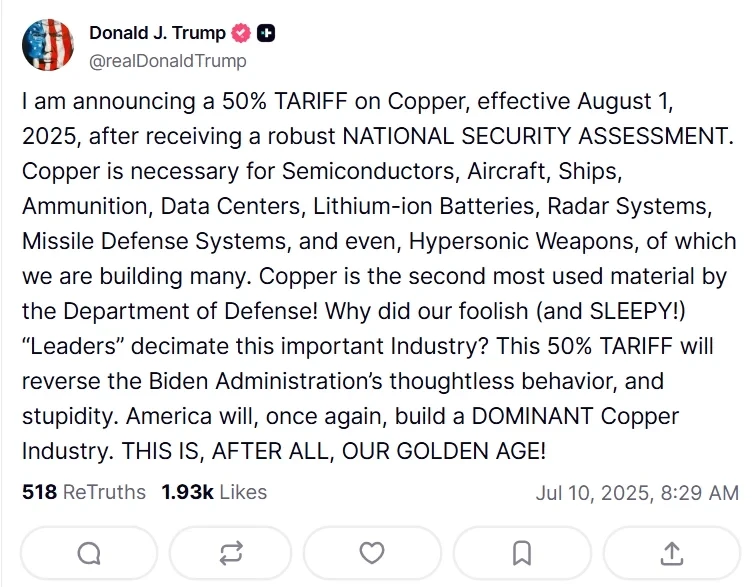
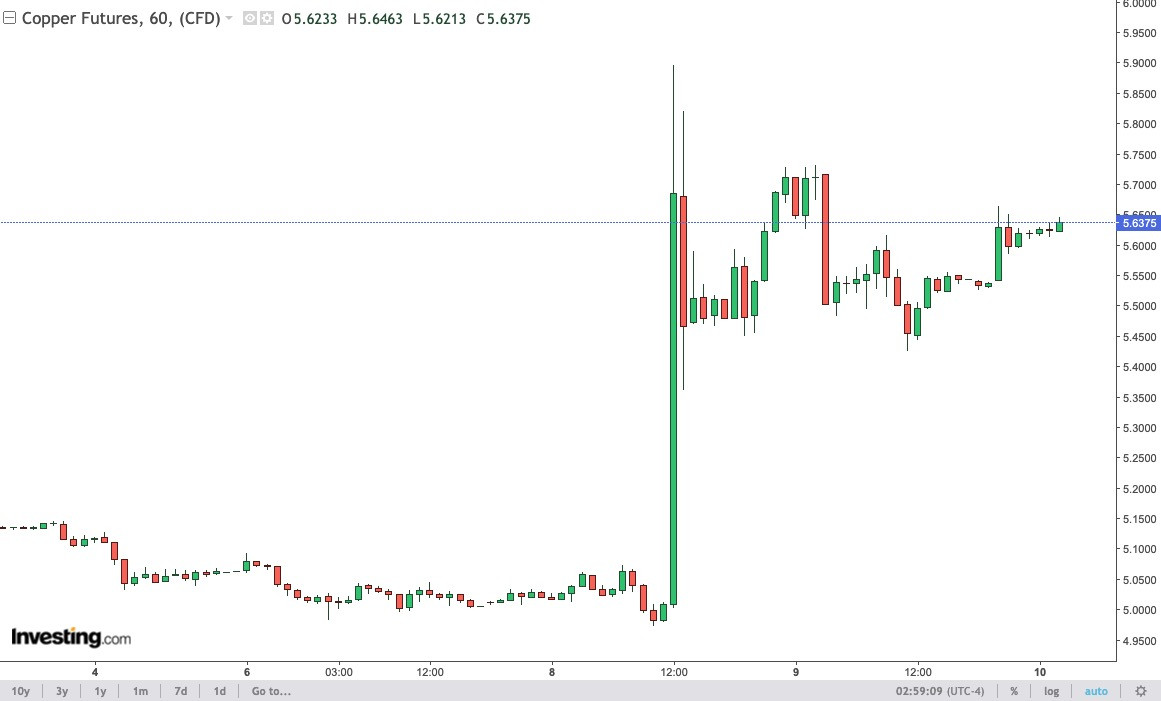
Earlier on Tuesday, he had already hinted at this move. The market wasted no time reacting. Copper futures jumped over 13% on July 8, hitting an all-time high before pulling back slightly the next day.
So, what’s driving this surge? And is this the beginning of a new copper supercycle?
Demand Was Already Hot
Even before the tariff news, copper prices had been steadily climbing throughout 2025. According to Ken Hoffman, commodities strategist at Red Cloud Securities, demand is being driven by three powerful forces:
1. Military buildup – As global defense budgets rise, so does the demand for copper-intensive military hardware.
2. Electrification – From EVs to renewable infrastructure, the green transition depends heavily on copper.
3. AI and data centers – These rapidly expanding sectors require large amounts of copper for wiring and power systems.
Now, Trump’s tariff threat adds a new layer of pressure — this time on the supply side.
“Imposing these kinds of tariffs is like pouring gasoline on a fire,” Hoffman told CNBC. “If I’m a U.S. automaker or utility, I’ll be stuck paying a higher domestic price, while the rest of the world pays less.”
A Growing Gap Between U.S. and Global Copper Prices
Trump’s announcement has already triggered a significant price dislocation. According to the Financial Times, copper futures in the U.S. are now trading at a 28% premium over the London Metal Exchange (LME) benchmark.
This divergence has fueled a wave of arbitrage trading, with copper traders rushing to ship supplies into the U.S. before the tariff takes effect. Meanwhile, Chinese copper imports surged 38% following the announcement, a sign that surplus supply is quickly being redirected to other markets.
Strategic Policy or Political Theater?
Is this tariff a serious economic strategy or a political move aimed at energizing Trump’s base?
Some view it as a classic protectionist measure designed to promote domestic copper mining. Others see it as a short-term play that could introduce more uncertainty than actual benefit.
“The uncertainty is massive,” said Dalton Baretto, Managing Director at Canaccord Genuity. “Producers don’t know whether to ramp up. Buyers don’t know how to hedge. Markets hate this level of unpredictability.”
It’s also worth noting that Trump has hinted at tariffs on steel, aluminum, pharmaceuticals, and semiconductors, raising concerns about broader global trade tensions and potential retaliation.
Inflation Risks and Broader Economic Impact
The biggest concern? Inflation.
Copper is a core material used across industries. Artificially boosting its price through tariffs could ripple through sectors like automotive, electronics, housing, and energy, potentially pushing up prices for consumers at a time when the Fed is still trying to manage inflation carefully.
Hoffman also noted another factor: the U.S. dollar has weakened by nearly 15% year-to-date, giving an additional boost to dollar-denominated commodities like copper. Combined with the tariff, this could lead to significantly higher input costs for U.S. businesses.
Winners and Losers
This policy shift is set to reshape the copper supply chain, and not everyone will come out ahead.
Winners:
-
U.S.-based miners such as Freeport-McMoRan (FCX) and Southern Copper Corp (SCCO) are likely to benefit from higher domestic copper prices.
-
Canadian mining companies like Taseko Mines and Hudbay Minerals, which are working to expand into the U.S. market, may also gain from new investment flows.
Losers:
-
U.S. manufacturers in auto, utility, and tech sectors face rising costs for copper components.
-
Consumers may see higher prices on electric vehicles, appliances, and home construction.
-
AI and data center firms, which rely on copper-heavy infrastructure, could experience project delays or budget overruns.
Final Thoughts
Between robust global demand, persistent supply constraints, and now Trump’s aggressive tariff stance, copper prices appear to be entering a perfect storm, especially in the U.S. market.
In the short term, copper producers and traders might enjoy strong tailwinds. But the longer-term risks are real: inflation, trade disruption, and increased costs for critical industries.
So, is copper heading for a long-term bull run? Probably yes, but it’s shaping up to be a volatile ride.
#Market Spotlight: The Stories Driving Today’s Trading