
JPMorgan Sees $500 Billion From Retail Investors Driving U.S. Stocks Higher

This year, retail investors—the everyday people buying and selling stocks—have been a major force behind the market’s rise. According to JPMorgan, these investors are set to keep driving stocks higher in the second half of the year, with nearly $500 billion expected to flow into U.S. equities. This influx could push the market up by another 5% to 10%.
Why Retail Investors Matter So Much
So who are retail investors? Simply put, they’re individual investors—not the big institutions like pension funds or hedge funds. Thanks to apps and online brokerages, investing has never been easier for regular folks. Over the past few years, especially during the pandemic, retail investors jumped into the market aggressively, helping fuel the strong rebound.
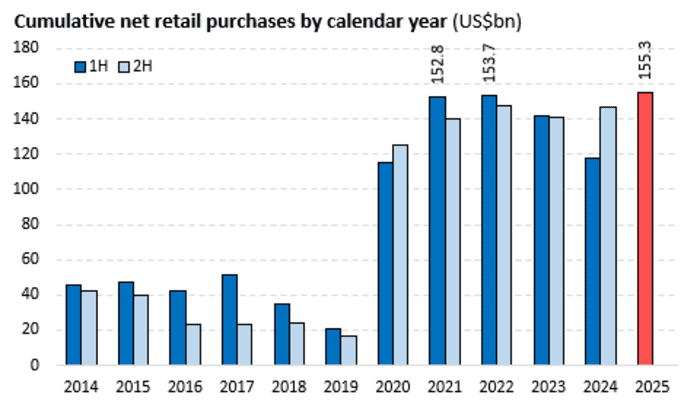
JPMorgan’s strategists estimate that retail investors still have about $360 billion left to invest in stocks this year, out of a total expected $630 billion. The brief pause in buying during May and June wasn’t because they lost interest—it was just a chance to take profits after a strong rally in March and April.
How Retail Buying Supports the Market
Stock prices go up when there’s more money buying than selling. While each retail investor’s purchase may be small, together they add up. When many retail investors buy at once, it can have a big impact.
JPMorgan believes retail investors will ramp up their buying again starting in July, providing solid support for the market. Other investors show mixed signals:
-
Hedge funds cut back earlier in the year but are adding some exposure now, though not at huge levels.
-
Quantitative funds that use computer models trimmed positions recently but might increase buys later.
-
Pension funds and insurance companies are moving money out of stocks into safer bonds and are expected to keep selling stocks in 2025.
When Will Foreign Investors Return?
One surprising trend is that foreign investors have largely stayed on the sidelines this year, avoiding U.S. stocks. This “buyer’s strike” has mostly been driven by concerns over a weakening U.S. dollar. Since foreign investors deal with currency risk, a falling dollar makes investing in U.S. assets less attractive.
But JPMorgan argues this can’t last forever. The U.S. stock market—especially the S&P 500 and its top tech giants, often called the “Magnificent Seven”—is simply too important to avoid for long.
The good news is the dollar may be stabilizing. The dollar index, which tracks the greenback against other currencies, has been hovering near its April low. If the dollar steadies, foreign investors could come back, bringing an additional $50 to $100 billion into U.S. stocks.
What This Means for Investors
Overall, the market looks well-supported by strong inflows, especially from retail investors and potentially returning foreign buyers. Even though some big institutions are pulling back, as long as more money goes in than out, the market can keep climbing.

Still, investors should keep a few things in mind:
-
Watch the dollar—if it weakens further, foreign buying might slow, and market confidence could take a hit.
-
Big institutions shifting to bonds shows caution about economic growth, so it’s wise to manage risk carefully.
-
Retail enthusiasm can’t last forever—markets will have ups and downs, so staying diversified and thoughtful is key.
In short, JPMorgan’s analysis sends a clear message: retail investors remain a powerful force in the market, and their continued buying will be a major driver of U.S. stocks through the rest of the year. For anyone new to investing, understanding where the money flows and following the trend while managing risks is a smart approach.