
Bitcoin Surges Past $121K: From Skepticism to Mainstream—What’s Behind It?

on Monday, Bitcoin has smashed through $121,000! Mainstream exchange short liquidations hit $1.061 billion in intensity, with a 2.93% gain in the past 24 hours and trading volume at $43.619 billion.
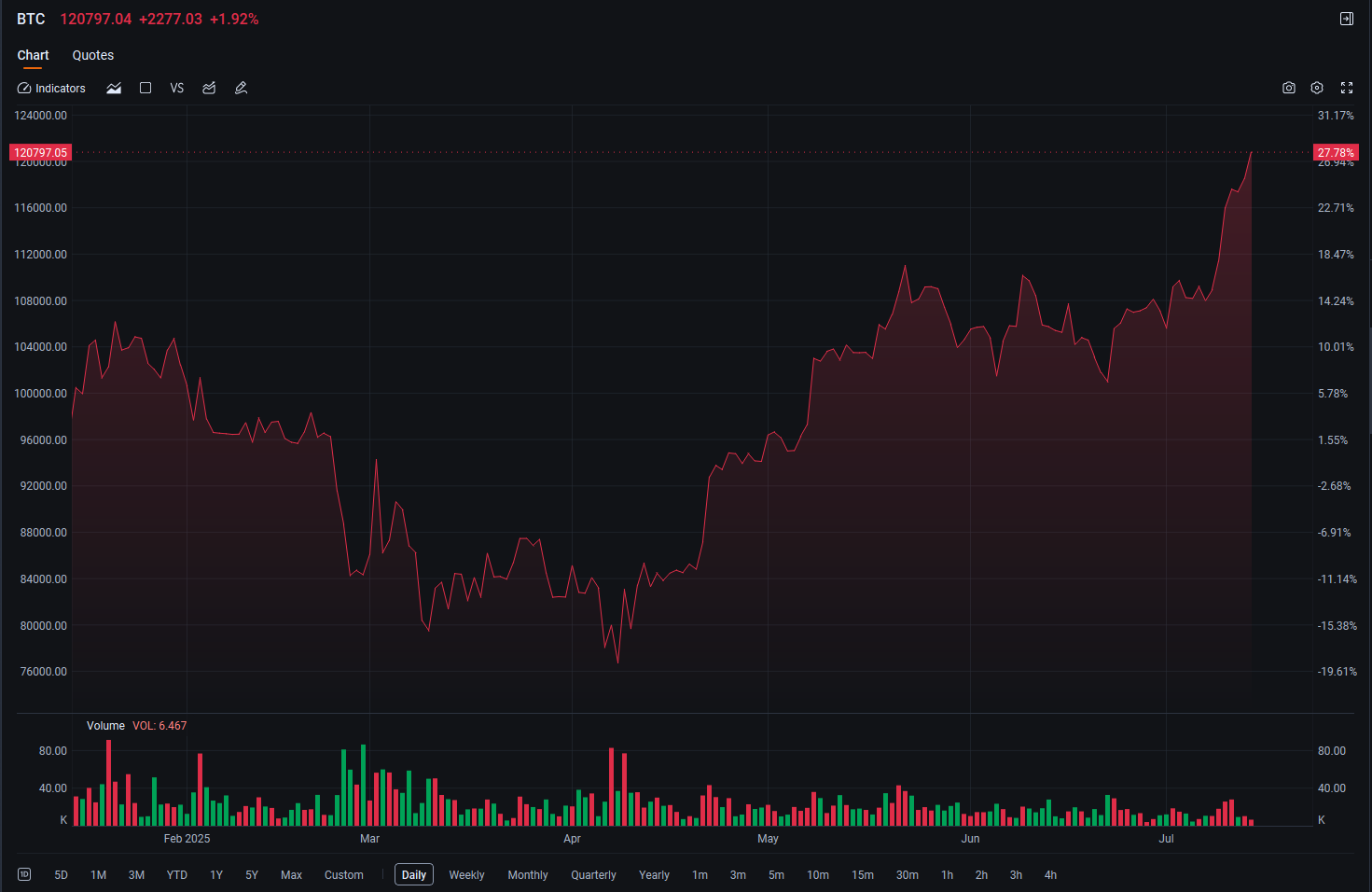
This breakthrough marks Bitcoin’s shift from a “speculative bubble” to a “mainstream asset,” reflecting deep changes:
Regulation Turns from Foe to Ally
Institutional Money Now Drives Pricing
Bitcoin ETFs from giants like BlackRock, Fidelity, and Franklin Templeton have attracted over $10 billion.
Companies like MicroStrategy and Metaplanet treat Bitcoin as a “corporate reserve asset,” with corporate holdings nearing 3.6% of circulating supply.
Pricing is no longer swayed by retail sentiment but by institutional strategies like inflation hedging, risk diversification, and gold substitution.
“Digital Gold” Status Gains Official Nod
Fed Chair Powell calls Bitcoin a “digital gold competitor.”
Germany’s central bank is selling gold to buy Bitcoin.
New Hampshire passed a bill including Bitcoin in “strategic reserve assets.”
This shows Bitcoin’s evolution from a “rebel against traditional finance” to a defensive asset absorbed by it.
Market Structure Undergoes a Shift
Exchange reserves drop while ETF holdings rise, signaling a move from “trading tool” to “long-term asset.”
The top 100 addresses control 18% of supply, with whales and institutions forming a “new oligarchy,” sidelining traditional retail investors.
$121K Breakout, “Bubble” Label Fades
Nobel laureate Krugman once dubbed Bitcoin a “pure bubble,” but in 2025, Kenneth Rogoff, another Nobel winner, noted it’s becoming a settlement tool for the global underground economy (20% of GDP), backed by “real demand.”
Bitcoin’s “Mainstream” Rise Is Not a Victory, But a Co-optation.
It’s no longer a challenger to fiat systems but a “high-volatility gold” within them. The higher its price climbs, the more it proves traditional finance has tamed it—not destroyed it.